%22%2F%3E%3C%2Fpattern%3E%3C%2Fdefs%3E%3Crect%20width%3D%22100%25%22%20height%3D%22100%25%22%20fill%3D%22url(%23phal7dg)%22%2F%3E%3Crect%20width%3D%22100%25%22%20height%3D%22100%25%22%20fill%3D%22url(%23phal7dp)%22%2F%3E%3Ctext%20x%3D%2250%25%22%20y%3D%2250%25%22%20text-anchor%3D%22middle%22%20dominant-baseline%3D%22central%22%20fill%3D%22rgba(255%2C255%2C255%2C0.95)%22%20font-family%3D%22Georgia%2C%20'Times%20New%20Roman'%2C%20serif%22%20font-weight%3D%22700%22%20font-size%3D%22272%22%20letter-spacing%3D%22-0.02em%22%3EAnwar%3C%2Ftext%3E%3C%2Fsvg%3E)
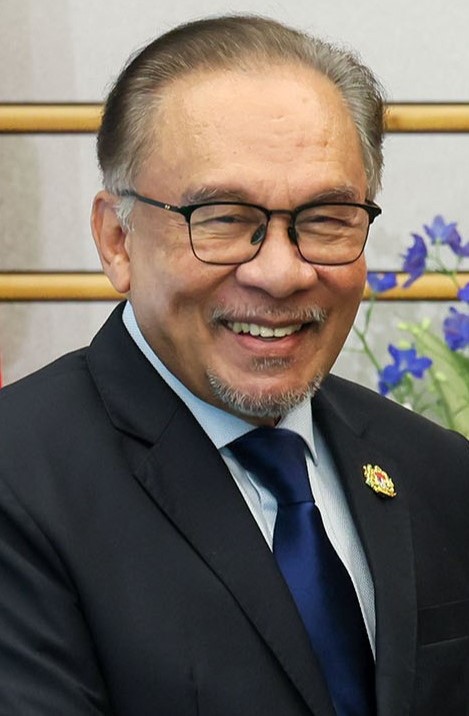
Prime Minister Anwar Ibrahim headlined Pakatan Harapan's candidate announcement ceremony for the 16th Johor State Election on 22 June 2026, delivering what the coalition branded as a "Night of Hope" to energise supporters and set the tone for a critical state-level battle. The high-profile gathering at Padang Bukit Gambir Extreme Park represented a significant show of central leadership commitment to Johor, traditionally a competitive political terrain where Pakatan Harapan has sought to consolidate and expand its foothold following the 2023 general election.
Anwar's presence and direct messaging at the event underscored the coalition's determination to frame the Johor contest not merely as a local affair but as part of a broader national narrative around governance reform and people-centred policy-making. By personally introducing the full complement of PH candidates for every state seat, the Prime Minister positioned himself as the guarantor of the coalition's electoral promises and the embodiment of its reform credentials. This approach mirrors successful campaign strategies in other state-level contests where central figures lend legitimacy and momentum to local candidacies.
The Prime Minister articulated a vision of politics serving tangible community needs rather than factional interests or personal advancement. His statement that politics should strengthen communities, create youth opportunities, support businesses, and improve family living standards reflected PH's attempt to ground its campaign messaging in economic and social concerns that resonate across Johor's diverse demographic landscape. For Malaysian voters increasingly focused on cost-of-living pressures and employment prospects, this framing offered a counterpoint to alternative narratives that may prioritise identity politics or sectarian appeals.
The Malaysia Madani vision—the government's overarching governance framework emphasising prosperity, civility, environmental stewardship, and democratic accountability—served as the philosophical scaffolding for the campaign launch. By explicitly linking Johor-level candidacies to this national doctrine, Pakatan Harapan sought to create coherence between state and federal policy directions while signalling to voters that electing PH representatives would ensure alignment with federal development priorities and resource allocation mechanisms. This messaging carries particular weight in Johor, a state with substantial economic influence and federal revenue contributions.
The coalition's emphasis on four core values—unity, integrity, compassion, and progress—represented an attempt to transcend communal or regional divisions that have historically fragmented Johor's electorate. Unity messaging is especially significant in a state with mixed demographics and a history of close electoral contests between competing coalitions. By centering integrity as a campaign pillar, PH implicitly contrasted its positioning with governance failures or corruption allegations that may attach to rival parties, though such references remained implicit rather than explicit in the official messaging.
Johor holds considerable strategic significance within Malaysian politics due to its size, economic contribution, and historical role as a swing state in federal elections. The state's voting patterns have demonstrated sensitivity to both national political currents and local constituency-level issues. A strong Pakatan Harapan performance in Johor would consolidate the coalition's 2023 electoral gains and provide a template for similar campaigns in other states. Conversely, electoral setbacks would invite scrutiny of PH's grassroots organising capacity and message effectiveness in non-urban areas where the coalition has sometimes struggled.
The timing of the candidate announcement in June 2026 allowed substantial campaigning runway before polling day, permitting candidates to establish local profiles and execute ground-level organising while national attention remained engaged with state politics. The event's structure—combining ceremonial announcement with explicit thematic messaging—demonstrated contemporary campaign professionalism in Malaysian politics, blending spectacle with substantive messaging about governance and policy direction.
For Southeast Asian observers, the Johor campaign illustrates the regional pattern of incumbent coalitions leveraging state elections to affirm electoral mandates and consolidate power bases. The Malaysia Madani framework itself represents an attempt to craft distinctive governance branding that distinguishes the ruling coalition from both its predecessors and contemporary opposition alternatives, a strategic imperative facing centre-left and reformist movements across the region.
The comprehensive announcement of all state-seat candidates signalled organisational readiness and eliminated speculation about last-minute substitutions that might signal internal discord. This approach contrasts with campaigns where candidacy announcements stretch across multiple events or encounter public controversy, potentially creating impressions of uncertainty or factional dispute within the ruling coalition.
For Johor voters, the candidate slate and accompanying messaging would shape perceptions of whether Pakatan Harapan offered genuinely fresh governance alternatives or represented continuity with established political patterns. The coalition's success in translating the "Night of Hope" campaign narrative into actual electoral support would depend substantially on implementation—whether PH candidates could credibly commit to specific infrastructure, economic development, and social policy improvements that would materially enhance constituent well-being throughout the state's diverse regions.
The event also served internal coalition-building purposes, allowing Pakatan Harapan's constituent parties and member leaders to demonstrate unity before the electorate while signalling to grassroots activists and volunteers the scale of leadership commitment to the Johor campaign. Such high-profile endorsements from federal figures carry organisational spillover effects, energising volunteer networks and encouraging both financial contributions and the donation of volunteer labour that campaigns require.
Looking forward, the Johor State Election represents a critical test of whether Pakatan Harapan's Malaysia Madani messaging and reform positioning can sustain electoral traction beyond the immediate post-2023 period. The outcome would likely influence the coalition's strategic planning for subsequent state elections and provide early indicators of national political trajectory heading toward the next federal election cycle.