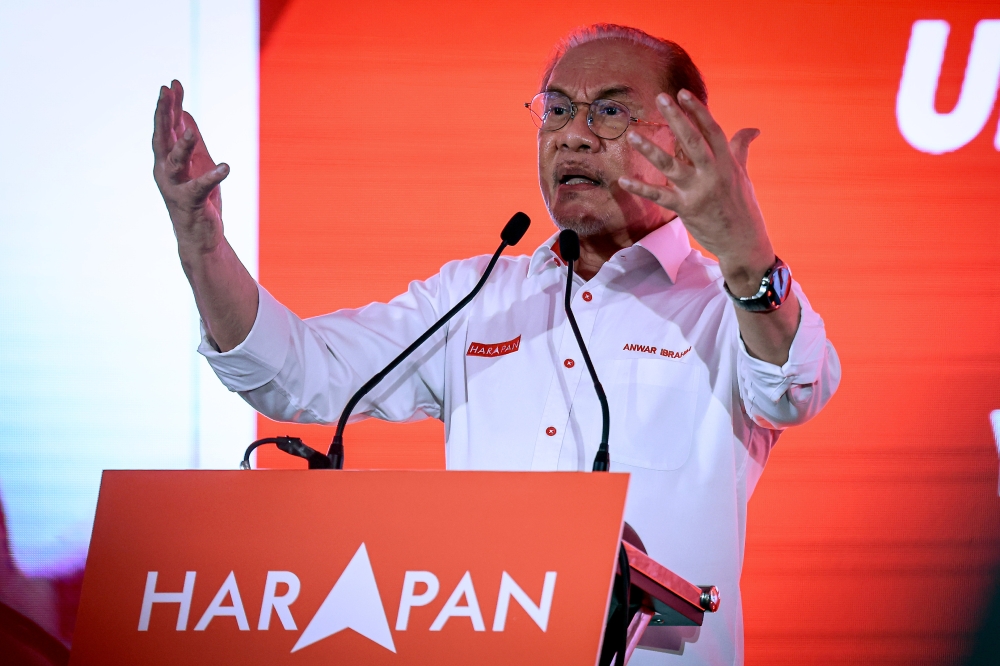
Prime Minister Datuk Seri Anwar Ibrahim is bringing his campaign directly to Negeri Sembilan, marking a significant show of political muscle as Pakatan Rakyat seeks to maintain momentum in a state where the coalition's control remains contested. The campaign foray represents a calculated move to energise supporters on the ground and underscore federal leadership backing for the coalition's state-level ambitions.
Anwar's personal involvement in campaign activities carries symbolic weight in Malaysian politics, signalling that Kuala Lumpur views the state contest as strategically important. His presence on the stump allows the Prime Minister to connect directly with voters in Negeri Sembilan, a state where Pakatan's hold on power has been tested by internal party dynamics and shifting voter preferences. The timing of the campaign push suggests the coalition is intent on pre-empting any ground slippage before formal polling begins.
Negeri Sembilan occupies a curious position in Malaysian politics—neither as tightly contested as Selangor nor as consistently aligned as some eastern states. The state has been a laboratory for various political configurations, having experienced both Barisan Nasional and opposition government in recent decades. For Pakatan, maintaining presence here means securing one of the crucial pieces of Malaysia's electoral map and preventing the federal opposition from establishing a foothold.
The coalition's need to dispatch its top political figure reflects broader strategic calculations about voter mobilisation. In post-2020 Malaysian politics, where electoral margins have narrowed significantly and coalition stability remains fragile, demonstrating grassroots energy becomes essential. Anwar's campaign appearance serves as a rallying point for party machinery and volunteer networks that often determine whether registered voters actually turn out on polling day.
Context matters significantly for understanding this campaign initiative. Malaysia's political landscape has become increasingly volatile since the 2018 general election, with coalition arrangements proving temporary and voter sentiment unpredictable. Pakatan's federal position, though dominant, depends partly on maintaining strong state-level performances that validate the coalition's governance credentials. A weak showing in Negeri Sembilan could invite questions about electoral durability, potentially affecting morale in other states where contests loom.
Anwar's engagement with state politics also reflects evolving power distribution within Pakatan itself. The coalition comprises multiple parties with distinct organisational cultures and voter bases, requiring the Prime Minister to appear invested across all components. His Negeri Sembilan campaign allows him to work with local DAP, PKR, and Amanah structures simultaneously, reinforcing the notion of federal-level coordination behind state efforts. This institutional signalling helps prevent the kind of inter-party tensions that have occasionally destabilised Pakatan in the past.
From a voter perspective, Anwar's personal campaigning offers both reassurance and scrutiny. Supporters see federal commitment to local contests; critics assess whether the Prime Minister's popularity translates into legislative gains. Malaysian voters, increasingly discerning about political performances, calibrate their ballot decisions based partly on whether national leaders deliver visible benefits to their states. Anwar's campaign presence therefore becomes a form of political accountability, demonstrating that the federal government remains attentive to state-level concerns.
The broader regional context adds another dimension to this campaign activity. Southeast Asia's electoral trends show that personalised leadership engagement drives turnout, particularly in democracies where party institutions remain relatively fluid. Malaysia fits this pattern, with Prime Ministers from both government and opposition regularly campaigning in state contests. Anwar's approach aligns with regional norms while accounting for Malaysia's specific party dynamics and voter psychology.
Pakatan's electoral strategy in Negeri Sembilan likely combines data-driven targeting with traditional ground organisation. Campaign appearances by top national figures provide the public spectacle that generates media coverage and social media amplification, complementing behind-the-scenes voter contact work by party volunteers. Anwar's presence elevates the profile of state-level candidates and helps overcome the perception that Negeri Sembilan contests are secondary to federal politics.
Looking forward, the success of this campaign initiative will be measured not merely by the Prime Minister's ability to draw crowds but by whether Pakatan translates momentum into actual electoral victories. Malaysian voters have shown themselves willing to split their votes between different levels of government, complicating predictions based on federal popularity. Anwar's Negeri Sembilan campaign therefore represents necessary but insufficient work towards securing the state for the coalition.
The campaign also reflects Anwar's recognition that prime ministerial power in Malaysia depends significantly on maintaining healthy coalition governments across multiple states. The federal system requires coordination between state and federal administrations, and Pakatan's strength rests on controlling key states that provide both resources and political representation. Negeri Sembilan, while smaller than Selangor or Johor, nonetheless represents a meaningful increment to the coalition's territorial footprint and political legitimacy.

