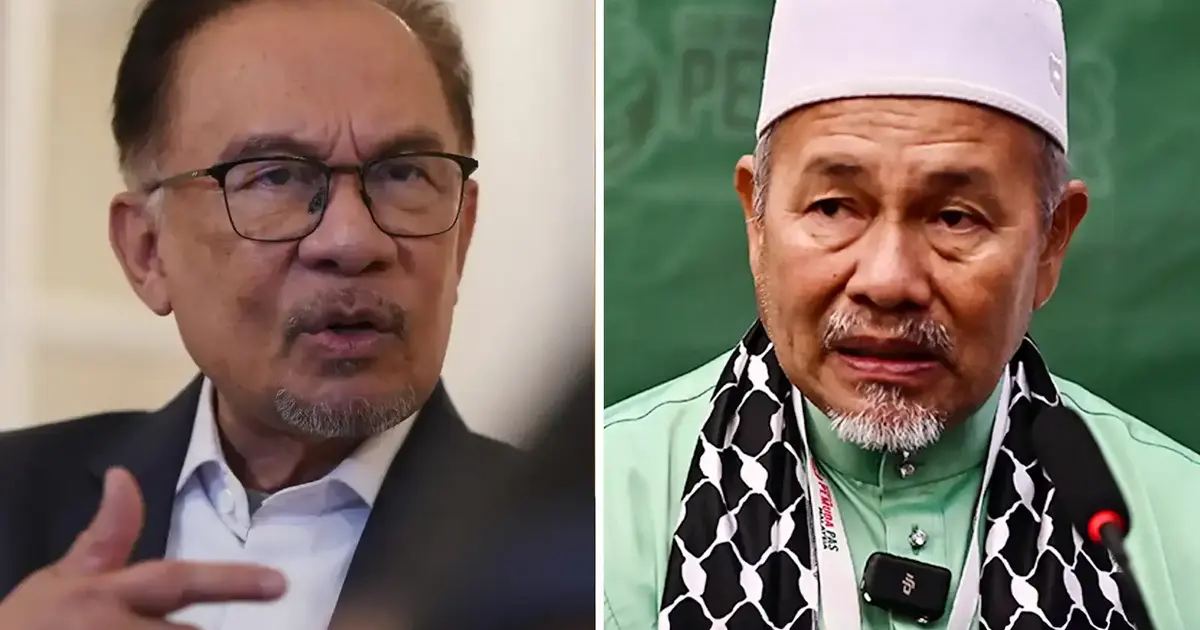
Prime Minister Anwar Ibrahim has commenced legal action against Tuan Ibrahim, the deputy president of PAS, over defamatory statements allegedly made during a public speaking engagement. The lawsuit centres on claims the PAS leader made regarding Anwar's purported interference in police investigations and matters concerning the royal institution within Negeri Sembilan, escalating tensions between the government and the opposition Islamic party.
The defamation suit represents a significant escalation in the political friction that has characterised the relationship between Anwar's administration and PAS since the latter withdrew from the government coalition in October 2023. The legal action underscores the deepening ideological and strategic divisions within Malaysia's fractured political landscape, where personal attacks have increasingly morphed into courtroom battles. This development signals Anwar's willingness to deploy legal mechanisms to counter what his team views as baseless accusations that damage his reputation and undermine his authority as the country's chief executive.
Tuan Ibrahim's remarks during the ceramah—a form of public discourse deeply embedded in Malaysian political culture—allegedly targeted Anwar's conduct in two sensitive areas: the independence of law enforcement and the sanctity of the royal institution. Both domains are constitutionally and culturally significant in Malaysia, where the monarchy holds paramount constitutional status and the police force operates under strict hierarchical frameworks. By making such allegations in a public setting, Tuan Ibrahim may have intended to mobilize PAS's political base by suggesting governance failures at the highest level, but the strategy has resulted in formal legal consequences.
The decision to pursue defamation charges reflects a broader pattern whereby Malaysian politicians increasingly resort to litigation when facing criticism. While free speech remains a constitutional guarantee, the boundaries of protected political speech versus actionable defamation remain contested terrain in Malaysian jurisprudence. The courts have historically balanced these competing interests, though outcomes often depend on whether statements are characterized as opinion or factual assertion. Anwar's legal team will need to demonstrate that Tuan Ibrahim's remarks constituted false factual claims rather than hyperbolic political commentary, a distinction that frequently determines the outcome of such cases.
For Negeri Sembilan specifically, the allegations touch on the state's governance and its relationship with federal authorities. The state has been a focal point of political maneuvering, and allegations of federal interference in state-level police matters or crown affairs could resonate among voters sensitive to issues of territorial autonomy and proper governance hierarchies. The lawsuit thus carries implications beyond personalities, potentially raising questions about centre-state relations and the appropriate exercise of federal power in Malaysia's federalist system.
PAS, as an Islamist opposition party with growing electoral influence, has maintained an increasingly adversarial posture toward the Anwar government since withdrawing from the Pakatan Harapan coalition. The party has positioned itself as a vocal critic of government policies, particularly those involving secular governance principles and economic management. Tuan Ibrahim, as deputy president, plays a significant role in articulating PAS's parliamentary strategy and public messaging. His comments during the ceramah must be understood within this broader context of organized political opposition rather than isolated remarks.
The ceramah format itself merits consideration. These gathering-based speeches represent a traditional mode of Malaysian political engagement where speakers often employ rhetorical flourishes and emotionally resonant language to energize supporters. However, legal standards for defamation apply regardless of venue. The question before the courts will be whether Tuan Ibrahim's specific allegations meet the threshold of actionable defamation under Malaysian law, which requires demonstration of falsity, damage to reputation, and publication to third parties—all of which appear superficially present in this case.
This lawsuit arrives amid ongoing political fragmentation in Malaysia, where coalition arithmetic remains precarious and opposition parties actively contest government legitimacy. PAS and its ally Bersatu together command substantial parliamentary numbers, making them formidable critics. The willingness of Anwar to engage in legal combat with opposition figures suggests confidence in his government's legal position but also reflects the combative nature of contemporary Malaysian politics, where institutional and electoral battles frequently spill into courtrooms.
The implications for Malaysian democracy warrant examination. While protecting individual reputation remains important, excessive litigation against political opponents risks chilling legitimate criticism and public debate. Conversely, permitting false or reckless allegations to go unchallenged without legal recourse could enable the degradation of political discourse. The courts' handling of this defamation suit will establish precedent regarding the boundaries of protected political speech in Malaysia and may influence how future disputes between government and opposition figures are resolved.
From a broader Southeast Asian perspective, Malaysia's approach to defamation law in political contexts attracts regional attention. Countries throughout the region grapple with similar tensions between protecting free expression and safeguarding reputation, with varying outcomes. The outcome of Anwar versus Tuan Ibrahim may serve as a reference point for how Malaysian jurisprudence addresses the intersection of politics, law, and speech rights during a period of heightened polarization.
The path forward will depend on judicial interpretation of existing defamation law and how thoroughly the courts examine whether Tuan Ibrahim's allegations contained demonstrably false factual claims or remained within the realm of political opinion. Regardless of the verdict, the case illustrates how Malaysian politics has increasingly become litigious, with major political figures prepared to pursue legal remedies rather than relying solely on electoral or parliamentary mechanisms to contest accusations and maintain their public standing.

