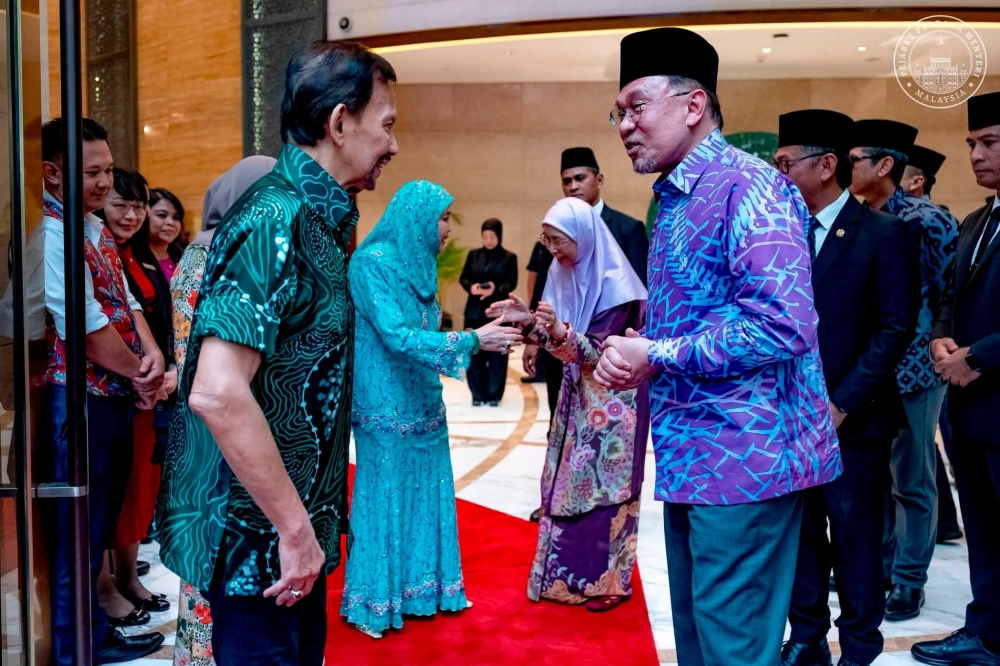
Prime Minister Datuk Seri Anwar Ibrahim has extended warm birthday wishes to Brunei Sultan Hassanal Bolkiah, underscoring Malaysia's dedication to deepening ties with the sultanate and advancing collaborative efforts across Southeast Asia.
The gesture, announced through official channels, reflects the longstanding diplomatic protocol between the two neighbouring nations and their shared commitment to regional stability. Such high-level courtesies serve as important rituals in maintaining cordial relationships within ASEAN, where ceremonial acknowledgements often accompany substantive discussions on trade, security, and cultural exchange.
Malaysia and Brunei maintain a complex bilateral relationship defined by geographical proximity, cultural similarities, and economic interdependencies. The two countries share maritime boundaries in the South China Sea and face common challenges ranging from transnational criminal activity to environmental conservation. Regular high-level exchanges of greetings and official visits help sustain the diplomatic momentum necessary for addressing these shared concerns effectively.
The timing of Anwar's message carries significance given the broader regional context. Southeast Asia continues navigating geopolitical tensions, including disputes over maritime boundaries and competing great-power interests. Within this environment, bilateral relationships between ASEAN members become particularly important for maintaining the bloc's cohesion and ability to speak with a unified voice on matters affecting regional security and development.
Brunei, despite its smaller population and economy, holds strategic importance within ASEAN due to its location and resource wealth from oil and natural gas reserves. Malaysia's effort to maintain warm relations ensures stable trade corridors and cooperation on maritime security matters, including joint patrols and information-sharing mechanisms that help combat piracy and smuggling in the region.
The sultanate has historically played a measured role within ASEAN forums, often adopting consensus-building positions that align with the bloc's traditional non-interference doctrine. This diplomatic approach, combined with Brunei's economic prosperity, makes it an important stabilizing force in Southeast Asian affairs, particularly when disagreements arise between larger regional powers.
Anwar's outreach reflects Malaysia's broader diplomatic strategy of strengthening relationships across ASEAN member states while emphasizing shared values and mutual interests. This approach contrasts with the occasional tensions that have marked Malaysia's relations with other neighbours in the region, making efforts to reinforce friendly ties with Brunei particularly valuable from a strategic perspective.
Bilateral trade between Malaysia and Brunei, while modest compared to Malaysia's economic relationships with other regional partners, encompasses important sectors including oil and gas, manufacturing, and financial services. Strengthening political ties creates conditions favouring continued commercial engagement and provides platforms for resolving any trade-related disputes that may arise.
Cultural and educational exchanges constitute another dimension of the Malaysia-Brunei relationship. Significant numbers of Bruneian students pursue higher education at Malaysian universities, fostering people-to-people connections that reinforce government-to-government ties. These grassroots connections ensure that diplomatic relationships extend beyond official channels and benefit from sustained institutional relationships.
The greeting also arrives during a period when ASEAN cooperation mechanisms face evolving pressures. The regional grouping continues efforts to maintain relevance as a diplomatic framework while managing internal differences over issues ranging from Myanmar's political crisis to responses to great-power competition in the region. Individual member states' efforts to strengthen bilateral relationships thus contribute to the broader project of maintaining ASEAN unity.
Looking forward, such gestures establish goodwill that facilitates deeper engagement on substantive issues. Whether involving discussions on maritime boundary demarcation, cross-border environmental management, or joint initiatives in renewable energy and digital innovation, the foundation of personal rapport between leaders enhances the likelihood of productive outcomes in bilateral negotiations.
For Malaysia specifically, maintaining strong relations with Brunei aligns with the government's wider strategy of positioning the country as a reliable ASEAN partner while simultaneously managing relationships with larger regional powers. Brunei's prosperity and stability serve Malaysian interests by creating a predictable security environment along Malaysia's eastern maritime frontier, allowing focus on other priority areas.

