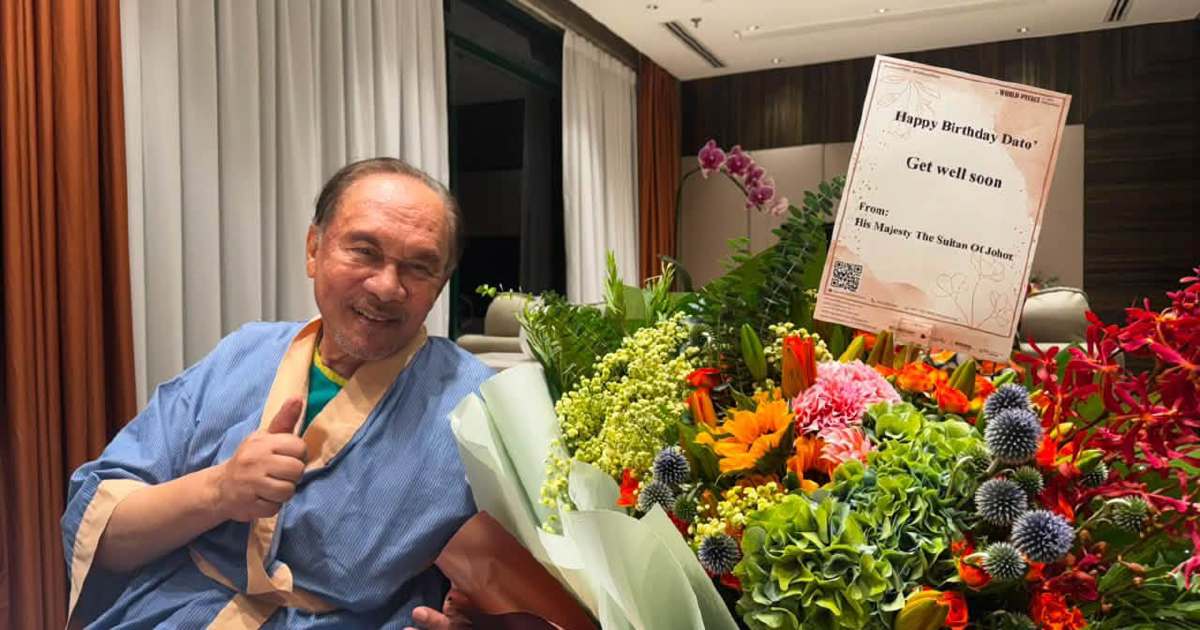
Prime Minister Datuk Seri Anwar Ibrahim has publicly acknowledged the gracious birthday wishes and prayers extended by His Majesty Sultan Ibrahim, King of Malaysia, and Her Majesty Raja Zarith Sofiah, Queen of Malaysia. The gesture reflects the close bonds of goodwill that characterise the relationship between Malaysia's constitutional monarchy and the country's head of government, underscoring the ceremonial importance placed on such courtesies within the nation's institutional framework.
The Prime Minister's expression of thanks, delivered in Kuala Lumpur, carries significance within Malaysia's political culture, where acknowledgment of royal support remains a cornerstone of governmental legitimacy and public communication. Such exchanges between the executive branch and the institution of the monarchy serve to reinforce the symbolic unity of the nation's leadership structures, particularly during moments of personal significance for senior government figures.
Anwar Ibrahim's particular mention of prayers for his speedy recovery suggests he has recently faced health challenges or medical treatment. The inclusion of this element in his public acknowledgment demonstrates how personal matters of national leaders intersect with state ceremonial practices in Malaysia. The royal family's expression of concern extends beyond formal protocol, indicating genuine wishes for the Prime Minister's wellbeing—a sentiment that resonates with Malaysians' broader cultural values surrounding compassion and collective care during times of difficulty.
The significance of such royal gestures within the Malaysian context cannot be understated. The constitutional monarchy plays a vital symbolic role in national affairs, and the King and Queen's acknowledgment of the Prime Minister's milestone birthday reaffirms the institutional bonds between executive leadership and the crown. This interplay between political authority and royal presence has historically served to stabilise Malaysia's governance structures, particularly during periods of political transition or uncertainty.
Within Southeast Asia's broader political landscape, the Malaysian model of constitutional monarchy paired with parliamentary democracy represents a distinctive institutional arrangement. The regular public exchanges of courtesies between the head of government and the royal family help maintain public confidence in this dual system. International observers often note that Malaysia's monarchy-government relationship serves as a stabilising force in the region, where such formal frameworks contribute to political continuity and institutional credibility.
The Prime Minister's gratitude reflects not merely personal appreciation but also recognition of the Queen's role in contemporary Malaysian public life. Her Majesty Raja Zarith Sofiah has increasingly taken on expanded ceremonial and charitable responsibilities, and her inclusion in birthday wishes acknowledges the expanding contemporary role of the monarchy in supporting national leadership across multiple dimensions.
For Malaysian citizens, particularly those who value traditional institutional frameworks and constitutional propriety, such exchanges carry cultural and patriotic resonance. The public acknowledgment of royal support reinforces concepts of national unity and collective belonging that transcend partisan political divisions. In a nation where the monarchy remains deeply woven into constitutional identity and cultural heritage, these moments of mutual regard between the throne and the Prime Minister's office serve important functions beyond their immediate ceremonial content.
The timing and nature of such acknowledgments also provide insights into the political climate within Malaysia. When senior leaders publicly express appreciation for royal gestures, it often signals a period of institutional stability and collaborative governance between the political executive and constitutional institutions. This appears to be the current environment, with the Prime Minister comfortable in publicly recognising and reciprocating royal goodwill.
Anwar Ibrahim's two-decade journey through Malaysian politics—marked by dramatic reversals, periods of imprisonment, rehabilitation, and eventual ascension to the premiership—has made his acknowledgment of institutional support particularly poignant for many Malaysians. His gratitude toward the King and Queen resonates with narratives of redemption and national reconciliation that many citizens associate with his political trajectory. The Prime Minister's expressed appreciation thus carries personal historical weight alongside its ceremonial significance.
Moving forward, such moments of public exchange between the monarchy and executive leadership will likely continue shaping Malaysia's governance narrative. As the nation navigates contemporary economic challenges, regional geopolitical shifts, and domestic political complexities, the visible solidarity between different branches of the state apparatus provides reassurance to both domestic audiences and international observers regarding institutional stability.

