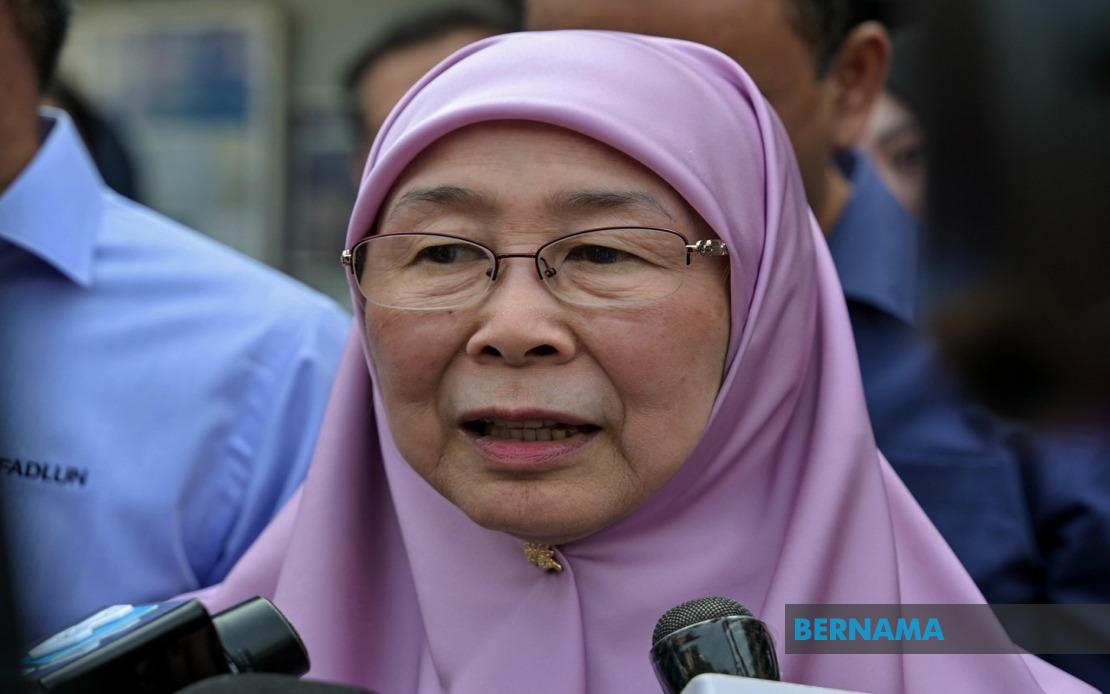
Prime Minister Datuk Seri Anwar Ibrahim was set to depart the hospital on August 12 after completing his medical treatment, as confirmed by his spouse Datuk Seri Dr Wan Azizah Wan Ismail. The announcement came as the nation continued observing the lead-up to the 2026 National Month celebrations, with various government agencies and civic organisations conducting preparatory activities across the capital.
Dr Wan Azizah relayed the positive update while present at the Semarak Merdeka programme organised at the Bandar Tun Razak branch of the Kuala Lumpur City Hall (DBKL). Her statement to the assembled press indicated that the Prime Minister's recovery was progressing favourably and that he wished to convey his gratitude to the public for their support during his period of hospitalisation.
The nature of Anwar's hospital visit centred on an elective surgical intervention performed four days earlier on Monday. The procedure, conducted using laparoscopic techniques, addressed a para-umbilical hernia—a condition involving tissue protruding through the abdominal wall in the region near the navel. This type of minimally invasive surgery typically carries lower complication risks and shorter recovery periods compared to traditional open surgical methods, making it the preferred approach for many contemporary medical facilities.
According to Dr Wan Azizah's remarks, Anwar conveyed his appreciation to citizens and well-wishers who had offered prayers and supportive sentiments throughout his medical episode. The Prime Minister, often referred to colloquially as PMX, requested that his thanks be transmitted broadly to all those who had demonstrated concern for his health and recuperation. This public acknowledgment served to reassure the nation about his condition and demonstrated appreciation for the widespread public interest in his wellbeing.
The timing of the discharge announcement came amid Malaysia's preparations for the approaching National Month celebrations. The Semarak Merdeka initiative represents part of these broader commemorative efforts, engaging communities and reinforcing national pride during the countdown to August 31. Dr Wan Azizah's presence at such civic events underscores the government's continued engagement with public programming despite the Prime Minister's temporary medical absence.
Paraumbilical hernias, though generally not life-threatening, can cause discomfort and gradually enlarge if left untreated. Elective surgical repair remains the standard definitive treatment, particularly when patients experience symptoms or the hernia shows signs of enlargement. The laparoscopic approach employed in Anwar's case utilises several small incisions rather than a single large cut, allowing surgeons to operate with enhanced precision while minimising trauma to surrounding tissues.
The successful completion of this procedure and the anticipated swift discharge suggest that no complications arose during or immediately following the operation. Modern laparoscopic techniques have become increasingly refined, with recovery timelines considerably shortened compared to open surgery. Most patients undergoing such procedures can resume light activities within weeks, though medical professionals typically recommend a gradual return to normal routines to ensure proper healing.
The announcement holds broader implications for Malaysia's political leadership and governance continuity. While the Prime Minister's hospitalisation necessitated temporary adjustments to his official schedule, the swift recovery and discharge demonstrate that governmental operations remained stable. Malaysia's constitutional framework and cabinet structure are designed to ensure that routine administration continues even during the brief absence of the head of government, reflecting institutional maturity in the nation's political system.
For the Malaysian public, news of the Prime Minister's satisfactory medical outcome provided reassurance during a period when his absence from public duties had naturally generated speculation. The transparent communication from Dr Wan Azizah helped manage public concern while maintaining appropriate privacy regarding specific medical details. This balance between transparency and discretion represents responsible crisis communication, particularly when matters of national leadership are involved.
Moving forward, observers will likely monitor the pace of Anwar's return to full public duties and official engagements. Typical recovery protocols following laparoscopic hernia repair suggest that most individuals can resume normal professional responsibilities within several weeks, though the extent of the Prime Minister's duties may require a more gradual reintegration. The success of this procedure contributes positively to national confidence in the stability of Malaysia's political leadership during a period of ongoing developmental initiatives and regional engagement.

