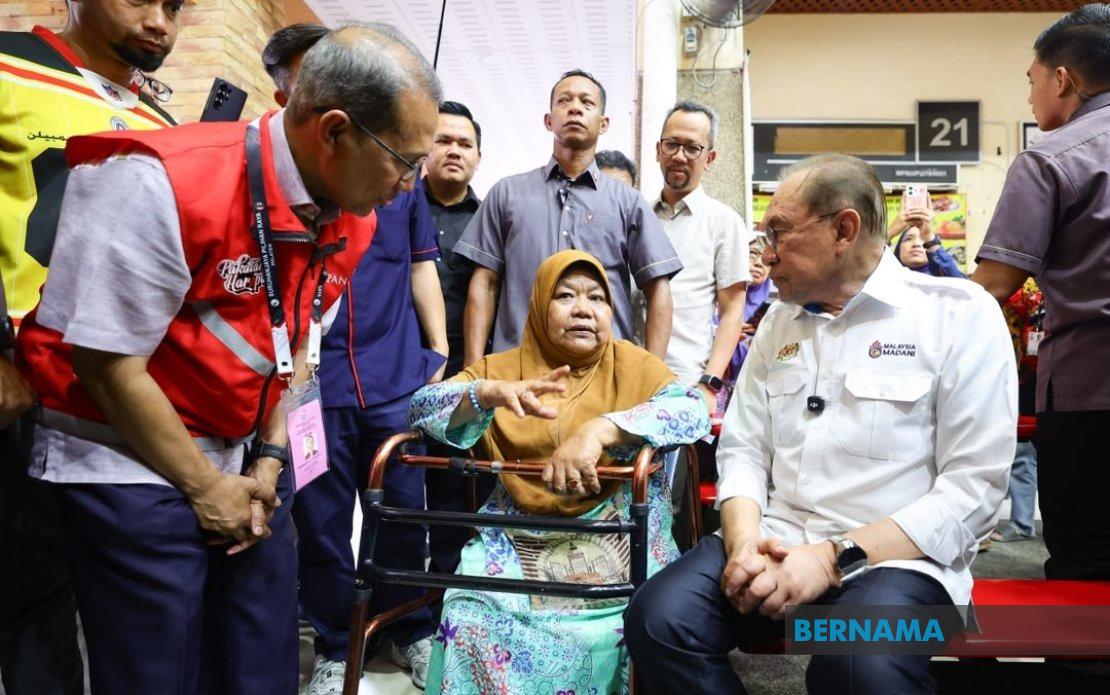
Prime Minister Anwar Ibrahim used a grassroots engagement session in Negeri Sembilan to showcase what he characterises as the Pakatan Harapan administration's commitment to transparent governance and community-focused development. Speaking at an afternoon gathering with residents of Ampangan, Anwar pointed to the state government's river widening and deepening initiatives as concrete examples of how PH's approach differs from previous administrations. These projects, he argued, demonstrate the coalition's ability to execute meaningful infrastructure works while simultaneously directing the financial benefits back to the communities they serve.
The Ampangan river project embodies the reciprocal model that Anwar highlighted as central to PH's development philosophy. Rather than allowing extracted materials to become a separate revenue stream controlled by government contractors, the administration has structured the project so that sand dredged from the riverbed finances ongoing maintenance and upgrades to the river infrastructure itself. This circular approach addresses immediate community concerns—particularly flooding vulnerability—while creating a self-sustaining mechanism for long-term river management. For a state with significant water-related challenges during monsoon seasons, such projects carry direct practical relevance to residents' daily lives and property security.
Anwar's framing of these developments as evidence of integrity-based governance reflects broader concerns within PH about distinguishing its record from the malfeasance and opacity associated with the Barisan Nasional era. The party's messaging strategy for this state election hinges on contrasting its transparent resource allocation with historical patterns of opaque spending and elite capture of state assets. By grounding this message in a specific, visible project that residents can observe and understand, Anwar attempted to translate abstract principles of good governance into tangible benefits that voters can evaluate directly.
The Prime Minister drew a parallel to his involvement in Port Dickson developments, citing a hotel project that he claimed incorporated welfare considerations for the local fishing community. This anecdote served to illustrate that integrity-driven development need not sacrifice economic growth or investment attraction; rather, it integrates social considerations from the outset. The inclusion of educational support and housing improvements alongside commercial development projects suggests a model where economic activity and community welfare proceed simultaneously rather than in tension. Such messaging appeals particularly to middle-class and working-class voters who have experienced decades of development narratives that prioritised elite enrichment over broad-based improvements.
Anwar's emphasis on choosing trustworthy leaders transcends ethnic and religious categories, though his specific invocation of good Malays, Indians, and Chinese reflects Malaysia's persistent communal political consciousness. By insisting that integrity and competence exist across all communities, he sought to position PH as a multiethnic coalition united by principle rather than divided by sectarian interest. This framing becomes especially significant in Negeri Sembilan, where historically competitive Malay-Muslim constituencies have at times been receptive to race-based political messaging.
The Negeri Sembilan state election represents a testing ground for PH's coalition dynamics and electoral viability outside federal governance. PH is contesting all 36 seats with a distribution of 16 PKR candidates, 11 DAP representatives, and nine Amanah nominees. This allocation reflects ongoing negotiations within the coalition about seat distribution and territorial influence. The PKR majority reflects the party's roots in the state and Anwar's personal political base, though DAP's substantial presence signals the coalition's commitment to maintaining its multiethnic character even in contests where Malay-dominant parties might traditionally dominate.
The election campaign occurs amid broader uncertainty about PH's cohesion and future electoral prospects nationally. The Negeri Sembilan contest provides an early indicator of whether the coalition can maintain voter momentum following the 2022 federal election. Losses or narrow victories would suggest erosion of PH's support base, while decisive wins would reinforce perceptions that the coalition retains genuine grassroots appeal. State-level contests like this one operate at a different political scale than federal elections, with local infrastructure issues, constituency service, and personality-driven campaigns often mattering more than grand ideological narratives.
For Malaysian voters in Negeri Sembilan and observers across Southeast Asia, this election illustrates how contemporary Malaysian politics continues to grapple with competing visions of governance and resource distribution. The narrative Anwar articulated—that development should transparently serve community interests rather than enriching political elites—resonates with governance challenges across the region. Many Southeast Asian nations struggle with similar questions about whether development resources flow to ordinary citizens or concentrate among connected interests. Malaysia's competitive electoral system allows such arguments to be tested regularly through voting.
The polling date of August 1, with early voting on July 28, establishes a compressed campaign timeline that favours well-organised coalitions with established local networks. PH's experience in Negeri Sembilan governance since 2018, combined with its federal government status, provides organisational advantages. However, local grievances about service delivery or development priorities could override these structural advantages if residents feel inadequately consulted or served.
Anwar's campaign visit underscores how prime ministers deploy their office and visibility to support state-level political efforts. His presence at grassroots events signals to voters that the federal leadership takes state elections seriously and maintains direct engagement with constituencies. It also allows state candidates like Muhammad Nazri Kassim for the Ampangan seat to associate themselves with the broader PH narrative and federal leadership's credibility. This vertical integration of campaign messaging from federal Prime Minister down to state candidate level requires disciplined party structures and consistency in messaging.
The river management projects cited as evidence of successful PH governance also illustrate the granular nature of development delivery that ultimately determines voter satisfaction or dissatisfaction. While major infrastructure megaprojects attract national attention, residents' direct experience of governance derives largely from whether local flooding improves, whether rivers are maintained, whether roads function, and whether government responsiveness feels genuine or performative. Anwar's focus on these immediate, observable improvements reflects sophisticated understanding that electoral support ultimately derives from perceptions of competent, attentive governance rather than ideology alone.
As Negeri Sembilan voters prepare to exercise their franchise, the state election serves as a referendum on PH's development model and governance approach. The coalition's performance here could influence calculations about whether PH maintains sufficient electoral viability to form future federal governments. For Malaysian and regional observers tracking the evolution of Southeast Asian democracy and governance, this contest demonstrates how electoral competition continues to function within Malaysia's institutional framework, shaping which parties and leaders gain authority to direct state resources and development priorities.

