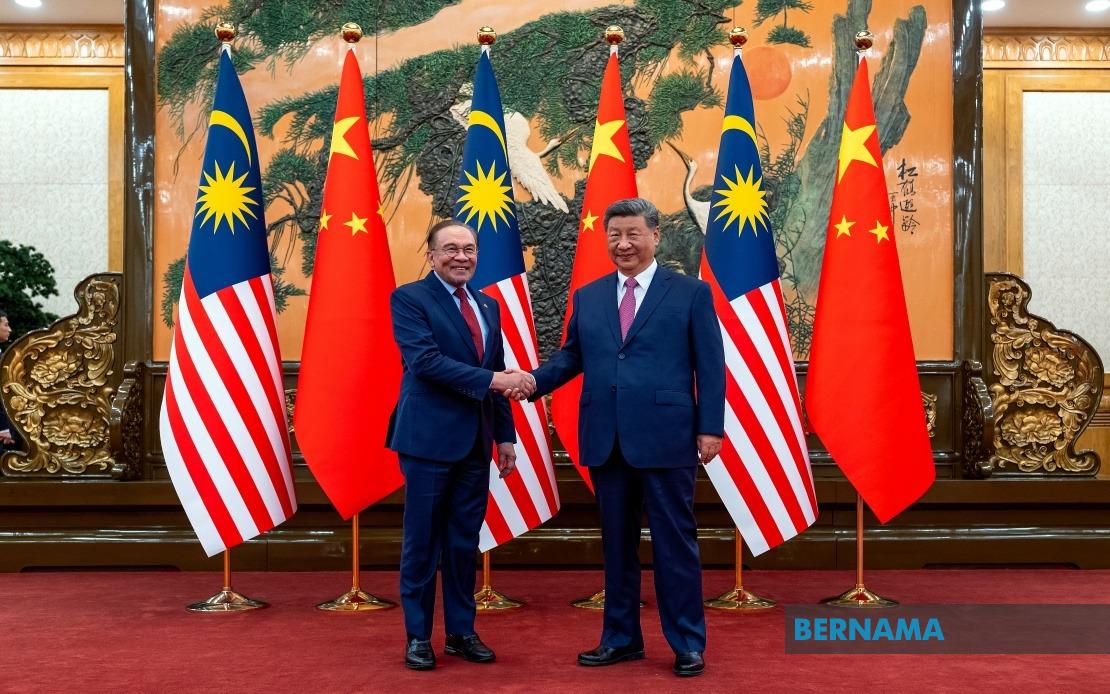
Prime Minister Datuk Seri Anwar Ibrahim has conveyed official congratulations to the Chinese government on the 105th anniversary of the Chinese Communist Party, underscoring Malaysia's enduring commitment to its relationship with Beijing. Through a letter addressed to Chinese President Xi Jinping, Anwar transmitted warm wishes from both the Malaysian government and its citizens, reflecting the diplomatic protocols that govern relations between the two nations.
In announcing the correspondence via social media, Anwar highlighted his appreciation for the extensive historical journey undertaken by China's ruling party, acknowledging how its governance has contributed to the country's substantial development over more than a century. The Prime Minister specifically referenced the civilisational heritage, historical continuity and inherited values that have shaped China's trajectory, presenting a recognition of the broader context within which contemporary Sino-Chinese governance operates.
A particularly significant element of Anwar's message concerned Malaysia's pioneering diplomatic recognition of the People's Republic of China on May 31, 1974. This historical milestone held particular importance as Malaysia became the first non-communist nation in Southeast Asia to extend formal diplomatic recognition to China, a decision that Anwar characterised as demonstrating exceptional wisdom and strategic foresight by Malaysian policymakers of that era. The recognition occurred during the Cold War period when regional geopolitical tensions ran high, making Malaysia's move diplomatically consequential.
The 1974 recognition has proven foundational to Malaysia-China bilateral relations, which have since developed into a multifaceted partnership spanning more than five decades. What began as a bold diplomatic initiative has matured into institutional relationships characterised by sustained engagement across multiple domains. Anwar's invocation of this historical benchmark served to ground contemporary ties in a concrete achievement, demonstrating that Malaysia-China relations possess both depth and durability.
Beyond historical acknowledgment, Anwar's letter reiterated Malaysia's contemporary strategic objectives regarding China. The Prime Minister emphasised the nation's commitment to progressively deepen cooperation with Beijing across various sectors and domains. This commitment operates within a framework explicitly anchored to three fundamental principles: mutual respect, reciprocal trust, and arrangements designed to deliver shared benefits for both nations. These foundational pillars represent the values Kuala Lumpur seeks to embed within its China relationship.
The timing and substance of Anwar's message also reflected broader Southeast Asian dynamics. Malaysia's relationship with China carries particular significance given China's expanding economic and geopolitical influence throughout the region. As a major Southeast Asian economy and a nation with substantial Chinese diaspora populations, Malaysia occupies a position where balancing relationships with Beijing requires careful navigation. Anwar's communication demonstrated continued commitment to engagement with China while positioning Malaysia as an active participant in regional prosperity initiatives.
The emphasis on regional peace, stability and prosperity in Anwar's statement addresses concerns that extend beyond bilateral Malaysian interests. These objectives align with Malaysia's broader regional role and its participation in multilateral forums such as ASEAN. By framing Malaysia-China cooperation within this wider regional context, Anwar positioned bilateral advancement as contributing to collective Southeast Asian benefit rather than narrow bilateral gain. This framing carries diplomatic significance, particularly given regional sensitivities regarding great power competition.
The congratulatory letter also implicitly affirmed Malaysia's consistent diplomatic approach toward major powers. Rather than adopting postures of alignment or confrontation, Malaysian foreign policy traditionally emphasises practical engagement based on mutual interest and respect for national sovereignty. Anwar's overture to Xi Jinping exemplified this pragmatic approach, extending courtesies while clearly articulating Malaysia's interests and principles.
For Malaysia's domestic political landscape, the communication served to reinforce continuity in foreign policy. Anwar's government has maintained the fundamental orientation toward China established by previous administrations, avoiding disruption that might complicate economic relationships or regional standing. Given Malaysia's reliance on Chinese investment in infrastructure, manufacturing and technology sectors, sustaining positive diplomatic atmospherics carries tangible implications for domestic economic performance and development priorities.
The letter also carried implications for how Malaysia positions itself within broader geopolitical competition in the Indo-Pacific region. As major powers contend for influence and alignment, Malaysia's demonstrated capacity to maintain substantive engagement with China while preserving other strategic relationships remains valuable. This balancing act increasingly defines Southeast Asian statecraft, and Anwar's communication illustrated Malaysia's intention to remain a player capable of engaging multiple powers without abandoning core principles or regional autonomy.
Moving forward, Anwar's message suggests Malaysia will continue pursuing deepened cooperation with China across multiple domains while maintaining its distinctive approach to balancing competing international pressures. The commitment to shared regional prosperity represents both genuine interest and careful diplomatic positioning, reflecting how contemporary Malaysian policymakers navigate complex geopolitical terrain. Whether through trade expansion, infrastructure development, or technological collaboration, the trajectory appears set toward closer Malaysia-China integration within parameters designed to protect Malaysian interests and regional stability.

