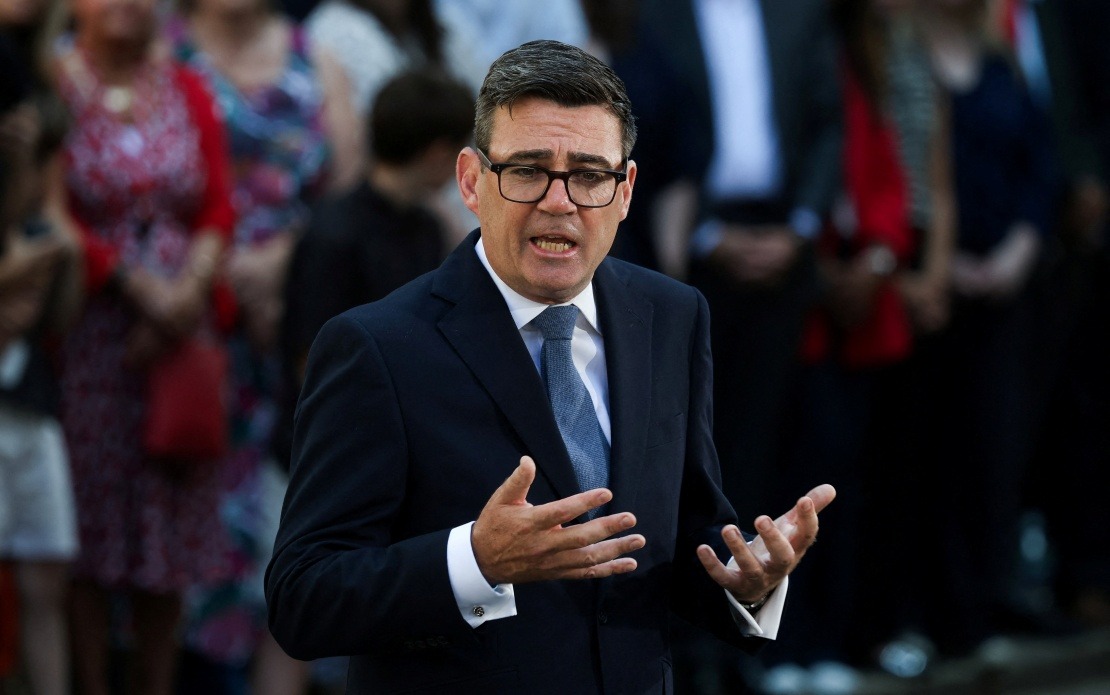
Prime Minister Datuk Seri Anwar Ibrahim has formally congratulated Andy Burnham following his appointment as the United Kingdom's seventh Prime Minister in a decade, signalling Malaysia's readiness to deepen engagement with Britain's new Labour administration. In a message posted on social media on July 20, Anwar outlined an ambitious agenda for bilateral cooperation spanning trade, technology and defence, framing the transition as an opportune moment to reinvigorate the longstanding partnership between the two nations.
The Malaysian leader's swift acknowledgement of Burnham's elevation reflects the importance Kuala Lumpur places on its relationship with London, particularly as the region navigates shifting geopolitical alignments and economic partnerships. Burnham's ascension to the premiership on Monday followed Labour's decisive election victory and came after Keir Starmer's formal resignation at Buckingham Palace, marking the culmination of Britain's recent political upheaval.
Among Anwar's stated priorities is the finalisation of a Digital Trade Agreement between Malaysia and the UK, a mechanism that would facilitate commerce in digital services and data flows—sectors of growing importance to both Southeast Asia and Britain as they position themselves in the global knowledge economy. Beyond trade mechanics, the Prime Minister identified artificial intelligence, digitalisation, clean energy and defence as areas ripe for collaborative advancement, reflecting shared interests in technological innovation and strategic security.
Particularly noteworthy in Anwar's congratulatory message was his commendation of Burnham's acknowledgement regarding Britain's initial response to the Gaza crisis. Anwar specifically praised the incoming Prime Minister's candid admission that the UK's position had fallen short of moral expectations and his renewed advocacy for intensified international pressure against the Israeli regime. This element of Anwar's statement underscores how Middle Eastern geopolitics continues to influence diplomatic messaging even as leaders address bilateral economic and security agendas.
In Anwar's framing, such moral clarity on global humanitarian crises represents a refreshing departure from what he characterised as Western ambivalence. His emphasis on this point suggests that Malaysia's diplomatic outreach to London will encompass not merely transactional exchanges but also alignment on principles governing international conduct, particularly regarding Palestinian rights—a perennial concern for Malaysian constituencies with deep historical and cultural ties to the Arab world.
The timing of this diplomatic overture carries additional significance given that 2025 will mark seven decades of formal Malaysia-UK diplomatic relations. Anwar explicitly identified this milestone as a catalyst for both nations to recommit to their partnership and establish a forward-looking agenda that addresses contemporary challenges. For Malaysia, such commemorative moments serve as platforms to reset bilateral ties and secure commitments on outstanding priorities without the acrimony that sometimes accompanies routine negotiations.
The Prime Minister also extended appreciation to Keir Starmer for his contributions during his tenure as UK Prime Minister, a courteous acknowledgement that reflects Malaysia's interest in maintaining positive relations regardless of which party governs in London. By publicly wishing Starmer well in future endeavours, Anwar demonstrated diplomatic professionalism while simultaneously signalling to Burnham that Malaysia values consistency and continuity in bilateral engagements.
For Malaysian observers, this development carries implications for several ongoing policy areas. Defence cooperation between Malaysia and Britain spans maritime security, counterterrorism and professional military exchanges—domains where the incoming Burnham administration will inherit existing frameworks and may expand given Labour's historical emphasis on strengthening alliance relationships. The digital trade agreement referenced by Anwar could facilitate Malaysian technology companies' access to British markets while providing UK firms opportunities in Southeast Asia's dynamic digital economy.
The emphasis on clean energy cooperation reflects global climate commitments both nations have undertaken and the potential for technological transfer and investment partnerships. Malaysia has positioned itself as a regional hub for renewable energy innovation and downstream industries, while Britain possesses advanced expertise in offshore wind and grid modernisation technologies that could benefit Malaysian energy transitions.
Burnham's appointment marks the beginning of a new chapter in UK governance following months of Conservative administration that concluded with multiple prime ministerial changes. For regional observers, the restoration of Labour to power carries implications for British engagement strategies across Southeast Asia, historically a region where London has sought to maintain influence through institutional mechanisms like the Commonwealth and bilateral security arrangements such as the Five Power Defence Arrangements involving Malaysia.
Anwar's proactive diplomatic outreach demonstrates Malaysia's strategic calculation that engaging early with a newly empowered UK leadership offers opportunities to shape priorities and secure commitments before other bilateral pressures accumulate. The articulation of specific cooperation areas—digital trade, artificial intelligence, clean energy and defence—provides Burnham's team with clear entry points for substantive engagement rather than ceremonial exchanges.
The broader context reveals how Malaysia, despite its focus on Southeast Asian regionalism and non-aligned positioning, continues to value relationships with major Western democracies. The Malaysia-UK partnership represents a blend of historical legacy—rooted in colonial administration and post-independence Commonwealth ties—and contemporary strategic interest in leveraging British capabilities across technology, finance and security sectors to advance Malaysian development objectives.
Looking forward, the success of deepened Malaysia-UK cooperation will depend on translating Anwar's stated aspirations into concrete institutional arrangements and resource commitments. Whether Burnham's administration proves willing to prioritise Southeast Asian partnerships amid competing demands in Europe, Northern Ireland and global Britain positioning remains to be seen. Nevertheless, Anwar's immediate and substantive response signals Malaysia's determination to shape this relationship actively rather than await British initiative.

