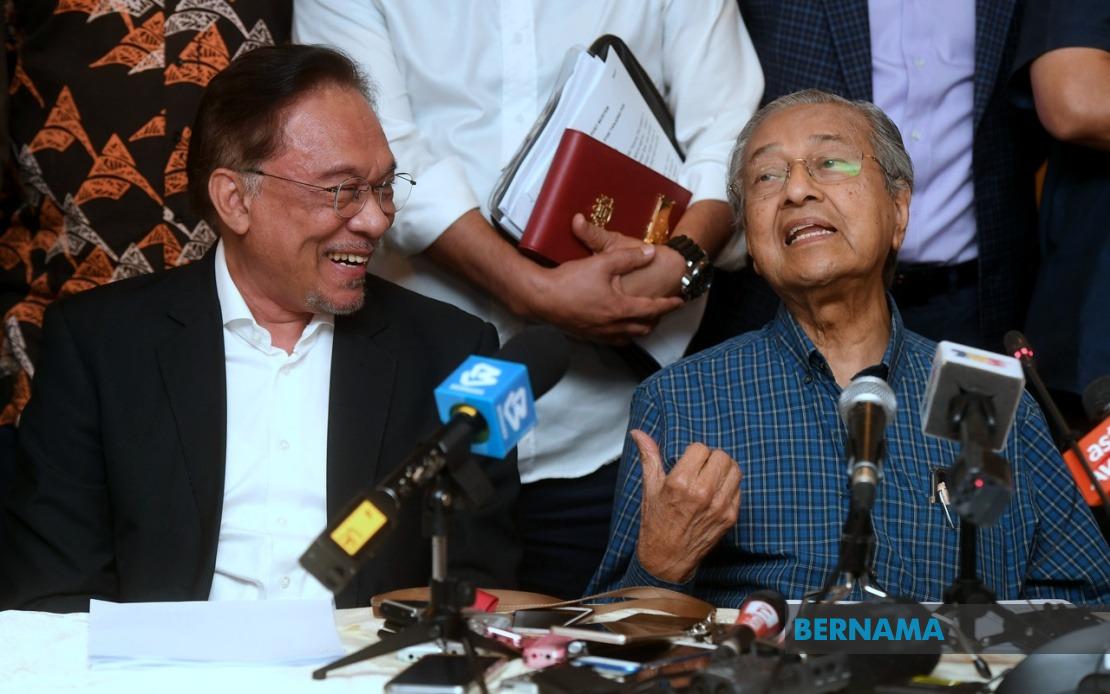
Prime Minister Datuk Seri Anwar Ibrahim has publicly wished former Prime Minister Tun Dr Mahathir Mohamad on reaching his 101st birthday, offering prayers for the veteran statesman's continued wellbeing and good health. The birthday greeting, shared via Facebook on July 10, represents a moment of civility between two political figures whose relationship has been notably contentious at various points in Malaysian politics. Anwar's message, which expressed hope that Dr Mahathir would "continue to be blessed with grace, good health and be under His blessings," signals the kind of institutional respect often shown between holders and former holders of the nation's highest office, regardless of their personal or political differences.
Tun Dr Mahathir, born on July 10, 1925, in Alor Setar, Kedah, has been one of Malaysia's most influential and divisive political figures across multiple decades. His original tenure as Prime Minister spanned an unprecedented 22 years, from 1981 through 2003, a period that fundamentally reshaped Malaysia's political and economic landscape. During those two decades, Dr Mahathir oversaw massive infrastructure projects, pursued the Vision 2020 development agenda, and established himself as a forceful leader who was willing to challenge both Western powers and domestic opponents. His government implemented major policies that transformed the manufacturing sector, industrialized rural areas, and positioned Malaysia as a regional economic powerhouse.
What remains remarkable about Dr Mahathir's political journey is his return to the highest office at an extraordinary age. When he was reappointed as Prime Minister in 2018 at 92 years old, he became the world's oldest serving prime minister, a distinction that captured global attention and generated considerable debate about age, capability, and leadership continuity. His second stint, which lasted until 2020, came following the political upheaval surrounding the 1Malaysia Development Berhad scandal and represented a significant comeback for someone many had believed had permanently departed from frontline politics. This second chapter demonstrated that Malaysian voters were willing to overlook age concerns when they perceived an urgent need for change and strong leadership.
The relationship between Anwar and Dr Mahathir has been complicated and historically adversarial. Anwar served under Dr Mahathir for many years, including as Finance Minister and Deputy Prime Minister, before their dramatic falling out in 1998 led to Anwar's detention under the Internal Security Act and subsequent trial on charges that were highly controversial both domestically and internationally. That episode left scars on Malaysian politics that have never fully healed. However, in recent years and particularly during the 2018 political transition, both men found themselves on the same side against what they perceived as a greater threat to the nation's political integrity. Their cooperation during that period, while pragmatic rather than warm, suggested that shared concerns about national governance could supersede historical grievances.
As Anwar consolidates his position as Prime Minister, gestures like the birthday greeting to his predecessor carry symbolic weight in Malaysian political culture. Such acknowledgements of respect for elder statesmen and former leaders, regardless of past disputes, reflect established norms of parliamentary democracy and the importance placed on continuity of institutions rather than personality-driven politics. The public nature of the greeting through social media ensures it reaches both the Malaysian public and the international community, reinforcing a message that despite fierce political competition, there exists a baseline of institutional civility.
Dr Mahathir's remarkable longevity has made him a living link to Malaysia's post-independence history. He witnessed and shaped the nation's transformation from a newly independent state into a middle-income country with aspirations toward developed-nation status. His long life has spanned the entirety of Malaysia's modern political era, from the tumultuous early years through the rapid economic expansion and, more recently, through periods of significant political realignment. His survival to 101 years is itself a testament to good health and vitality, qualities that have defined his public persona throughout his life.
The birthday greeting also reflects broader patterns in Southeast Asian politics, where respect for age and experience, particularly among founding or transformational leaders, remains an important cultural value. In societies across the region, leaders who fundamentally shaped national trajectories are often accorded special recognition and reverence even by political opponents. This approach differs from some Western democracies where former leaders often fade from public prominence more quickly. In Malaysia, figures like Dr Mahathir continue to command attention and influence discourse even after stepping down from office, and maintaining respectful relationships with such figures has become part of the political establishment's unwritten code.
Looking forward, Dr Mahathir's continued presence in Malaysian public life, whether as an elder voice offering occasional commentary or simply as a living symbol of the nation's political evolution, will remain significant. As Malaysia navigates complex challenges including political fragmentation, economic pressures, and regional competition, the perspective of someone who has shaped much of the nation's modern history carries weight in public discourse. Anwar's birthday wishes, therefore, transcend mere courtesy; they represent an acknowledgement of Dr Mahathir's enduring place in Malaysia's political narrative and a reaffirmation of the importance of institutional continuity even amidst personal and political differences.

