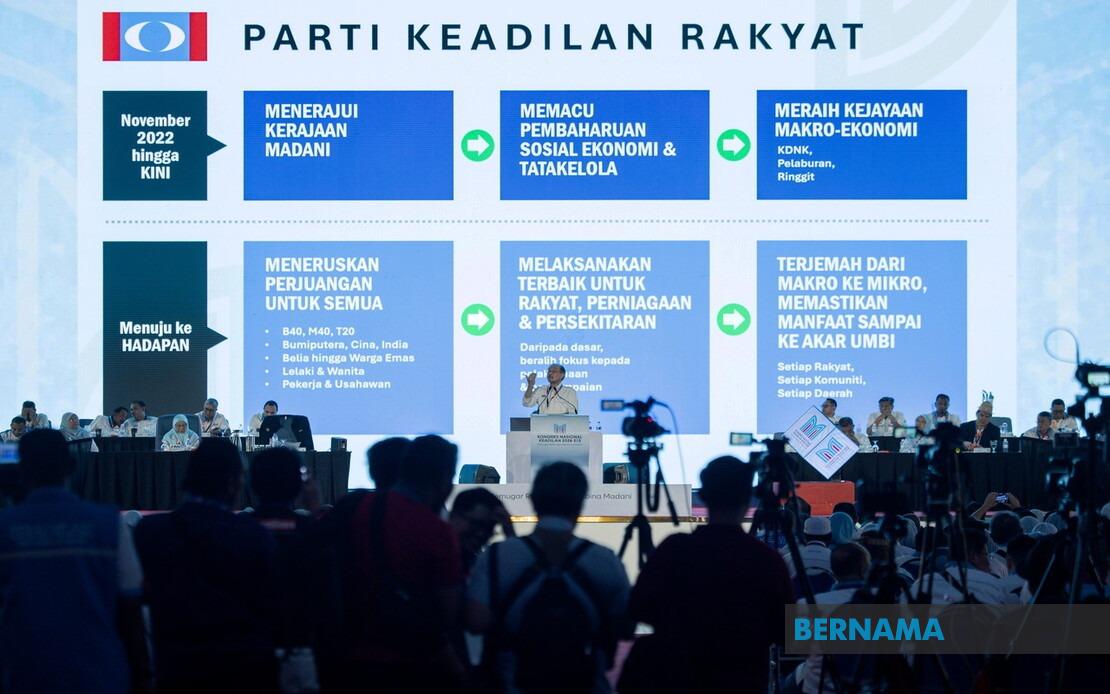
In a significant reorganisation of its leadership structure, PKR president Datuk Seri Anwar Ibrahim has placed the party's operational responsibilities directly in the hands of Home Minister Datuk Seri Saifuddin Nasution Ismail, tasking him with performing the duties of deputy president on an interim basis. The announcement came during Anwar's closing remarks at the PKR National Congress 2026 held at the Melaka International Trade Centre in Ayer Keroh on August 16, marking a reshuffling of senior party portfolios designed to strengthen the ruling coalition's administrative machinery.
Anwar's decision to delegate the deputy president's responsibilities reflects his confidence in Saifuddin Nasution's capability to manage the party machine. The Prime Minister described the appointment as a natural progression, emphasising that the Home Minister's familiarity with his working methods and longstanding loyalty made him the ideal candidate to steer the party's day-to-day affairs. The announcement carries particular weight given Saifuddin Nasution's existing commitments as head of the Home Ministry, one of the government's most demanding portfolios, underscoring the trust Anwar places in his ability to juggle multiple high-stakes responsibilities.
The formal decision to grant Nurul Izzah Anwar a temporary leave of absence had been previously endorsed by PKR's Central Leadership Council on August 6, with party information chief Datuk Seri Fahmi Fadzil confirming the arrangement at that time. The interim appointment arrangement circumvents the need for formal constitutional procedures, allowing the party to maintain continuity in its hierarchical structure without necessitating a full deputy president election. This pragmatic approach reflects how Malaysia's major political parties increasingly manage leadership transitions and absences through executive mandates rather than lengthier procedural channels.
Accompanying the announcement were several other significant leadership appointments that restructure PKR's upper echelon. Vice-president Datuk Seri Amirudin Shari received promotion to the position of party election director, a role that will place him at the centre of the coalition's electoral strategy and campaign coordination efforts. Simultaneously, Tengku Datuk Seri Zafrul Tengku Abdul Aziz was designated as coordinator in the Prime Minister's Office, positioning him as a key liaison between the party and the federal administration. These moves suggest a broader consolidation of Anwar's inner circle, strengthening his direct control over critical party functions.
Anwar devoted considerable attention during his speech to the ongoing political challenges facing the party in Negeri Sembilan, particularly following the state's August 1 election which resulted in PKR setbacks. He directly addressed discontent among party members by calling on vice-president Datuk Seri Aminuddin Harun to refocus his energy on training and development of younger party cadres, effectively redirecting Aminuddin away from state-level political management. The Prime Minister's intervention suggests an attempt to defuse tensions while preserving Aminuddin's position within the broader party hierarchy.
The Negeri Sembilan situation had become increasingly contentious, with six division chiefs publicly calling for a review of Aminuddin's role as chairman of the state PKR leadership council. Rather than removing Aminuddin or acceding to demands for his replacement, Anwar adopted a diplomatic approach that acknowledges concerns while retaining the former Menteri Besar's considerable experience within the party structure. This move reflects the delicate balancing act required in managing coalition politics, where removing a senior figure entirely could trigger factional divisions while maintaining him in his existing position risks alienating grassroots members frustrated with electoral performance.
Anwar's characterisation of the Negeri Sembilan electoral loss as a collective responsibility rather than an individual failing represents an attempt to distribute accountability across the party rather than concentrating blame on any single leader. By framing the defeat as a shared challenge requiring systemic correction, the Prime Minister seeks to prevent the emergence of internal scapegoating that could fragment party cohesion. His explicit statement that Aminuddin should not shoulder sole responsibility for the loss, combined with his call for the party machinery to learn from mistakes, suggests Anwar recognises that demoralising senior figures through public criticism could undermine party morale more broadly.
The timing of these announcements during the party congress provided Anwar with an optimal platform to communicate leadership decisions to the broader PKR membership simultaneously. Congressional venues serve as formal occasions for articulating party direction and settling internal matters before assembled delegates and media representatives, lending legitimacy and transparency to otherwise executive decisions. Anwar's decision to explain his reasoning for each appointment reflected a concern with securing grassroots acceptance rather than simply imposing changes from above, a calculated approach to party management that seeks buy-in rather than compliance.
For Malaysian political observers, these developments illustrate how coalition governance operates in practice, particularly regarding the distribution of responsibilities among senior figures balancing ministerial duties with party roles. Saifuddin Nasution's expanded portfolio now encompasses both the Home Ministry, responsible for internal security and administrative affairs, and proxy control over PKR's internal party operations. This concentration of power in his hands reflects Anwar's assessment that maintaining tight management of party structures serves the coalition's broader political interests during what remains a relatively precarious period of governance.
The appointments also signal how succession planning and leadership development operate within PKR's hierarchical structure. By elevating Amirudin and Zafrul to prominent roles while repositioning Aminuddin toward cadre development, Anwar appears to be grooming a secondary tier of leaders for potential future advancement. These moves create clearer pathways for ambitious younger figures while maintaining respect for senior party veterans, a political strategy designed to prevent generational resentment from destabilising party unity.
For Southeast Asian coalition politics more broadly, PKR's approach to managing leadership transitions offers insights into how dominant parties maintain internal discipline while accommodating competing factional interests. The decision to grant Saifuddin Nasution interim authority rather than forcing a party-wide election reflects confidence in maintaining stability through executive mandate, a preference increasingly common in the region's political systems where consensus among senior figures often supersedes formal democratic procedures within party structures themselves.

