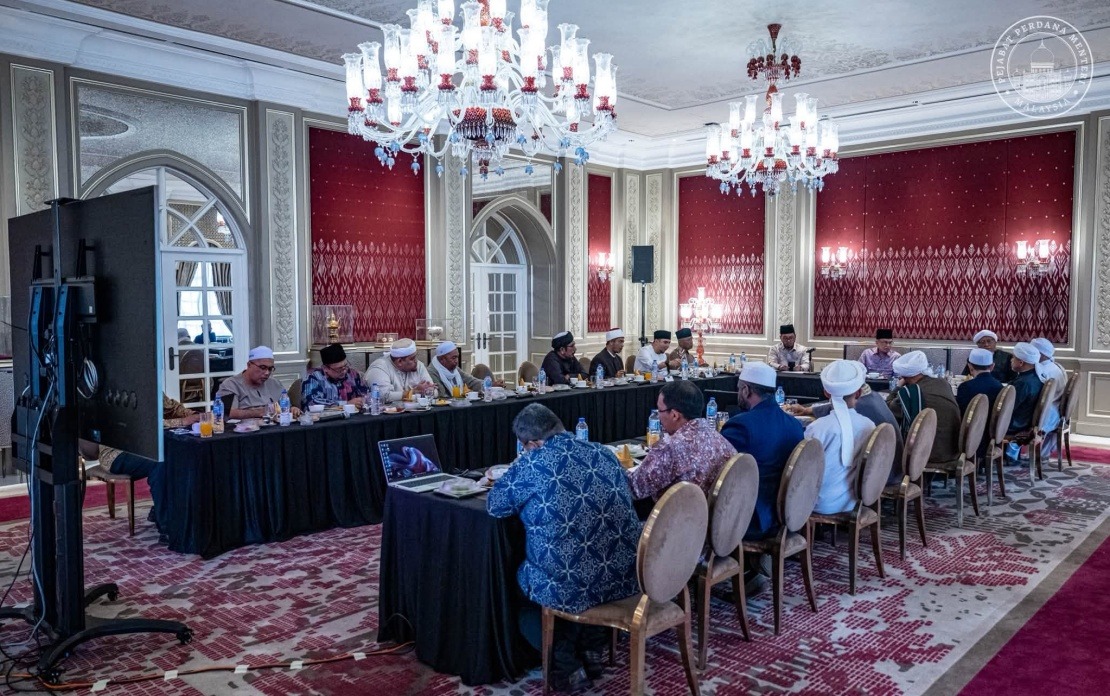
Prime Minister Datuk Seri Anwar Ibrahim has underscored the strategic importance of regular consultations with religious scholars, framing these exchanges as essential mechanisms for ensuring that government initiatives remain aligned with Islamic principles and responsive to the evolving needs of Malaysia's Muslim population. Speaking after a series of discussions held in conjunction with Maulidur Rasul celebrations, Anwar characterised such engagements not as routine administrative meetings but as deliberative sessions that allow policymakers to reflect critically on their approach and recalibrate decisions in light of scholarly counsel.
The Prime Minister's emphasis on these consultations reflects a broader governance philosophy that positions Islamic knowledge as a foundational pillar of policy formulation. By framing dialogue with religious experts as opportunities for institutional learning rather than mere ceremonial encounters, Anwar signals that the government views the input of scholars as integral to the legitimacy and efficacy of its decisions affecting the Muslim community. This approach carries particular significance in Malaysia's multi-religious context, where the government must balance competing interests while maintaining credibility among the Islamic community and religious institutions.
During the afternoon sessions, Anwar engaged with Sheikh Dr Muhyiddin Awwamah, a representative of Darul Hadis al-Awwamiyyah, one of the region's respected centres for Islamic scholarship. The choice to meet with figures from established hadith academies suggests the government's interest in drawing upon deep scholarly traditions rather than ad-hoc opinions, reflecting a preference for engaging with institutions that command respect within Islamic intellectual circles across Southeast Asia. This selection strategy indicates thoughtfulness in how the administration sources religious guidance.
The Prime Minister also acknowledged the scholarly contributions of Sheikh Dr Muhyiddin's father, Al-'Allamah Sheikh Muhammad bin Awwamah, a prominent figure in Islamic academia whose works on hadith have influenced generations of scholars. Anwar's public recognition of this intellectual lineage carries symbolic weight, demonstrating respect for established scholarly authority and positioning the government as a patron of Islamic learning. Such gestures matter in maintaining relationships with influential religious figures whose public endorsement or critique can significantly shape perceptions of government legitimacy within Muslim communities.
Anwar framed his engagement with religious scholars as part of a continuous endeavour to understand how Islam can flourish within Malaysia's contemporary context. This framing addresses a persistent challenge for Muslim-majority governments in Southeast Asia: reconciling traditional Islamic jurisprudence with modern governance demands. By positioning himself as an active listener rather than an authority imposing decisions, the Prime Minister appears to be attempting to build consensus around government policies by making religious scholars feel heard and valued in the policy process.
The reference to seeking wisdom on "the development and future of Islam in Malaysia" suggests the government is grappling with substantive questions about how Islamic institutions and principles should evolve as the country navigates demographic change, technological advancement, and regional integration. For Malaysian readers, this signals that major policy discussions affecting Islamic education, religious administration, and Islamic finance may be drawing on input from scholarly consultations, though the specific policy areas under discussion were not detailed.
Anwar's characterisation of scholarly books as "intellectual legacies" rather than merely informational repositories reveals an understanding that engagement with Islamic scholarship involves more than extracting practical advice. It encompasses participation in a long chain of intellectual tradition that connects contemporary policymakers to historical Islamic thought and positions current deliberations within a continuum of scholarly discourse. This perspective potentially appeals to conservative religious constituencies while also suggesting that the government values intellectual depth in its approach to religious matters.
The timing of these consultations during Maulidur Rasul observances adds a devotional dimension to what might otherwise appear as purely functional governance activities. This linkage between religious celebration and policy consultation reinforces the narrative that government engagement with Islamic scholarship is spiritually motivated rather than instrumentally motivated, though analysts may reasonably question whether such framing fully captures the strategic interests involved in managing relationships with religious institutions.
For Malaysia's broader governance landscape, Anwar's insistence on the value of religious scholar input reflects recognition that sustainable policies affecting Muslim communities require more than top-down implementation. The approach acknowledges that religious scholars command alternative sources of authority and legitimacy within Muslim constituencies, and that government effectiveness depends partly on aligning major initiatives with positions held by respected religious figures. This dynamic has shaped Malaysian politics for decades but appears to be receiving renewed emphasis under current leadership.
The significance of these consultations extends beyond Malaysia's borders, as decisions made by the government on Islamic matters often reverberate through Southeast Asia's Muslim networks. Religious scholars from Malaysia's institutions frequently advise counterparts across the region, and Malaysian government policies on Islam serve as reference points for other Muslim-majority nations in the region navigating similar modernisation questions. Thus, consultations conducted in Kuala Lumpur can influence Islamic governance approaches across the wider region.
Moving forward, the apparent commitment to regular engagement with religious scholars may shape how major policy initiatives are presented and defended publicly. Government announcements affecting Islamic institutions, religious education, or matters touching on Islamic law may increasingly be framed as reflecting scholarly consensus rather than purely executive decision-making, potentially increasing public acceptance among religious communities while raising questions about the appropriate boundaries between government authority and religious institutional influence. This balance will likely remain a defining feature of Malaysian governance under current leadership.

