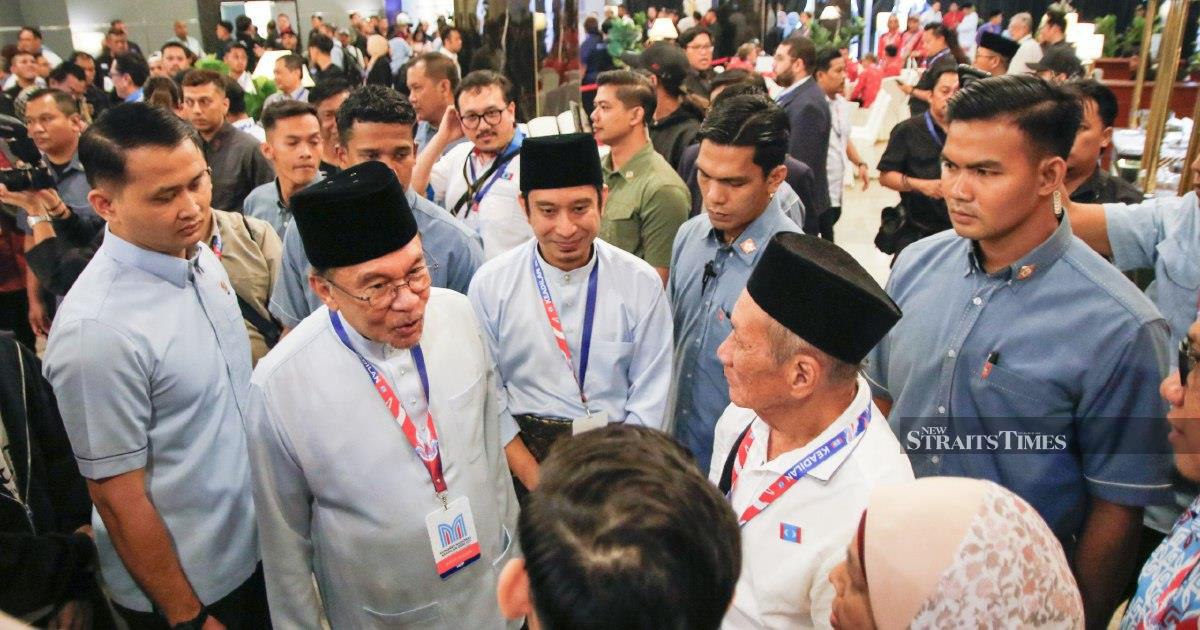
Prime Minister Datuk Seri Anwar Ibrahim moved swiftly on Monday to extinguish speculation about deteriorating ties with his deputy, Datuk Seri Dr Ahmad Zahid Hamidi, when pressed at an event in Ayer Keroh. The denial comes amid periodic murmurs within political circles about potential strains in the partnership that underpins Malaysia's current coalition government. Anwar's assertion that relations remain sound at the national level represents an attempt to project stability and continuity within the federal administration, even as grassroots tensions occasionally surface within the coalition's component parties.
The clarification underscores the delicate equilibrium that sustains the present ruling coalition, which depends on collaboration between Anwar's Pakatan Harapan bloc and the United Malays National Organisation under Zahid's leadership. Any genuine rupture between the two top executives could destabilise the government's parliamentary majority and trigger cascading political consequences across the nation. Both leaders have invested heavily in portraying their partnership as functional and pragmatic, despite ideological differences that historically separated their respective political camps before the 2023 general election.
Zahid's position as Deputy Prime Minister represents a strategic accommodation within Malaysia's power-sharing architecture. His presence in the top two roles—combined with UMNO's parliamentary representation—signals Anwar's commitment to inclusive governance and his willingness to work across traditional political divides. This arrangement, while sometimes strained by competing interests and personalities, has managed to deliver legislative continuity and avoid the constitutional crises that plagued previous administrations.
Periodic reports of friction typically emerge from lower organisational levels, where representatives from different parties navigate competing agendas at state and local government tiers. These grassroots tensions occasionally percolate into national discourse, prompting clarifications from senior leadership designed to reassure stakeholders and markets that the central government remains cohesive. Anwar's intervention, though brief, appears calibrated to preempt further speculation that might undermine investor confidence or encourage coalition partners to reconsider their alignment.
The broader context of Malaysian politics reveals that such working relationships between ideologically disparate parties require constant diplomatic management. The Prime Minister and Deputy Prime Minister cannot afford to allow personal chemistry or policy disagreements to metastasise into public controversy, as this would invite opportunistic opposition figures to exploit perceived divisions. Anwar's measured response reflects sophisticated political awareness of these dynamics.
Zahid himself, as UMNO's chairman and a veteran of Malaysian politics, understands the mutual dependency that characterises their arrangement. His party, while retaining significant parliamentary seats, depends on coalition partnership to remain within government rather than opposition. This structural reality, though rarely articulated explicitly, creates incentives for both men to maintain public united fronts regardless of tactical disagreements.
For Southeast Asian observers and international partners monitoring Malaysian political stability, such assurances carry practical weight. Foreign investors and regional diplomats monitor the health of Malaysia's ruling coalition closely, as instability could disrupt economic policy continuity and complicate bilateral relationships. Anwar's statement, therefore, functions partly as an external confidence-building measure.
The Prime Minister's comments also reflect awareness that Malaysian voters increasingly value governmental stability and competence over partisan loyalty. Public concern about economic performance, infrastructure development, and service delivery quality means that perceived instability within the cabinet can translate into declining support across demographic groups. By insisting on cordial working relations with his deputy, Anwar signals that the administration remains focused on delivery rather than internal politics.
Moving forward, maintaining this working relationship will require both leaders to manage periodic dissents on policy matters while preventing such disagreements from becoming public spectacles. The coalition's survival depends on their ability to accommodate competing pressures from their respective party structures, regional interests, and the broader electorate's expectations. Zahid's role, both politically and symbolically, remains important to the coalition's legitimacy, particularly given UMNO's deep institutional roots and electoral reach in peninsular Malaysia.

