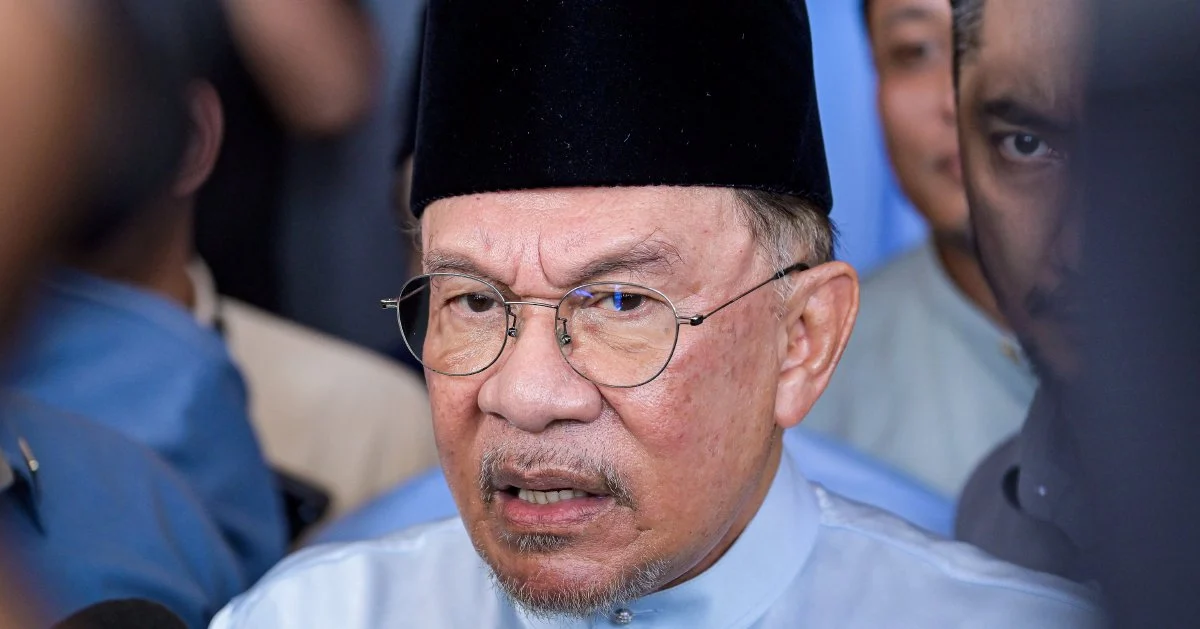
Prime Minister Datuk Seri Anwar Ibrahim has categorically rejected allegations that officials acted under instruction to prevent caretaker Johor Menteri Besar Datuk Onn Hafiz Ghazi from attending Felda-related events. Speaking at Dengkil, Anwar distanced himself and his administration from claims that a deliberate exclusion directive had been issued against the caretaker chief minister.
The denial comes at a politically sensitive moment, as Malaysia approaches its electoral cycle and state-level dynamics in Johor—traditionally a federal government stronghold—continue to draw national scrutiny. Onn Hafiz, who serves as acting Menteri Besar pending electoral outcomes, has been a prominent figure in Umno-Barisan Nasional politics and commands significant influence within his party's grassroots network. Any perceived marginalisation of such figures could have ramifications for intra-coalition cohesion and messaging ahead of upcoming electoral contests.
Felda, the Federal Land Development Authority, represents a crucial constituency within Malaysia's political landscape. The statutory body manages hundreds of thousands of hectares across the peninsula and administers settlement schemes affecting hundreds of thousands of beneficiaries and their families. Access to Felda platforms provides politicians with direct channels to communicate with this economically significant voter base, making inclusion or exclusion from such gatherings matters of both symbolic and practical political importance.
The emergence of these allegations suggests underlying tensions within ruling coalition circles regarding access to government-linked entities and public platforms. Such disputes, whether substantiated or not, risk projecting an image of disunity at precisely the moment when Anwar's administration seeks to consolidate its political position. The prime minister's swift and emphatic rebuttal indicates awareness of how such narratives can circulate rapidly through political networks and media channels, potentially damaging coalition cohesion.
Onn Hafiz's status as caretaker Menteri Besar carries particular weight in this context. Caretaker administrations occupy a constitutionally defined space where officials must maintain governance functions while remaining politically neutral pending fresh electoral mandates. This balancing act becomes complicated when questions arise about their access to public institutions and events, as such restrictions could be construed as politically motivated even if presented in administrative terms.
For Malaysian observers, the incident reflects broader questions about how political authority is exercised across different tiers of government. Federal-state relations remain delicate, particularly when state leadership and federal leadership derive from the same coalition but may harbour differing strategic priorities. The Felda access issue, however it originated, exposes potential friction points where federal agencies answerable to the prime minister's office might be deployed in ways that affect state-level politicians' ability to engage their constituencies.
The backdrop of Johor politics adds further complexity. The state has experienced significant political churning in recent years, with various configurations of government reflecting broader national trends and local factional dynamics. Onn Hafiz himself represents continuity with Umno's traditional base in Johor, and his caretaker role underscores the transitional nature of state politics. Any suggestion that federal mechanisms are being weaponised against sitting state officials, even in a caretaker capacity, could inflame sensitivities about federal overreach.
Anwar's categorical denial appears designed to reassert control over the narrative and prevent further damage to coalition unity. By personally addressing the matter, the prime minister has signalled that such allegations will not be tolerated and that his administration operates under principles of fair access to government platforms. This intervention may also serve to reassure other coalition members that federal mechanisms will not be selectively deployed against them for factional reasons.
The incident underscores the ongoing importance of Felda as a political touchstone in Malaysian politics. Politicians across the spectrum recognise the settlement communities as pivotal swing constituencies, and access to their platforms remains fiercely contested. Restrictions or perceived restrictions on any politician's ability to engage with Felda settlers can trigger alarm bells within the broader political establishment, particularly when they come from the federal level.
Moving forward, the alleged barring incident and its refutation will likely be absorbed into the broader tapestry of coalition politics, but the underlying issues it raises about federal-state coordination and fair treatment of coalition partners will persist. How the prime minister's administration handles such matters in coming months will significantly influence perceptions of its commitment to internal coalition discipline and equitable governance, particularly in states where political power remains contested among Barisan Nasional components.

