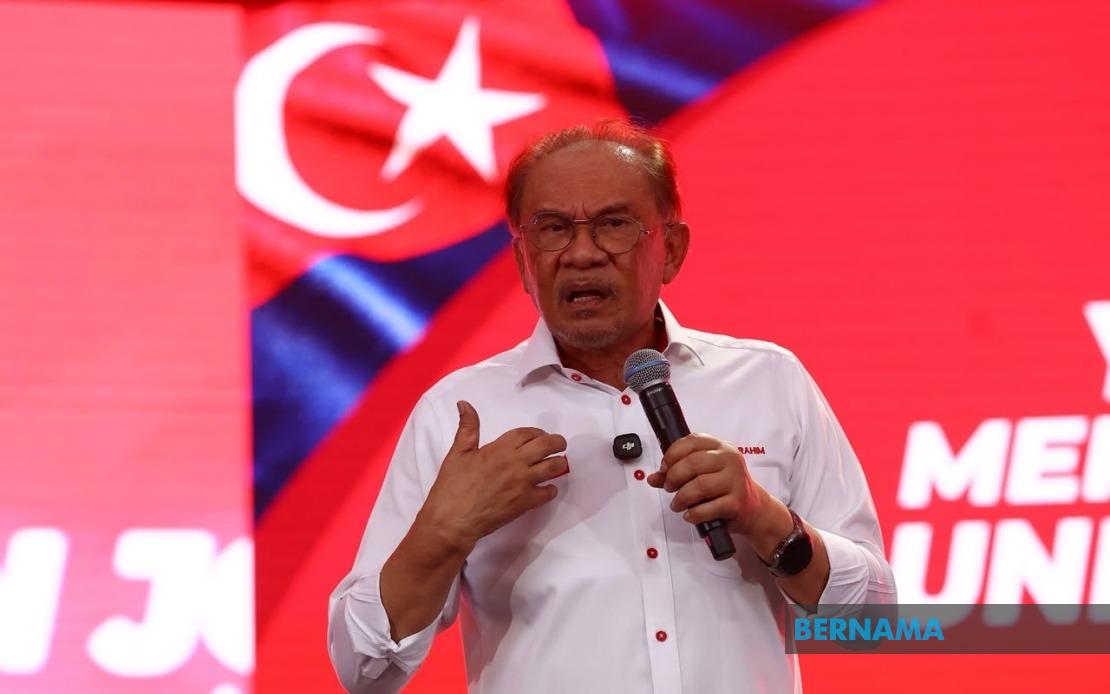
Prime Minister Datuk Seri Anwar Ibrahim moved to quash circulating allegations that he had acquired a new BMW vehicle for his own purposes during a campaign rally in Johor on July 9, dismissing the claims as false narratives designed to undermine his public standing. Speaking at the 'Yok! Meriahkan Johor! Undi Harapan' programme in Senggarang during campaigning for the 16th Johor state election, Anwar directly addressed the controversy brewing on social media platforms, emphasizing that the BMW in question was neither newly purchased nor personally owned.
The Prime Minister's frustration with the narrative was evident as he challenged the veracity of claims suggesting a contradiction between his public rhetoric on poverty alleviation and alleged personal extravagance. The accusation carried particular sting given Anwar's consistent positioning as an advocate for ordinary Malaysians and his calls for fiscal responsibility within government. By framing the BMW controversy as a deliberate falsehood, Anwar sought to reposition himself as a leader being unfairly targeted rather than one engaging in hypocrisy, a distinction that carries significant weight in Malaysian political discourse where public perception of leadership integrity remains influential.
Crucially, Anwar provided clarification regarding his actual vehicle usage, explaining that the Mercedes-Benz he currently operates was granted to him as a royal gift from His Majesty Sultan Ibrahim, King of Malaysia. This distinction proved important to his defence, as it moved the narrative away from personal acquisition towards institutional provision. The Prime Minister underscored that he had deliberately registered this vehicle under the Prime Minister's Department rather than claiming personal ownership, a procedural choice he highlighted as evidence of his principled approach to separating personal and official interests. This registration decision carries administrative and symbolic weight, suggesting a conscious effort to maintain a firewall between his private capacity and public role.
Anwar's remarks were notably pointed when he contrasted his own conduct with alleged practices of others in positions of authority, declaring he was "not like others who siphon off and steal the people's money." This comparative attack served multiple purposes within the broader political context. First, it reinforced his positioning as a reformist leader committed to good governance. Second, it implicitly referenced historical corruption narratives that have shaped Malaysian politics, particularly given the country's experience with high-profile corruption cases involving political figures and misuse of government assets. By making this explicit contrast, Anwar sought to cement his credibility as someone operating under different standards than his predecessors.
The Prime Minister's Department (JPM) and the Ceremonial and International Conference Secretariat Division (BIUPA) had already issued a clarifying statement on the preceding Monday, describing the BMW as an existing government asset rather than a newly procured official vehicle. This institutional backing provided formal support for Anwar's personal denials, establishing that the automobile had long been part of BIUPA's management portfolio and was designated for official government logistics purposes. The layering of both personal denial and bureaucratic confirmation suggested a coordinated approach to containing the controversy, though the necessity of such elaborate clarification perhaps inadvertently highlighted how easily allegations regarding government vehicle usage can gain traction in Malaysia's politically charged environment.
The controversy itself reflects the heightened scrutiny that accompanies high office in contemporary Malaysian politics. Social media platforms have democratized the ability to circulate allegations and narratives, creating environments where unverified claims can achieve significant circulation before institutional correction occurs. This dynamic has complicated the work of political leaders seeking to maintain public trust, as the speed and scope of digital dissemination often outpaces traditional mechanisms for clarification. Anwar's direct intervention in addressing these claims during a public campaign event represented an attempt to seize narrative control by speaking directly to audiences rather than relying solely on official statements.
The timing of these remarks coincided with significant electoral activity, as the Johor state election was scheduled for that Saturday with Pakatan Harapan contesting all 56 state seats. The prominence given to addressing the BMW controversy during campaign activities indicated that party strategists deemed the issue sufficiently damaging to public perception to warrant direct prime ministerial intervention. This calculation suggested internal polling or research had identified the claims as resonating with voters in ways that required immediate senior-level response rather than delegated handling to lower-ranking party officials.
The rally itself brought together key Pakatan Harapan figures, with Communications Minister Datuk Fahmi Fadzil and coalition candidates for the Senggarang, Semerah and Penggaram seats present to reinforce campaign messaging. This assembly of leadership demonstrated organizational focus on the Johor state election as a significant electoral test. The inclusion of Fahmi Fadzil, who manages the coalition's communications strategy, alongside substantive candidate appearances, underscored the comprehensive approach the coalition was deploying to consolidate support in Johor ahead of polling day.
From a governance perspective, the incident highlights ongoing tensions between transparency expectations and the operational requirements of high office. Malaysian public discourse increasingly demands detailed accounting for government vehicle usage and official spending, reflecting broader accountability movements that have gained momentum following previous administrations' scandals. Leaders must now navigate expectations to justify routine operational decisions that earlier generations of officials might have viewed as purely administrative matters. Anwar's detailed explanation of his vehicle arrangements, while necessary for political damage control, also underscores how thoroughly public scrutiny now extends into the mechanics of executive life.
The controversy also reveals the vulnerability of political narratives to inconsistency claims. Anwar's political credibility rests substantially on his commitment to transparency and reform, making allegations about personal acquisition of luxury vehicles particularly potent. Even unfounded claims can inflict reputational damage by forcing public figures into defensive postures. The speed with which Anwar felt compelled to address the matter personally, rather than allowing institutional spokespeople to handle it exclusively, demonstrated the perceived severity of the threat to his political positioning. For Malaysian voters assessing leadership integrity, such controversies often become reference points in broader evaluations of trustworthiness, regardless of their factual basis.

