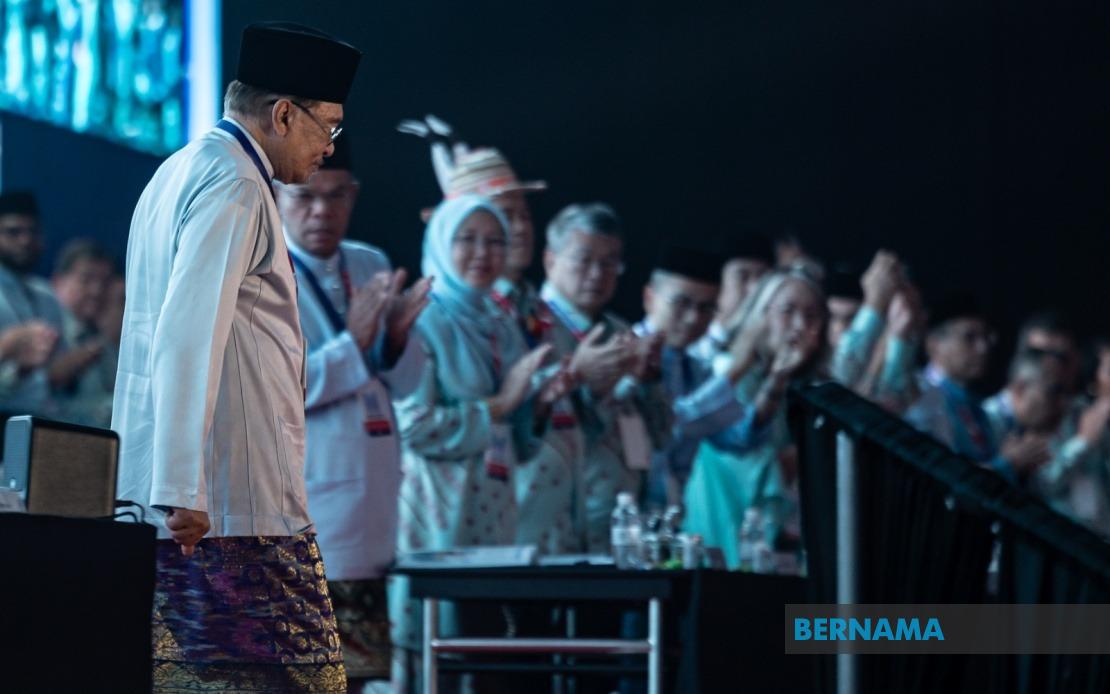
Prime Minister Datuk Seri Anwar Ibrahim used his address to the 2026 PKR National Congress in Melaka to strike a measured tone on his government's reform agenda, acknowledging both tangible achievements and the political realities that constrain faster implementation. Speaking to party delegates at the Melaka International Trade Centre, Anwar argued that critics demanding further change should not overlook the substantial work already completed since his administration took office roughly three years ago. The framing reflected a central tension in Malaysian politics: the need to satisfy reform-minded supporters while managing coalition partnerships that have shaped the pace and scope of institutional changes.
Anwar, who holds the simultaneous positions of Prime Minister, Finance Minister, and Pakatan Harapan chairman, emphasised that the MADANI reform agenda had delivered outcomes that remained elusive during six decades of prior governance. He pointed to concrete legislative achievements including amendments to the Audit Act 1957, reforms to the Parliamentary Service Act, and the enactment of the Public Finance and Fiscal Responsibility Act 2023. Additionally, his administration had established a Special Task Force on Agency Reform, introduced the Consumer Credit Act, and passed new protections for gig economy workers. For supporters of systemic change, these represent genuine victories on transparency, accountability, and worker welfare—areas where progress had stalled under previous administrations.
Yet the Prime Minister's defence carried an implicit acknowledgment of constraint and compromise. The formation of the Unity Government following the 2022 General Election required negotiations with multiple coalition partners whose interests did not always align with the most ambitious reform proposals. Pakatan Harapan, despite being the principal party within the coalition, could not unilaterally dictate the pace of change. This coalition dynamics matter deeply for Malaysian observers: they explain why certain reforms championed by Harapan during opposition have proceeded cautiously, and why some priority measures have been shelved or diluted. The political architecture of consensus-building, while necessary for stability, inherently slows transformation.
Anwar's argument that reforms require strong institutional foundations and staged implementation reflects lessons from past Malaysian governance crises. Rushed institutional changes without adequate planning or buy-in from stakeholders can create backlash, legal challenges, or implementation failures. By framing the phased approach as strategically sound rather than merely politically expedient, Anwar positioned patience as a virtue of responsible stewardship. This messaging resonates with technocrats and economists who worry that rapid, uncoordinated reforms can destabilise markets or create unintended consequences. However, for younger voters and civil society activists who have waited decades for change, such reasoning may feel like a recirculation of familiar delay tactics.
The presence of coalition partners at the congress—including Amanah president Datuk Seri Mohamad Sabu and Gabungan Rakyat Sabah chairman Datuk Seri Hajiji Noor—underscored the coalition's continuing fragility. Each partner brings different constituencies and red lines. Some prefer more cautious economic management; others prioritise sectional interests over sweeping institutional reform. Anwar's balancing act requires keeping these disparate groups aligned while showing reformist supporters that progress continues. The task has grown more complex as inflation, employment concerns, and regional geopolitical shifts have shifted public attention from institutional reform toward immediate bread-and-butter issues.
Anwar also conceded that not all government steps had been perfect, a rare admission of fallibility that suggested some frustration with implementation challenges. Translating legislative reforms into genuine behavioural change within entrenched bureaucracies remains difficult. Laws alone do not guarantee that procurement officers stop awarding contracts to cronies, that police investigations become truly impartial, or that independent agencies operate free from political interference. The gap between legal reform and institutional culture change is substantial and cannot be closed by decree. For Malaysian citizens observing corruption cases or allegations of selective prosecution, rhetorical commitments to reform ring hollow without visible shifts in on-the-ground practice.
The broader Southeast Asian context adds another dimension to Anwar's position. Regional peers in Indonesia, Thailand, and the Philippines have pursued varying approaches to institutional reform, with mixed results. Some have discovered that rapid anti-corruption campaigns, while popular, create backlash among entrenched power networks or destabilise governance. Others have found that incremental reform, though slower, enjoys more staying power. Anwar appears conscious of these regional lessons and may be deliberately avoiding the pitfalls that have plagued reform movements elsewhere. Yet this caution also risks appearing timid to a generation of Malaysians who have grown impatient with systemic inequality and opaque decision-making.
The Prime Minister's emphasis on not erasing achievements already accomplished suggests awareness that momentum could dissipate if reform is perceived as stalled. Amendments to foundational legislation like the Audit Act represent real constraints on executive overreach, and consumer credit protections address genuine harms. These are not symbolic gestures but material improvements in governance architecture. Anwar's implicit message to his party faithful was that progress, though imperfect and incomplete, should be defended and built upon rather than dismissed as insufficient.
Looking forward, Anwar indicated that further reforms would proceed based on the government's capabilities and prevailing circumstances. This formulation is notably open-ended, leaving room for acceleration or deceleration depending on political calculations and economic conditions. It also suggests that the reform agenda, while central to MADANI branding, remains subordinate to other priorities such as fiscal stability and political survival. Coalition partners may demand or withhold support for future reforms based on shifting interest alignments, and economic downturns could push institutional change further down the priority list.
For Malaysian stakeholders invested in systemic change, the implications are mixed. Anwar's record shows that significant institutional reforms are possible even within a constrained coalition environment, which offers some optimism. Yet the acknowledged need for phased implementation and political accommodation suggests that more ambitious changes—such as electoral reform, decentralisation, or radical transparency initiatives—may remain perpetually deferred. The PKR Congress address essentially asked supporters to accept that perfection is impossible and that incremental progress, while frustrating, represents the realistic outer boundary of what Malaysian politics currently permits.
The sustainability of this position depends on whether Anwar can simultaneously satisfy reform advocates that genuine progress continues while reassuring coalition partners and economic elites that stability will be maintained. This balancing act has worked so far, but it carries inherent tensions that may become more acute if economic conditions deteriorate or if younger voters lose faith in gradualism as a strategy for change. The coming years will reveal whether the foundations laid by these early reforms prove robust enough to support more ambitious transformation, or whether Malaysia's reform moment, having peaked, begins to recede.

