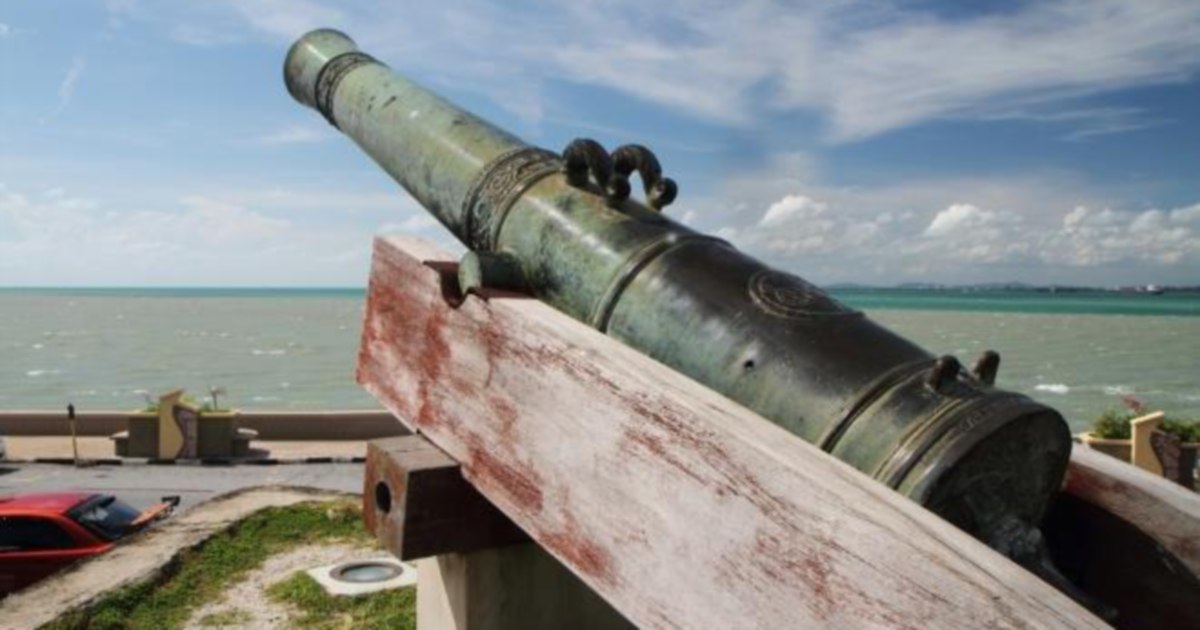
Prime Minister Datuk Seri Anwar Ibrahim has stepped into a nuanced conversation about how Malaysia should engage with its colonial past by defending his presence at the reopening of Fort Cornwallis, the historic fortress in George Town that stands as a physical emblem of British rule in Penang. His intervention signals that government support for the restoration project is grounded in historical education rather than any endorsement of colonialism itself, a distinction that appears designed to address sensitivities around how the nation commemorates periods of foreign dominance.
The Fort Cornwallis reopening has emerged as a touchstone for broader debates about historical memory in Malaysia, where post-independence governments have grappled with questions of how to preserve colonial-era structures without appearing to celebrate the occupation they represent. Anwar's framing positions the fort as a teaching tool, suggesting that engaging with material evidence of the colonial period serves an educational function for Malaysians seeking to understand their own historical trajectory. This approach reflects a maturing view within government circles that dismissing or demolishing such sites forecloses opportunities for critical reflection on a foundational period of national development.
The Prime Minister's emphasis on learning rather than glorification responds implicitly to concerns that heritage restoration projects might inadvertently romanticise colonial governance or understate the costs of British rule. In Malaysia's context, where nationalist sentiment remains connected to anti-colonial struggle, such clarifications carry political weight. By explicitly disavowing any celebratory intent, Anwar attempts to reframe the restoration within an analytical framework that treats Fort Cornwallis as a historical artefact worthy of preservation on intellectual grounds alone, much as museums worldwide preserve evidence of conquest and occupation to facilitate understanding rather than endorsement.
Fort Cornwallis itself carries particular significance in Penang's history. Constructed beginning in 1786 when the British East India Company established a foothold on the island, the fortress represents the physical manifestation of early European commercial and military expansion into Southeast Asia. Its restoration therefore touches on questions about how Malaysia commemorates the institutional origins of colonial rule, at a moment when the nation's relationship to its history is undergoing recalibration. Renewed interest in heritage preservation across Southeast Asia reflects both tourist potential and genuine scholarly interest in understanding how external powers shaped regional societies.
The timing of Anwar's defence reflects awareness that heritage decisions carry symbolic weight beyond their immediate scope. In recent years, several Southeast Asian nations have faced criticism—both international and domestic—for how they treat colonial-era monuments. Some critics argue that preserving such structures risks normalising foreign domination, while others contend that erasing them amounts to denying historical reality. Malaysia's approach, through figures like the Prime Minister, appears to land somewhere in the middle: preservation combined with reframing that emphasises critical historical examination over nostalgic appreciation.
The educational mission that Anwar invokes implies that Fort Cornwallis, once reopened, should serve audiences seeking to comprehend how colonial institutions functioned, what they represented to contemporaries, and how their legacies shaped independent Malaysia. This educational ambition requires careful curation and contextualisation—challenges that heritage organisations across the region are actively addressing. Museums and restored sites increasingly employ interpretive strategies that acknowledge the perspectives of colonised peoples alongside official histories, complicating any straightforward narrative of the colonial enterprise.
Anwar's position also reflects calculations about Malaysia's place in global heritage conversations. International cultural organisations and UNESCO frameworks increasingly encourage nations to preserve contested historical sites as opportunities for dialogue and learning. By embracing this orientation, Malaysia positions itself as a sophisticated actor in global heritage discourse, one that can engage with difficult history maturely rather than through erasure or unreflective celebration. This stance may also appeal to cultural tourists and scholars worldwide, broadening potential audiences for Penang's attractions.
The broader implication of the Prime Minister's intervention is that Malaysian governance increasingly views historical education as compatible with national pride and development objectives. Rather than seeing the preservation of colonial structures as somehow incompatible with post-colonial identity, this approach suggests that understanding Malaysia's historical formation—including its colonial chapter—strengthens rather than weakens national consciousness. This maturity in historical thinking has gradually become evident in policy discussions across the region, though it remains contested in some quarters where antipathy toward colonial legacies runs deeper.
For Penang specifically, Fort Cornwallis restoration aligns with the state's broader positioning as a heritage destination. Georgetown's UNESCO World Heritage status depends partly on the material presence of colonial-era architecture and institutions, which draw international visitors seeking to experience Southeast Asian history. The fortress fits within this ecosystem of heritage tourism, though success requires ensuring that visitors encounter interpretation emphasising Malaysian agency, resistance, and the lived experiences of ordinary people under colonial rule rather than elite perspectives alone.
Looking forward, the question for Malaysian heritage managers becomes how to ensure that Fort Cornwallis reopening genuinely serves the educational mission that Anwar articulates, rather than devolving into merely aesthetic restoration. This requires substantial investment in archival research, interpretive materials, and programming that helps visitors understand colonialism's complex legacies. It also necessitates ongoing conversation with historians, educators, and community stakeholders about what historical literacy regarding the colonial period should entail.
Anwar's defence ultimately reflects a calculated bet that Malaysians are sophisticated enough to engage with colonial history critically, learning from it without either reverencing it or denying it existed. Whether Fort Cornwallis reopening fulfils this promise depends on execution—on how thoroughly the restored site becomes an instrument for historical understanding rather than inadvertent nostalgia. The Prime Minister's intervention signals government confidence that the nation can hold complexity about its past while moving confidently into its future, a position increasingly embraced across Southeast Asia as heritage organisations confront the challenge of truthful historical narration.

