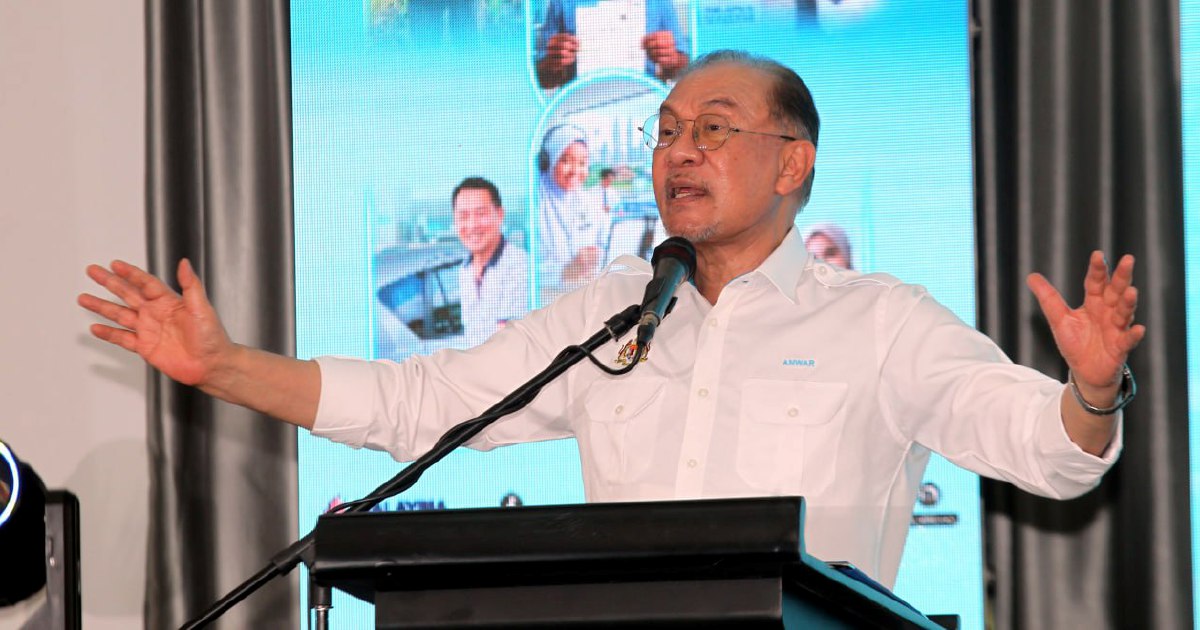
Prime Minister Datuk Seri Anwar Ibrahim has announced a RM15.3 million injection for Perak's religious and pondok schools, underscoring the Madani administration's strategic push to rehabilitate and expand Islamic educational institutions across Malaysia. Speaking in Ipoh, Anwar emphasised that strengthening these traditional learning centres remains a cornerstone of the government's broader education policy, signalling sustained investment in an often underfunded segment of the country's schooling landscape.
The commitment reflects growing recognition among Malaysian policymakers that pondok schools—residential Islamic institutions that have educated generations of Muslim scholars and community leaders—require modernised infrastructure and financial resources to remain competitive and relevant. These institutions, which operate alongside Malaysia's formal education system, have historically struggled with funding constraints despite their cultural and spiritual significance within Muslim communities. The RM15.3 million allocation targets facility improvements, curriculum development, and operational support across Perak's network of religious schools.
Anwar's pledge carries particular weight for Perak, a state with deep-rooted Islamic educational traditions and numerous pondok institutions serving students from across the region. The funding announcement signals federal commitment to recognising the educational contributions these schools make beyond their primary religious mission, as many pondok institutions now integrate contemporary subjects alongside traditional Islamic studies. This dual-track approach helps students balance spiritual development with practical knowledge required for Malaysia's modern economy.
The Madani government's emphasis on religious schools aligns with broader initiatives to strengthen Islamic institutions as part of what officials describe as inclusive nation-building. By directing resources toward these schools, the administration aims to demonstrate that federal support extends across Malaysia's diverse educational ecosystem, not merely the government-funded secular institutions that traditionally dominate policy discourse. This inclusive approach proves particularly important in states like Perak, where religious schools serve communities that might otherwise feel marginalised by mainstream education policy priorities.
Beyond the immediate financial commitment, Anwar's statement indicates the government recognises systemic challenges within the pondok and religious school sector. These institutions frequently operate with minimal government support despite handling significant teaching loads, maintaining boarding facilities, and serving as cultural anchors in their communities. The RM15.3 million injection, while substantial, represents part of a larger acknowledgment that adequate public investment remains essential for maintaining educational quality and accessibility across this sector.
The announcement also carries implications for Malaysia's Islamic education ecosystem regionally. Perak's pondok schools attract students from across Southeast Asia, particularly from neighbouring countries seeking traditional Islamic instruction within a structured academic environment. Improved infrastructure and resources enhance the appeal and capacity of these institutions to serve international students, potentially positioning Malaysia as a regional hub for Islamic education and strengthening cultural ties with Muslim communities throughout the region.
For parents and students within Perak considering educational pathways, the government commitment offers reassurance regarding the financial stability and future development of religious school options. Many families weigh decisions about pondok school enrolment based partly on institutional viability and modernisation prospects. Federal funding announcements directly influence confidence in these institutions' long-term sustainability and quality improvements, potentially affecting enrolment patterns across Perak's Islamic educational landscape.
The Madani government's approach demonstrates a shift toward recognising religious schools as integral components of Malaysia's national education architecture rather than peripheral alternatives. This reframing carries significant implications for education policy development, as it positions pondok and religious institutions within mainstream policy discussions rather than treating them as separate or supplementary. Such recognition potentially opens pathways for increased coordination between secular and religious educational institutions, fostering knowledge-sharing and complementary programme development.
However, the RM15.3 million allocation raises questions about adequacy relative to broader needs within Perak's religious school sector. Stakeholders have previously highlighted substantial infrastructure gaps, including facility maintenance backlogs, inadequate accommodation for boarding students, and limited digital resources. While this funding represents meaningful progress, comprehensive sector development may require sustained multi-year commitments exceeding single announcements. The government's willingness to commit resources suggests potential for longer-term planning, though detailed timelines and disbursement mechanisms remain subjects for stakeholder clarification.
The pledge also intersects with Malaysia's wider education modernisation agenda, where digital integration and contemporary pedagogical approaches increasingly influence funding priorities across all school categories. Religious schools require investment in technology infrastructure, teacher professional development, and curriculum updates to prepare students effectively for university entrance and employment—areas where funding gaps have historically constrained development. This RM15.3 million commitment potentially addresses some of these gaps, depending on allocation priorities and implementation strategies.
Anwar's statement reinforces the Madani government's positioning of inclusive governance spanning Malaysia's full educational spectrum. As the administration navigates competing priorities and budget constraints, demonstrating tangible support for traditionally marginalised institutional sectors strengthens the narrative of equitable policy implementation. For Perak specifically, the announcement validates regional importance while signalling that federal resources will flow toward communities whose educational needs deserve recognition and investment.

