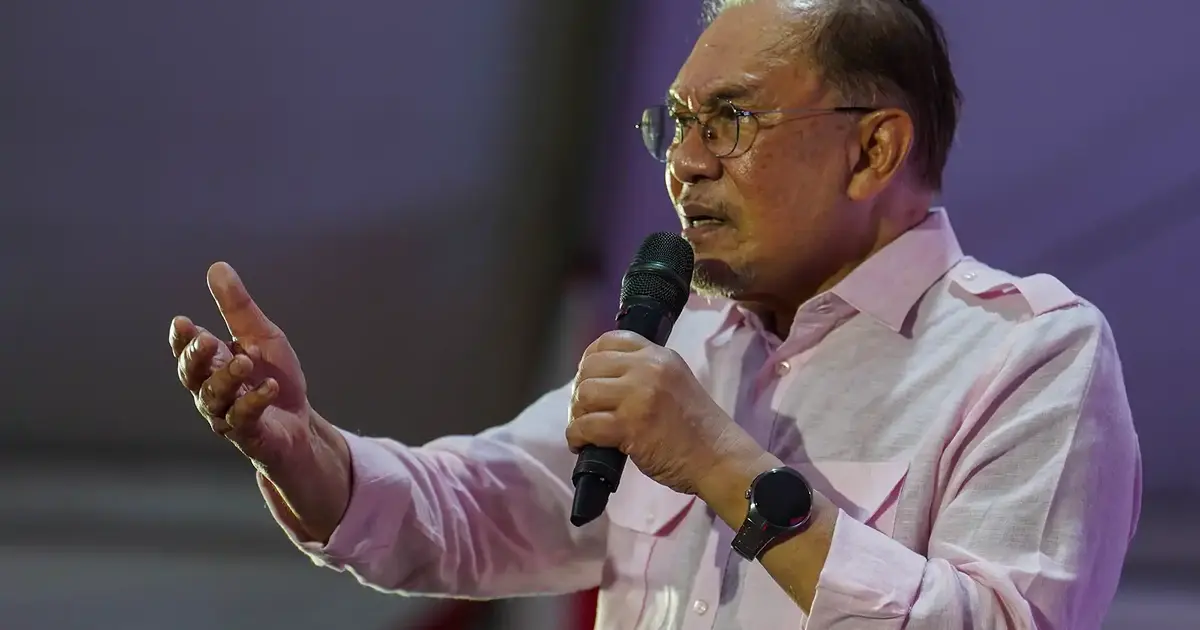
Prime Minister Anwar Ibrahim has moved to set clear expectations about a fresh round of constituency funding, explicitly stating that allocations distributed to Subang and Petaling Jaya MPs are intended to serve the broader public interest rather than individual political agendas. The announcement underscores an emerging emphasis within the federal government on transparent stewardship of development resources and accountability in how parliamentary representatives deploy public money within their constituencies.
The Subang constituency has been allocated RM1.6 million in fresh funding, whilst Petaling Jaya will receive RM3 million. Both allocations fall under the category of development projects designed to address community needs and infrastructure gaps identified within these constituencies. The combined RM4.6 million represents a significant commitment to these Selangor-based constituencies, which together encompass substantial populations across suburban Kuala Lumpur's metropolitan sprawl.
Anwar's emphasis on the public-benefiting nature of these funds carries particular weight given Malaysia's historical concerns about the politicisation of development spending. Previous administrations have faced criticism from civil society groups and opposition parties regarding the extent to which constituency allocations have been channelled into projects of limited public utility or concentrated in politically favourable areas. By explicitly reminding MPs that these resources belong to constituents rather than serving partisan interests, the Prime Minister appears intent on establishing a clearer demarcation between legitimate development spending and questionable political expenditure.
The timing of this clarification reflects broader governance discussions within the government. Since assuming office, the Anwar administration has positioned itself as committed to institutional reform and transparency improvements. This includes stricter oversight mechanisms for how development funds flow to constituencies and greater parliamentary scrutiny of spending priorities. The statement to Subang and Petaling Jaya MPs can be read as reinforcing these governance principles at the grassroots level where constituents directly experience the quality and appropriateness of resource allocation.
Both constituencies represent important political territory. Subang, encompassing areas such as Kelang and surrounding communities, has traditionally been a competitive seat with shifting political allegiances. Petaling Jaya, one of Malaysia's most densely populated suburban areas, includes the high-income enclave of Damansara and numerous residential developments. The infrastructure and service needs across both constituencies are considerable, and development funds appropriately deployed can address genuine public gaps ranging from community facilities to traffic management initiatives.
The articulation of this principle by the Prime Minister also responds to constituent expectations. Malaysian voters have become increasingly sophisticated in evaluating how well their representatives translate federal resource allocations into tangible improvements to daily life. Poorly directed funds—whether spent on unnecessary bureaucratic installations or projects that primarily benefit politically connected businesses—generate frustration that eventually materialises in electoral shifts. By establishing that these are public resources with public accountability, Anwar appears cognisant of this voter vigilance.
For the two constituencies' MPs, the statement effectively establishes benchmarks against which their performance will be measured. Rather than allowing ambiguity about appropriate use of funds, the Prime Minister has created explicit expectations that allocations should demonstrably improve community welfare. This raises the bar for justifying spending decisions and requires MPs to demonstrate careful consultation with constituents about priority projects. In an era of increasing public transparency demands and social media scrutiny, such clarity also protects MPs from accusations of misappropriation or poor judgment in allocation decisions.
The broader context involves Malaysia's significant development financing needs. Despite the country's middle-income status, substantial infrastructure gaps persist in constituencies across the country, particularly in suburban and semi-rural areas surrounding major cities. Selangor's constituencies face particular pressures given rapid population growth, ageing infrastructure in established areas, and the demand for improved public facilities. Well-managed development allocations can meaningfully address these challenges if directed toward priorities genuinely identified by communities.
Anwar's emphasis on public benefit also carries implications for how the federal government manages relationships with state-level authorities. Selangor, governed by Pakatan Rakyat, shares political alignment with the federal administration, theoretically enabling better coordination between federal development spending and state-level planning initiatives. The Prime Minister's clarification could signal expectations that both tiers of government align their development priorities to maximise constituent benefit rather than pursuing redundant or conflicting projects.
Moving forward, the success of these allocations will depend significantly on implementation capacity at the constituency level. MPs must conduct genuine community consultations to identify priorities, oversee projects effectively, and ensure funds are deployed within realistic timelines. The Prime Minister's statement establishes that performance expectations are high and that constituents retain the right to evaluate whether allocations genuinely improved their circumstances. This represents a substantive shift toward holding elected representatives accountable not merely for securing development funds, but for ensuring those funds translate into meaningful public value.

