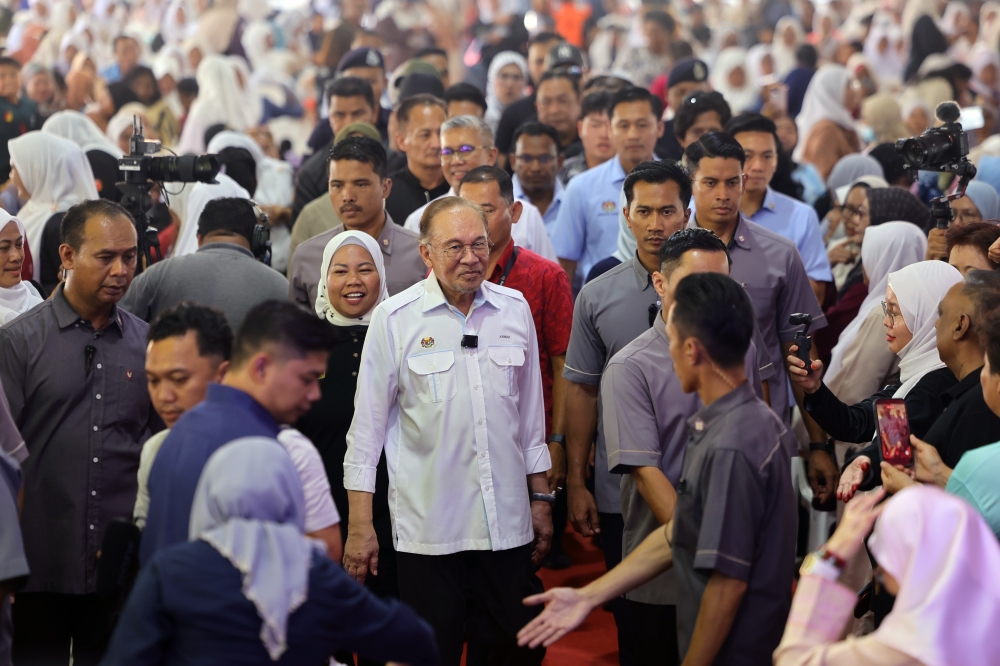
Prime Minister Datuk Seri Anwar Ibrahim has cast serious doubt on Tabung Haji's decision to disburse a 13-month bonus to employees, arguing that the payout represents a fundamental violation of the organisation's fiduciary responsibilities and the trust placed in its leadership. His comments come as the government continues to examine findings from the Royal Commission of Inquiry into the Islamic pilgrimage fund, which has uncovered significant governance failures over several years.
Anwar's intervention signals intensifying scrutiny of Tabung Haji's financial management and the decisions made by successive boards and executives. The Prime Minister contends that distributing additional compensation during a period of organisational crisis and financial reckoning sends the wrong signal about accountability and stewardship of public resources. His position reflects broader concerns about how much-needed reforms will be implemented following the inquiry's conclusions.
The timing of the bonus payout has emerged as particularly controversial, given that Tabung Haji has been navigating substantial challenges to its credibility and operational integrity. The 13-month payment to staff appears to contradict principles of prudent financial management, especially when the institution is addressing accumulated problems and rebuilding investor confidence. Anwar's challenge puts pressure on Tabung Haji's current leadership to justify the decision or reverse course.
For Malaysian Muslims who depend on Tabung Haji to facilitate their Hajj obligations, the governance controversies carry deep significance beyond corporate accountability. The fund serves as a crucial savings mechanism and pilgrimage facilitator for hundreds of thousands of Malaysians, making institutional integrity essential. When leadership decisions seem disconnected from financial realities or appear to prioritise internal stakeholder interests over broader responsibility, public confidence in the system weakens considerably.
The Royal Commission's investigation exposed numerous institutional weaknesses, ranging from inadequate oversight mechanisms to questionable investment decisions that contributed to financial losses. Against this backdrop, authorising substantial bonus payments appears incongruent with the message that leadership is serious about remediation and preventing future misconduct. Anwar's public questioning suggests the government intends to take a firm stance on governance standards within state-linked institutions.
This episode illustrates the tension between competing pressures facing large institutional employers during periods of reform. Management may argue that staff retention and morale require competitive compensation, particularly as the organisation attracts fresh talent committed to rebuilding its reputation. However, this rationale carries less weight when broader systemic failures have cost depositors and when public scrutiny is intense. The perception that insiders benefit while general stakeholders bear losses is politically untenable.
Anwar's remarks also underscore the Prime Minister's apparent willingness to intervene directly in the affairs of government-linked organisations when he believes leadership decisions contradict stated reform objectives. This approach suggests potential recalibration of how such institutions operate and to whom they ultimately answer. It raises questions about what other recent decisions might face similar scrutiny as the government applies consistent standards.
The Tabung Haji situation serves as a test case for how Malaysia will hold major institutions accountable during transition periods. The fund manages resources belonging to ordinary Malaysians saving for religious obligations and retirement, making governance failures particularly consequential. Restoring confidence will require demonstrable changes in decision-making, transparency, and alignment between stated values and actual practice.
Anwar's challenge may also reflect feedback from political stakeholders and the general public who view the bonus payout as tone-deaf and indefensible given recent revelations. As a newly re-established government, the administration likely recognises that allowing controversial decisions to pass unchallenged would undermine its reform credentials and weaken public confidence in governance improvements across the public sector.
Moving forward, how Tabung Haji responds to the Prime Minister's concerns will indicate whether the institution is genuinely committed to self-correction or whether defensive positioning will continue. The fund's leadership faces a choice between defending past decisions or acknowledging that governance priorities must shift to reflect post-inquiry realities. This moment will shape perceptions about whether reforms are genuine or merely performative.
The broader implications extend beyond Tabung Haji itself. State-linked organisations across Malaysia will be watching how this situation develops, recognising that similar scrutiny could apply to their own compensation decisions and financial practices. If the government follows through on enforcing stricter governance standards, other institutions may need to recalibrate their approaches to ensure alignment with public expectations and government policy priorities during periods of institutional accountability and reform.

