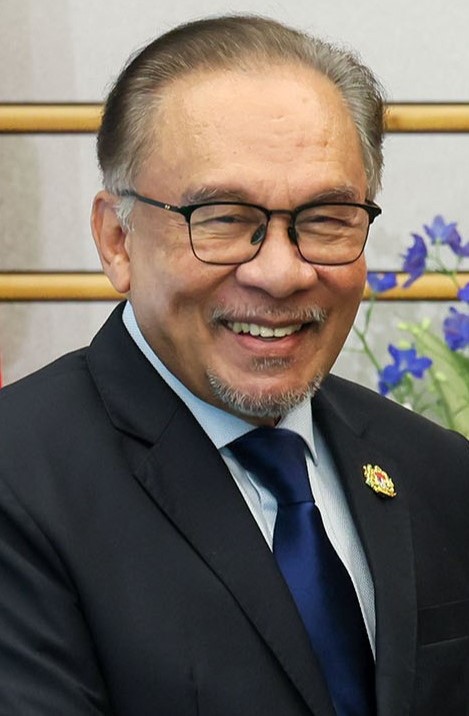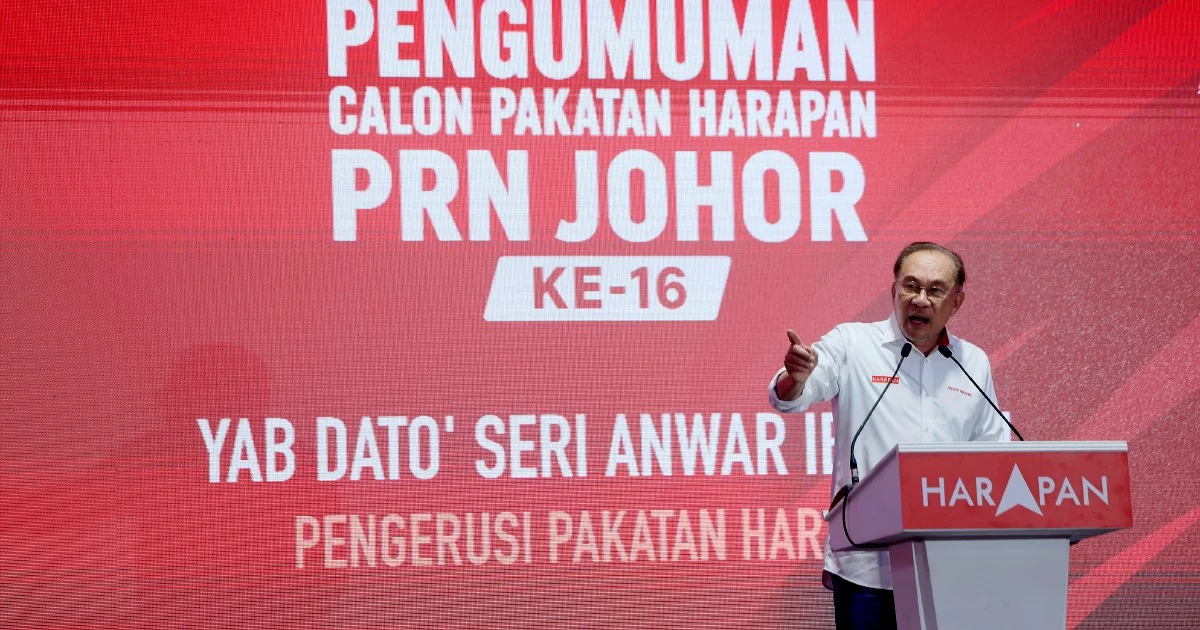
Prime Minister Datuk Seri Anwar Ibrahim has called on Johor's state executive councillors to conduct a rigorous examination of federal revenue distribution practices under the previous Barisan Nasional and Perikatan Nasional governments, responding to assertions that the southern state has been shortchanged in its financial entitlements. Speaking during a visit to Tangkak, Anwar framed the investigation as a necessary accountability exercise, suggesting that state officials should pursue substantive questioning of how federal funds were allocated to Johor during periods when BN and PN held national power.
The directive reflects growing tensions between state and federal leadership over fiscal distribution mechanisms and raises broader questions about whether Johor's development needs have received adequate federal investment. Since Anwar's coalition government assumed office, there has been an undertone of reckoning with financial decisions made by predecessor administrations, and Johor appears to be emerging as a focal point for these reassessments. The Prime Minister's comments suggest frustration with historical patterns in federal-state relations and indicate his willingness to leverage executive pressure to extract greater transparency from government machinery.
Johor's economic significance makes this dispute particularly consequential. As Malaysia's second-largest economy and a crucial industrial hub, the state's fiscal position directly affects regional growth dynamics and investment patterns across Southeast Asia. If federal revenue allocations have indeed been inequitable, rectifying these imbalances could reshape development trajectories not only within Johor but across the broader Peninsular economy. The state hosts major petrochemical complexes, port facilities, and manufacturing zones that contribute substantially to national GDP, yet questions about adequate federal funding support could undermine long-term infrastructure improvements.
Anwar's intervention suggests the federal government recognises a political imperative to address state grievances, particularly in Johor where local sentiment about fair treatment carries electoral weight. The state has historically occupied an ambiguous political position—supporting various coalition combinations—and securing its cooperation requires demonstrating tangible commitment to equitable resource distribution. By instructing Johor officials to formally interrogate federal spending records, Anwar signals that his administration is prepared to revisit inherited fiscal arrangements and potentially reorder budgetary priorities.
The investigation that Anwar is advocating would necessarily examine technical questions about revenue-sharing formulas, special grants, development allocations, and discretionary spending that benefited or disadvantaged Johor under previous governments. Such scrutiny could reveal whether political considerations influenced resource distribution, or whether legitimate economic assessments resulted in lower allocations to the state. Malaysian federal-state financial relations have long been opaque, and transparency in this domain remains limited despite periodic reform efforts. Formal questioning by state executive councillors could establish an important precedent for holding federal authorities accountable to state interests.
The timing of Anwar's remarks coincides with broader coalition recalibration efforts within Malaysian politics. Several state governments have shifted alliances or adjusted their positioning relative to federal leadership, and Johor remains strategically valuable to any national coalition. By demonstrating responsiveness to state financial concerns, the federal government seeks to reinforce relationships with state governments and forestall political realignment that could strengthen opposition parties. For Johor's executive councillors, Anwar's encouragement provides cover to pursue questions that might otherwise invite accusations of disloyalty or excessive demands on the federal government.
The question of historical revenue fairness also intersects with contemporary debates about Malaysia's fiscal federalism structure. Economists and policy analysts have long argued that rigid revenue-sharing formulas inadequately reflect economic realities and state-specific development requirements. Johor's case, if substantiated, could catalyse broader reforms to how Malaysia distributes federal resources among states. Such reforms might involve revised allocation mechanisms, adjusted dependency ratios, or enhanced discretionary funding pools that better accommodate regional economic variations and infrastructure needs.
Previous Barisan Nasional administrations generally emphasised centralised resource control and strategic allocation based on federal priorities, while Perikatan Nasional's shorter tenure was marked by competing factional interests that potentially created inefficiencies in resource distribution. Both approaches may have inadvertently disadvantaged Johor, particularly if federal decision-makers prioritised other states or underestimated the financial requirements for maintaining Johor's competitive advantage as an industrial and commercial centre. Anwar's call for investigation implicitly criticises these approaches without directly confronting the politicians responsible, allowing state officials to pursue accountability independently.
For Malaysia's broader political economy, this episode underscores persistent asymmetries between state aspirations and federal capacity to satisfy them. Johor's grievances likely represent concerns shared by other states that occupy less politically prominent positions, suggesting that systematic examination of federal-state fiscal relations could reveal widespread inequities. The federal government's apparent willingness to address Johor's claims, however, does not necessarily indicate equivalent openness toward other states, potentially creating new disparities in political satisfaction and development outcomes.
Anwar's intervention also demonstrates how contemporary Malaysian governance increasingly relies on direct prime ministerial involvement in subnational issues, reflecting both the federal executive's extensive powers and the gaps in institutional mechanisms for resolving state-federal disputes. Rather than relying on established mediation processes or constitutional forums, the Prime Minister personally advised state officials to pursue investigations, indicating either the weakness of existing dispute resolution mechanisms or the political necessity of high-level engagement on matters affecting key states. This pattern may establish expectations that prime ministers must personally involve themselves in every significant state grievance, potentially overextending the federal executive while delegitimising alternative institutional approaches.
Moving forward, the outcomes of Johor's investigation into historical federal allocations will likely shape both federal-state relations and broader political dynamics in Malaysia. Should the examination reveal substantial inequities, pressure will mount on the federal government to implement compensatory measures, potentially at the expense of other states or national priorities. Conversely, if investigations demonstrate that federal decisions reflected legitimate economic assessments, Johor officials will need to recalibrate their fiscal expectations and refocus on alternative strategies for economic development. Either outcome will carry implications for how other states perceive their own relationships with federal authorities and their willingness to cooperate with or challenge central government policies.