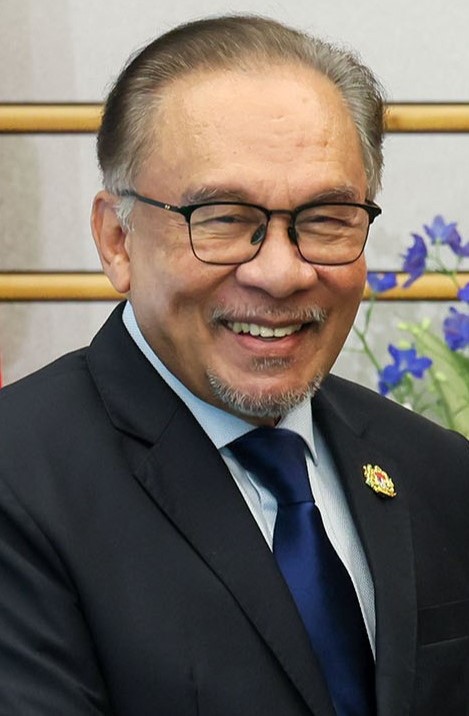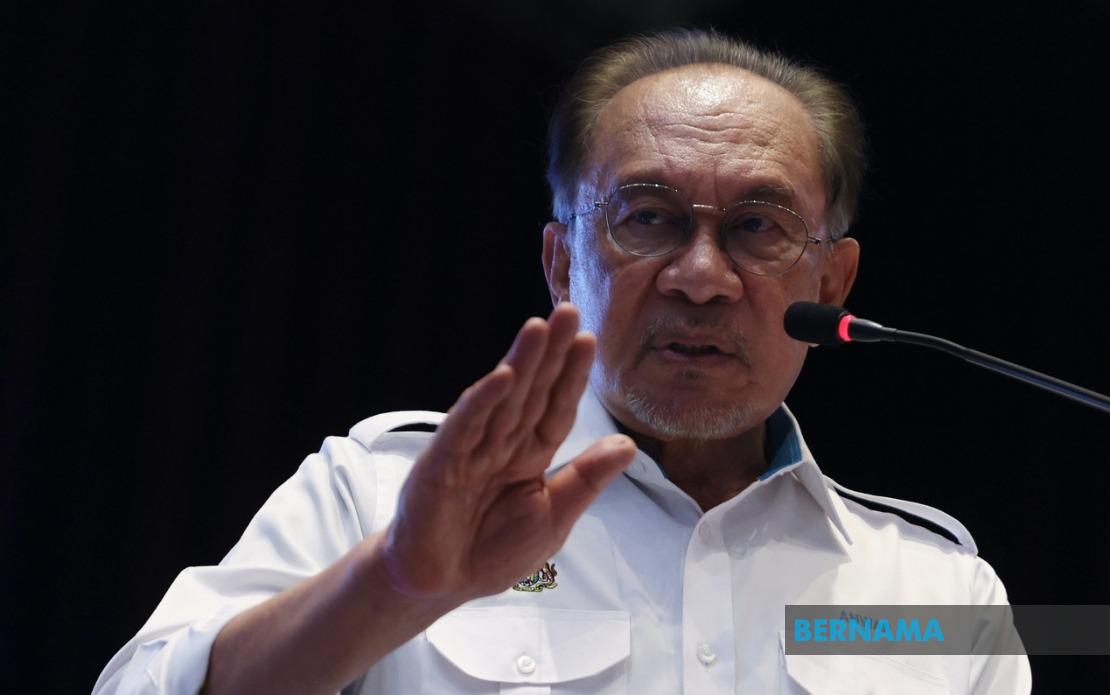
Prime Minister Datuk Seri Anwar Ibrahim has issued a firm reminder to political parties across the country not to entangle Malaysia's revered royal institutions in partisan political wrangling, particularly as the nation approaches upcoming electoral contests. Speaking at a civil service engagement in Alor Gajah on June 24, Anwar stressed that politicians must conduct themselves with maturity when disagreeing on policy matters or making public statements, ensuring that such disputes remain confined to the political arena without spilling over into the constitutionally protected sphere of the monarchy.
Anwar's comments came in response to remarks attributed to Amanah president Datuk Seri Mohamad Sabu during a Pakatan Harapan candidate announcement gathering in Johor on the previous Monday, which observers suggested may have contained references or implications concerning the royal institution. While Anwar did not explicitly name the Amanah leader or elaborate on the specific nature of the controversial statements, his intervention signals the government's sensitivity to any perceived attempts to politicise Malaysia's constitutional monarchy, which commands deep respect across the country's multiethnic society.
The Prime Minister's stark assertion that politicians should "let those involved engage in politics" and explicitly "not drag the sacred institution of the Malay Rulers into it" underscores the paramount importance placed on protecting the monarchy from electoral contestation. This principle lies at the heart of Malaysia's constitutional framework, where the Yang di-Pertuan Agong and the state Rulers occupy positions that transcend day-to-day political competition and remain symbols of national unity and institutional continuity across shifting political landscapes.
Anwar's warning carries particular weight given Malaysia's recent political turbulence and the fragmentation of coalition politics in recent years. The emergence of multiple competing alliances and the increasingly contentious nature of electoral campaigns have raised concerns among senior government figures that some actors might be tempted to exploit public reverence for the monarchy as a tactical advantage. By issuing this caution now, ahead of electoral contests, Anwar appears to be setting boundaries for acceptable political discourse and signalling that the government will not tolerate attempts to weaponise the institution of the Rulers for partisan gain.
The comment was made during Anwar's attendance at a meet-and-greet function with civil servants at the Public Works Department's Centre of Excellence for Engineering and Technology in Melaka, an event jointly organised with Chief Secretary to the Government Tan Sri Shamsul Azri Abu Bakar. The presence of multiple government officials at the function, including Melaka Chief Minister Datuk Seri Ab Rauf Yusoh and Deputy Higher Education Minister Adam Adli Abd Halim, reflected the government's broader engagement with the public sector workforce and demonstrated that institutional messaging about political propriety extends across multiple levels of the administration.
For Malaysian observers, Anwar's intervention represents a reaffirmation of the constitutional consensus that has largely prevailed throughout the nation's history regarding the separation of royal prerogative from electoral competition. While Malaysia's constitutional monarchy has occasionally been tested by political disputes, maintaining the depoliticisation of the Rulers remains essential to the fabric of national governance. The Prime Minister's explicit reminder serves to reinforce this principle and discourage any temptation among political actors to blur this crucial distinction during campaign periods.
The timing of the statement also reflects broader anxieties within government circles about maintaining institutional integrity during periods of heightened political competition. As electoral seasons approach, political rhetoric tends to intensify and actors sometimes overstep established norms in pursuit of electoral advantage. By staking out this position publicly and decisively, Anwar has attempted to establish clear guardrails for political conduct that should prevent escalation toward more serious constitutional breaches or erosion of public confidence in institutional boundaries.
Within the Southeast Asian context, Malaysia's approach to protecting the monarchy from politicisation distinguishes it from several regional neighbours and represents a deliberate constitutional choice. The monarchy's role as an institution above partisan politics has been central to Malaysia's political stability, particularly during moments of significant social or political strain. Anwar's intervention suggests that the government remains committed to this foundational principle, even as various political actors jostle for position in the competitive landscape of Malaysian electoral politics.
The incident also highlights the delicate balance that Malaysian political leaders must maintain between robust electoral competition and preservation of institutional respect. While democracies necessarily involve vigorous debate and contestation, Malaysia's constitutional framework places certain institutions beyond the bounds of such contestation. Anwar's statement effectively communicates to all parties that this principle will be enforced and that those who transgress it risk censure from the government and broader society, thereby contributing to the maintenance of political norms that have served Malaysia's stability.