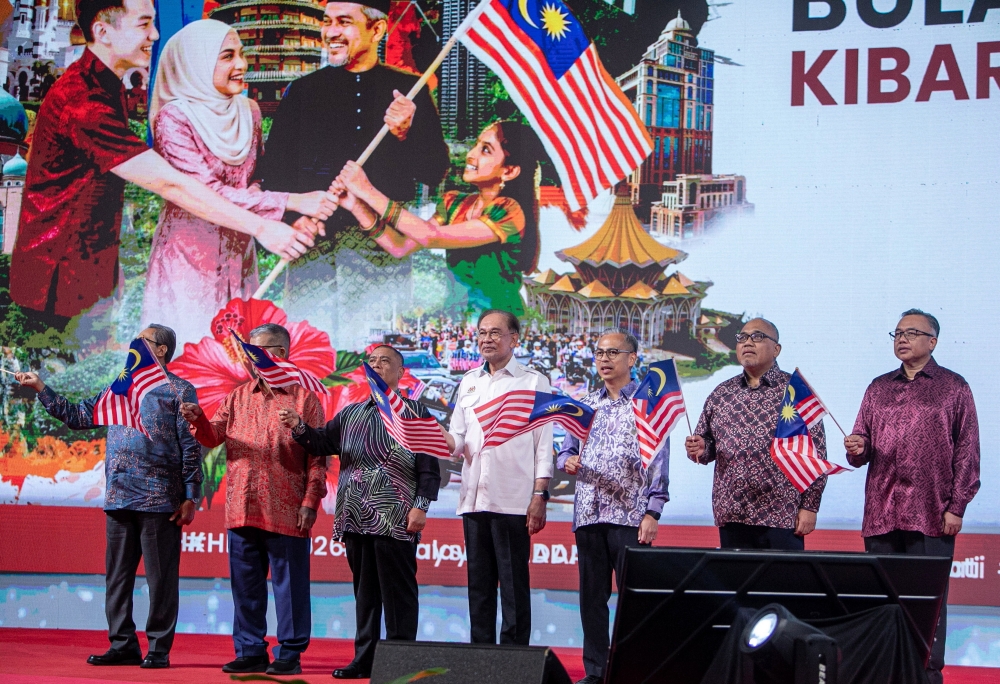
Prime Minister Datuk Seri Anwar Ibrahim delivered a pointed message to Malaysia's younger generation during a gathering in Ipoh on July 19, stressing the critical importance of understanding and cherishing the country's journey to independence. Speaking with the conviction of someone acutely aware of how quickly historical memory can fade, Anwar cautioned against the complacency that sometimes accompanies prosperity, noting that many Malaysians born after Merdeka Day may lack direct appreciation for the determination and sacrifice that secured the nation's sovereignty.
The Prime Minister's remarks came at a time when Malaysia continues to grapple with questions about national identity and cohesion in an increasingly complex geopolitical landscape. Anwar's emphasis on remembering the independence struggle reflects broader concerns within Malaysian leadership about maintaining social unity and shared national purpose among citizens who have only ever known an independent Malaysia. For young Malaysians in their teens and twenties, independence is a historical fact rather than a lived experience, making their understanding of national values dependent entirely on education, family transmission, and public discourse.
Anwar's appeal carries particular weight given his own extensive history as both a political activist and a central figure in Malaysia's modern political evolution. His personal journey—from youth activist to political prisoner to Prime Minister—serves as a living bridge between the independence era and contemporary Malaysia. By invoking the independence struggle directly, he sought to reconnect younger citizens with foundational narratives about sacrifice, determination, and the collective effort required to build a functioning nation-state.
The independence movement that resulted in Malaya's freedom from British colonial rule on August 31, 1957, involved diverse groups working toward a common objective. The Alliance Party—comprising the United Malays National Organisation, the Malayan Chinese Association, and the Malayan Indian Congress—negotiated with the British and forged the social contract that underpinned Malaysia's constitutional framework. This coalition approach to nation-building represented a pragmatic accommodation of Malaysia's multiethnic composition, a principle that remains central to understanding modern Malaysia's political architecture.
In contemporary Malaysia, the relevance of historical memory extends beyond nostalgic celebration. The independence struggle symbolises a moment when Malaysians of different ethnic backgrounds and religious affiliations worked toward shared objectives. With ongoing debates about religious freedom, minority rights, and inter-communal relations, Anwar's invocation of this inclusive historical narrative serves a dual purpose: it reminds citizens of their common heritage while implicitly calling for renewed commitment to the plural values embedded in the original independence compact.
The challenge facing Anwar and other national leaders involves translating abstract historical narratives into meaningful lessons for youth who live in a dramatically different world from that of their grandparents. Young Malaysians navigate globalised communication networks, international migration patterns, and economic pressures that their counterparts in 1957 could scarcely have imagined. Making the independence struggle relevant to this generation requires more than ceremonial invocation; it demands showing how the principles of consensus-building, mutual respect, and shared sacrifice address contemporary challenges.
Education systems across Malaysia have historically emphasised the independence narrative, yet effectiveness varies considerably depending on pedagogical approaches and resource availability. Anwar's public reminder suggests that formal education alone may be insufficient to create the kind of deep, emotional connection to national history that translates into conscious commitment to national values. His appeal implicitly encourages families, religious leaders, civil society organisations, and media to participate in transmitting historical understanding across generational lines.
The Ipoh gathering itself represented an important venue for such messaging. Ipoh, the capital of Perak, carries its own historical significance in Malaysia's independence narrative as a major urban centre that witnessed the development of nationalist politics and labour movements during the pre-independence period. Choosing this location allowed Anwar to ground his message in specific geographic and historical context rather than delivering abstract exhortations from the capital.
For policymakers across Southeast Asia, Anwar's emphasis on historical consciousness reflects broader regional concerns about maintaining national coherence amid rapid social change. Malaysia's multiethnic and multireligious composition makes deliberate efforts to sustain shared historical narratives particularly essential, as competing interpretations of the past can easily fragment into zero-sum communal conflicts. By contrast, a robust understanding of how diverse groups previously collaborated toward common ends provides templates for contemporary cooperation.
The Prime Minister's call also acknowledges an uncomfortable reality: institutional memory deteriorates without deliberate reinforcement. Within two generations, direct participants in the independence movement will no longer be alive to provide first-hand accounts. Within three generations, only specialised historians and archivists will possess detailed knowledge of the era. This makes Anwar's appeal timely and urgent, a recognition that the window for personal transmission of historical experience is rapidly closing.
Moving forward, translating Anwar's rhetoric into sustained engagement with youth will require multifaceted strategies. Digital platforms could disseminate multimedia content about independence-era figures and events. Museums and heritage sites could develop more interactive exhibitions. Universities might strengthen history curricula. Most importantly, political leaders across the spectrum must consistently frame contemporary challenges as opportunities to apply the principles of compromise and mutual respect that characterised the independence movement.
Ultimately, Anwar's message represents an investment in Malaysia's long-term stability and social cohesion. A generation that understands and internalises the inclusive values of the independence struggle possesses stronger foundations for navigating contemporary divisions and building on the nation's achievements.

