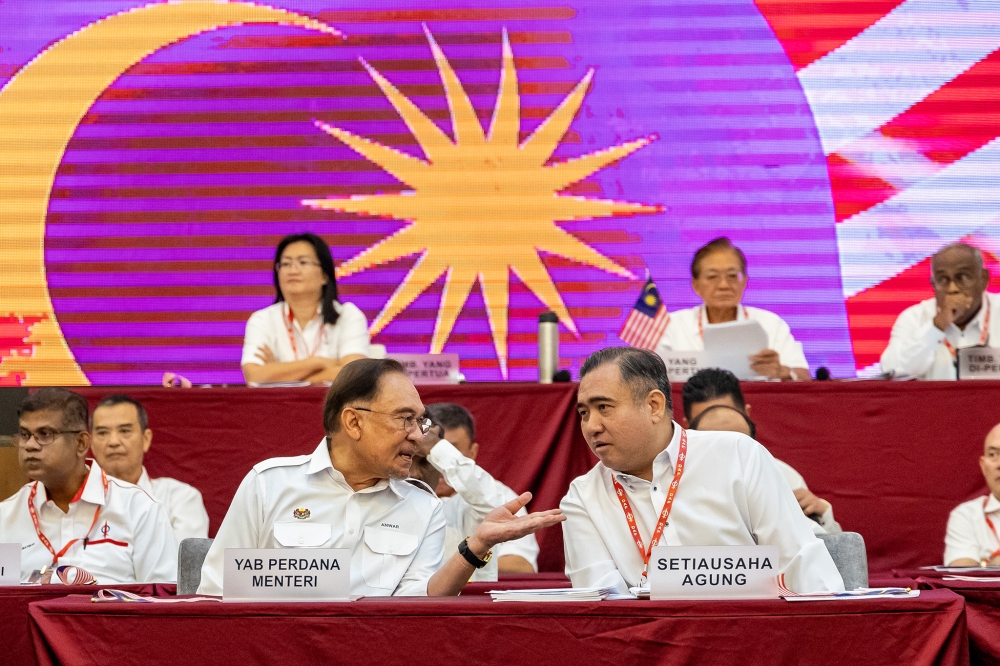
Prime Minister Datuk Seri Anwar Ibrahim has made a direct appeal to the Democratic Action Party's Melaka division to reconsider its decision to withdraw from the state government, arguing that the party should sustain its involvement in the administration until the next state election concludes. Speaking in Port Dickson on July 14, Anwar emphasised the importance of maintaining political stability and continuity in the eastern coast state, where DAP has held ministerial positions within the Pakatan Harapan-led administration.
The call represents a significant intervention by the federal government into internal coalition dynamics at the state level, reflecting broader concerns about the cohesion of the ruling alliance. DAP's announcement of its intention to step away from the Melaka state government had generated uncertainty about the administration's capacity to function effectively during a critical juncture in Malaysia's political calendar. Anwar's public plea underscores the delicate balance required to keep the coalition functioning across different state administrations while managing competing interests among partner parties.
The Prime Minister's argument centres on the disruption that would accompany a mid-term withdrawal by any significant coalition partner. He emphasised that completing a full election cycle without internal realignment would provide greater stability and predictability for state-level governance, allowing the government to focus on delivering policy outcomes rather than navigating power-sharing adjustments. This pragmatic reasoning reflects the operational challenges faced when coalition governments experience changes in composition during their tenure.
DAP's presence in the Melaka state administration has been significant since the state fell under Pakatan Harapan's control following the 2018 general election and subsequent state-level realignments. The party's participation has provided representation for urban constituencies and Chinese Malaysian interests within the administration, contributing to the coalition's multiethnic character. Any withdrawal would necessitate a recalibration of ministerial portfolios and potentially alter the coalition's political composition heading into the next state election.
For Melaka specifically, the timing of potential political changes carries particular weight. The state has experienced considerable volatility in recent years, with multiple shifts in control and governing coalitions. Maintaining stability in governance is especially important for economic development initiatives and public service delivery, particularly as the region continues to recover and grow post-pandemic. A stable administration can provide clearer planning horizons for infrastructure projects and investor confidence.
Anwar's intervention also reflects the broader challenge facing Pakatan Harapan at the federal level, where managing coalition discipline and unity across diverse parties remains a constant task. The alliance encompasses parties with distinct ideological orientations, electoral bases, and regional strongholds, requiring sustained negotiation and compromise. Tensions at the state level can quickly reverberate upward, affecting the federal coalition's effectiveness and message coherence.
DAP's grievances that prompted the withdrawal announcement likely stem from internal coalition dynamics, including concerns about ministerial representation, policy influence, or perceived unfair treatment in resource allocation. These recurring tensions between coalition partners are not unique to Melaka or to DAP; they reflect the fundamental challenge of maintaining multiparty coalitions where each constituent party must demonstrate value and achievement to its voters and party members.
The Prime Minister's appeal carries both moral and political weight, leveraging his position and credibility to encourage compromise. However, such interventions can only succeed if the underlying issues driving the withdrawal are genuinely addressable through negotiation. If DAP's concerns reflect deep structural problems within the coalition arrangement, a mere postponement without substantive resolution risks postponing rather than solving the underlying tension.
From a Southeast Asian perspective, Malaysia's experience navigating coalition politics offers instructive lessons. The region has seen numerous coalition governments succeed and fail based on their capacity to maintain unity while accommodating diverse interests. Anwar's approach here—emphasising continuity and full-term completion—represents a pragmatic, stability-focused strategy increasingly valuable in volatile political environments.
The outcome of Anwar's appeal will signal important messages about the coalition's internal dynamics and problem-solving capacity. If DAP accepts the postponement, it demonstrates that concerns can be channelled through dialogue and compromise at senior political levels. Conversely, if the party maintains its withdrawal timeline, it suggests that underlying grievances have reached a threshold where immediate structural change feels necessary, even at the cost of coalition stability.
Looking forward, the Melaka situation exemplifies the ongoing work required to maintain stable coalitions in Malaysian federalism. State-level administrations serve as testing grounds for coalition management, where experiments in power-sharing and resource distribution directly affect millions of constituents. Successful resolution of the Melaka question would reinforce confidence in Pakatan Harapan's ability to govern effectively through multiple electoral cycles, while persistent tensions could undermine broader coalition performance.
Beyond the immediate political theatre, citizens in Melaka ultimately depend on government stability for effective administration. While coalition dynamics necessarily shape governance structures, the fundamental measure of success remains the state government's capacity to deliver services, implement development projects, and maintain public confidence. Anwar's plea should ultimately be viewed through this lens—whether maintaining coalition continuity genuinely serves Melaka's developmental interests and constituent welfare.

