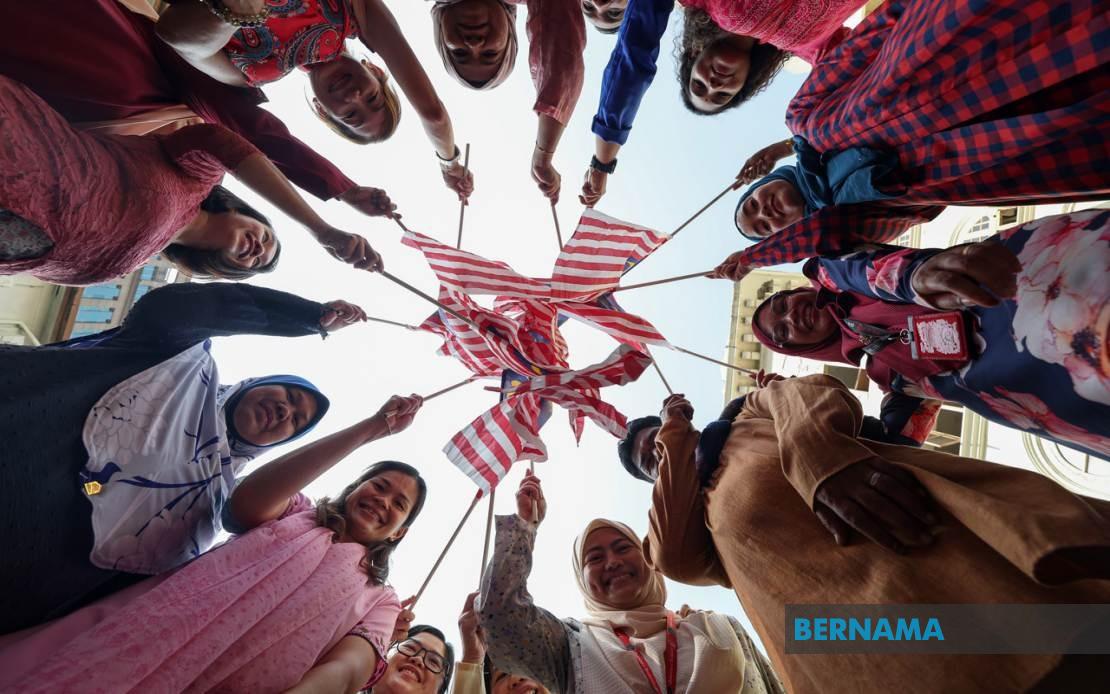
Prime Minister Datuk Seri Anwar Ibrahim has issued a powerful appeal to Malaysians to become active custodians of their nation and cement unity as the bedrock upon which the country's resilience is built. Speaking as the country prepares to mark its 69th National Day, Anwar stressed that true independence extends beyond formal sovereignty—it encompasses the freedom to shape one's destiny and the confidence that comes from belonging to a people of dignity and a nation commanding respect on the world stage.
Anwar's message, delivered through social media and video statements, carries particular weight given Malaysia's ongoing challenges around social cohesion and political polarization. His emphasis on upholding unity across Malaysia's diverse communities—explicitly naming the Malay, Chinese, Indian, Iban, Kadazan, Murut, Bidayuh and Orang Ulu peoples—signals recognition that Malaysia's greatest asset lies not in any single ethnic or religious group but in the collective strength that emerges when different communities pull in the same direction. This framing reflects a broader strategic shift in how the government seeks to articulate national identity in an era of rising divisive rhetoric.
The Prime Minister grounded his appeal in historical consciousness, reminding Malaysians that nothing in their present prosperity arrived without cost. The achievements citizens enjoy today, he emphasized, represent the accumulated sacrifices, toil, and blood of preceding generations who laid the foundations for a functioning democracy and developing economy. This appeal to historical memory serves a dual purpose: it honors those who fought for independence and nation-building while implicitly suggesting that contemporary Malaysians have an obligation to preserve rather than squander what was handed to them.
Central to Anwar's message is the imperative that national interest must supersede parochial ethnic, regional, or religious considerations. In a region where identity politics often dominates electoral contests and public discourse, this statement represents an attempt to redirect political conversation toward shared national objectives. Malaysia's competitive political landscape has increasingly seen parties and politicians mobilize support along communal lines, and Anwar's reminder that Malaysia's cohesion depends on prioritizing the national good over sectional advantage addresses this concerning trend directly.
Anwar further articulated a vision of Malaysia characterized by comprehensive justice. He stressed that the nation must earn recognition not merely as a functioning state but as one genuinely committed to fairness for all inhabitants, particularly those experiencing marginalization or social exclusion. This framing gestures toward inclusive governance and suggests that national strength depends partly on ensuring that prosperity and opportunity reach beyond privileged segments of society. For Malaysian observers, this rhetoric carries implications about whether government policy will genuinely address documented inequalities affecting various disadvantaged groups.
The Prime Minister's invocation of collective teamwork echoes his earlier messaging about national unity and points toward an implicit critique of the divisive politics that has characterized Malaysian public life in recent years. He urged citizens to persist in working collaboratively, maintaining their shared commitment to the nation, elevating their collective spirit, and defending their country with determination. The repetition of calls for unity and collective action suggests these themes represent priorities in his current political agenda.
Anwar's National Day message arrives as Malaysia prepares celebrations under the theme "Malaysia MADANI: Kesejahteraan Dinikmati," which emphasizes shared prosperity and wellbeing. The alignment between his appeal for unity and justice with this overarching national celebration theme suggests a coordinated effort to position upcoming festivities as more than ceremonial—rather as a moment for genuine reflection on national purpose and collective responsibility. The MADANI concept, which has become central to the government's policy framework, implies aspirations toward inclusive development and shared wealth creation.
For Southeast Asian observers, Anwar's emphasis on multi-ethnic cooperation carries broader regional significance. Malaysia has long positioned itself as a model of diverse communities coexisting within a democratic framework, though this model has faced considerable testing in recent years. The Prime Minister's reassertion of these foundational values, particularly his naming of multiple indigenous and immigrant-origin communities, reinforces Malaysia's commitment to this positioning even as other regional democracies experience rising majoritarian pressures.
The substance of Anwar's appeal—grounded in historical debt, national interest, social justice, and collective endeavor—reflects a particular understanding of what keeps nations stable and functional. Rather than emphasizing cultural purity, religious dominance, or ethnic privilege, his framing prioritizes the mechanics of successful coexistence among different groups. Whether Malaysian society will respond to this message, and whether political incentives will allow mainstream parties to embrace this unity-focused approach over the coming political cycle, remains an open question that will shape Malaysia's trajectory.
As Malaysians enter the National Day period, Anwar's message serves as both celebration and challenge. It celebrates what previous generations accomplished through their willingness to build something together despite differences. It simultaneously challenges contemporary Malaysians to prove worthy of that inheritance by resisting the divisions that threaten to undermine social stability. The test of whether such appeals can transcend rhetoric and influence actual political behavior and policy choices lies in the months and years ahead.

