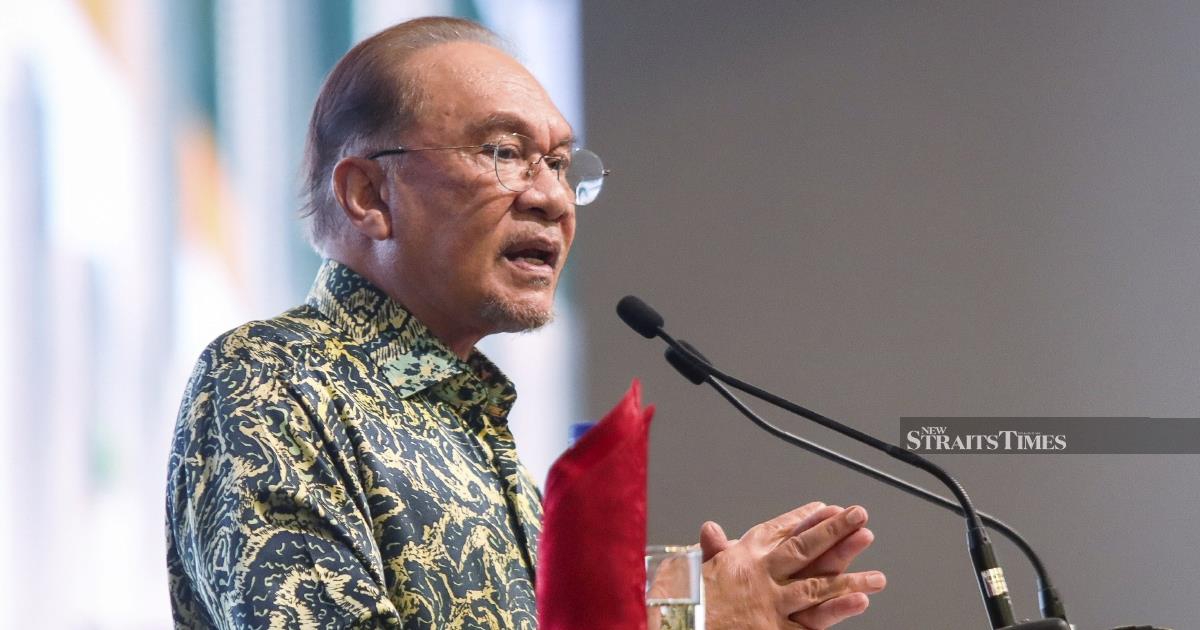
Prime Minister Datuk Seri Anwar Ibrahim travelled to Permatang Pauh to deliver a message directly to Malaysia's younger demographic: the administration values their input and wants them to move beyond polarising rhetoric that fragments society. Speaking to youth, Anwar underscored that his government recognises the frustrations many young people carry about employment prospects, cost of living pressures, and their role in shaping the nation's future. Rather than withdraw or embrace divisive movements, he argued, the country's next generation should channel their energy into constructive dialogue with government structures.
The Prime Minister's remarks reflect broader concerns about youth disengagement from mainstream political processes across Southeast Asia. In Malaysia specifically, younger voters have shown increasing willingness to support fringe political movements or abstain from formal political participation altogether, viewing traditional institutions as unresponsive or corrupt. Anwar's outreach appears designed to rebuild trust between government and this crucial demographic by demonstrating institutional openness to their grievances while simultaneously warning against extremist or sectarian messaging that could fracture social cohesion.
Young Malaysians face genuine structural challenges that drive frustration. Graduate unemployment remains elevated compared to previous decades, particularly in non-technical fields. Housing affordability has deteriorated sharply, with property prices climbing far beyond wage growth for those in their twenties and thirties. Meanwhile, social media algorithms often amplify contentious identity-based narratives, creating echo chambers where divisive ideologies flourish unchecked. Anwar's dual approach—acknowledging these real difficulties while rejecting the polarising frameworks some use to interpret them—addresses both the substance and the psychology of youth dissatisfaction.
The choice of Permatang Pauh carries political significance. Anwar has held this parliamentary seat since 1999, and it represents both his political heartland and a constituency with a substantial youth population. The venue thus functions as a symbol: this is territory where the Prime Minister has deep roots and legitimacy, from which he extends an invitation to younger voters to engage rather than reject the political mainstream. By framing the issue in terms of choosing between constructive engagement and destructive division, Anwar positions government collaboration as the mature, patriotic option.
Divisive narratives in Malaysia take multiple forms. Some centre on religious identity and interpretation, others on ethnic grievances real and imagined, and still others on regional or class resentments. During periods of economic stress or political uncertainty, young people with limited life experience and fewer economic anchors can find such narratives emotionally compelling. They offer simple explanations for complex problems and community belonging around a shared sense of grievance. Countering this pull requires not simply telling youth such ideas are wrong, but offering competing narratives that feel equally compelling and communities that feel equally belonging.
Government initiatives targeting youth employment and entrepreneurship have expanded in recent years, but their visibility and perceived effectiveness vary widely. Anwar's message suggests the administration recognises that policy alone cannot rebuild institutional trust; symbolic outreach, direct listening, and clear articulation of values matter equally. By personally appealing to young people rather than delegating such messaging to subordinates, the Prime Minister signals that this audience ranks among his highest concerns.
The generational dimension deserves attention. Many Malaysian youth came of age during periods of political instability, economic slowdown, and the early mainstreaming of social media divisiveness. They lack the lived experience of sustained economic growth or stable governance that characterised earlier generations' formative years. This altered baseline creates different expectations and frustrations. They demand more accountability, greater inclusion in decision-making, and visible action on issues like climate change and digital rights—concerns that older political frameworks were not designed to address. Anwar's acknowledgment that government listens implicitly recognises this shift in what constituencies expect from their leaders.
The rejection of divisive ideologies remains challenging precisely because such ideologies often contain kernels of truth mixed with distortion. Youth facing real discrimination, real economic obstacles, or real social exclusion may initially encounter these frameworks through genuine grievances. Effective counter-messaging must therefore validate underlying concerns while rejecting the poisonous interpretations layered atop them. This requires sustained engagement rather than one-off statements, genuine policy responsiveness alongside rhetorical appeal, and visible youth representation within decision-making structures.
Regionally, Malaysia's challenges mirror those across Southeast Asia where youth increasingly feel disconnected from formal political institutions. Thailand, Indonesia, and the Philippines have all witnessed surges in youth-driven protest movements, sometimes coalescing around anti-establishment positions that blur traditional left-right categories. The pattern suggests deep structural questions about whether existing institutions can effectively represent younger demographics' interests and values. Anwar's approach—combining acknowledgment of institutional listening with calls for youth participation within existing frameworks—represents one model for rebuilding that institutional legitimacy.
For Malaysian businesses and civil society organisations, the Prime Minister's remarks carry implicit messaging about social stability and cohesion. When large youth populations feel disconnected from government or drawn toward divisive movements, economic consequences follow: disrupted consumer confidence, reduced social trust, vulnerability to destabilising protests, and eventual political upheaval. The administration's investment in youth engagement thus serves multiple purposes: genuinely including young people in governance, rebuilding institutional legitimacy, and maintaining the stable environment necessary for economic activity.
Moving forward, the success of Anwar's appeal will depend on whether government actions match rhetorical commitments. Young Malaysians have heard promises before. Visible appointments of younger people to decision-making bodies, concrete policy shifts responsive to youth concerns, and transparent mechanisms for youth input into governance would substantiate the claim that government truly listens. Without such follow-through, even heartfelt appeals will ring hollow, potentially accelerating youth disengagement rather than reversing it.

