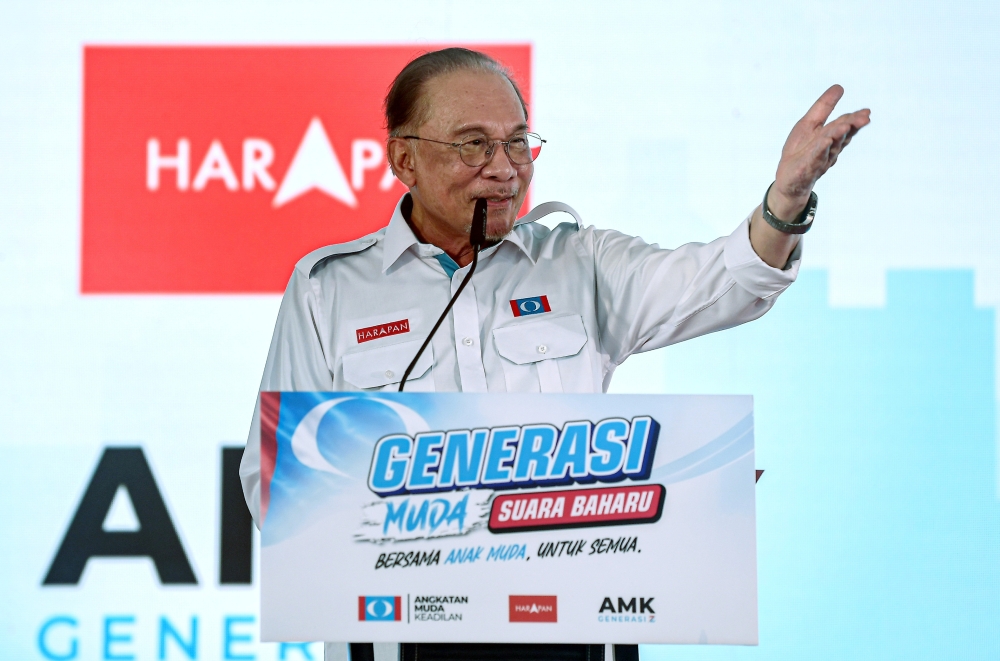
Prime Minister Datuk Seri Anwar Ibrahim has made an impassioned appeal to younger voters, particularly those from Generation Z, to abandon the entrenched patterns of divisive politics that have long characterised Malaysia's political landscape. Speaking in Petaling Jaya on July 25, the Prime Minister articulated a vision where political leadership selection prioritises merit and inclusivity over the traditional mechanisms that have perpetuated racial and religious divisions throughout the nation's independent history.
The call represents a deliberate attempt by Malaysia's political apex to reshape the narrative around governance at a critical juncture. Anwar's remarks suggest recognition that the demographic composition of the electorate has fundamentally shifted, with younger citizens increasingly sceptical of appeals rooted in communal anxiety and historical grievances. This generational pivot carries significant implications for how political parties will need to campaign and govern over the coming decade, particularly as voter participation from citizens under 35 years old continues to grow.
The Prime Minister's emphasis on moving beyond fear-based political messaging directly challenges the operational playbook that numerous political factions have relied upon for decades. Throughout Malaysia's post-independence period, electoral competition has frequently centred on mobilising voter bases through appeals to communal self-interest and anxieties about social position or privilege. Anwar's intervention suggests the government recognises that this approach faces diminishing returns as voters with limited personal memory of pre-independence communal tensions become the electoral majority.
Gen Z voters in Malaysia represent a cohort shaped by globalisation, digital connectivity, and exposure to diverse political ideas and models. Many have witnessed the consequences of persistent communal division, including governmental inefficiency, corruption, and institutional dysfunction that impedes economic and social progress. This lived experience creates receptivity to messages emphasising performance, transparency, and merit-based advancement—precisely the themes Anwar has increasingly emphasised since assuming office.
The Prime Minister's remarks also implicitly critique the strategies employed by opposition parties, many of which continue to rely heavily on communal mobilisation tactics and fear narratives regarding secular governance or threats to particular groups' constitutional positions. By positioning himself as advocating for transcendence of such approaches, Anwar seeks to capture the political centre ground among younger, urban-based voters who form the demographic bedrock of Malaysia's emerging middle class.
However, the feasibility of substantially altering Malaysia's political culture through appeals to generational change presents genuine obstacles. Institutional structures, including constituency delineation patterns and media landscape fragmentation, continue to reward parties that can mobilise concentrated communal blocs effectively. Additionally, political parties attempting to abandon identity-based mobilisation risk alienating older voter segments who remain numerically significant in electoral terms, creating strategic dilemmas for organisations seeking to broaden appeal while maintaining existing support.
The timing of Anwar's remarks reflects intensifying competition for control over Malaysia's political future as the nation approaches potential electoral contests. By explicitly courting Gen Z voters and framing their engagement as essential to national renewal, the Prime Minister positions his coalition as the vehicle for generational change. This rhetorical strategy carries particular weight given persistent concerns about institutional credibility and governmental effectiveness that have characterised Malaysian politics since the 2018 watershed election and subsequent political turbulence.
Gen Z mobilisation for political participation remains incomplete in Malaysia, with voter registration and turnout among younger citizens lagging considerably behind older demographics. Any substantive political realignment favouring merit-based, inclusive governance would require not merely rhetorical appeals but concrete governmental performance delivering tangible benefits to younger citizens. Economic opportunity creation, educational quality, and addressing environmental concerns represent priority areas where younger voters assess government effectiveness.
The Prime Minister's call also signals recognition that Malaysia's international standing and economic competitiveness increasingly depend on moving beyond internal divisions that consume governmental bandwidth and investor confidence. Multinational enterprises and international investors increasingly prioritise jurisdictions demonstrating institutional stability and inclusive governance frameworks. By positioning Malaysia as transcending racial and religious conflict through generational leadership renewal, Anwar seeks to address both domestic reform imperatives and international competitive positioning.
For Malaysian political parties across the spectrum, Anwar's message presents both challenge and opportunity. Those perceiving continued electoral advantage in communal mobilisation risk appearing dated and parochial to younger voters increasingly focused on tangible governance outcomes. Conversely, parties successfully pivoting toward inclusive, performance-based positioning may capture emerging voter cohorts whose political preferences remain substantially unsettled and malleable compared to older generational blocs.
The success of Anwar's appeal ultimately depends on translating rhetorical commitment to merit-based governance into demonstrable institutional change. Gen Z voters assess political leadership primarily through outcome-based evaluation rather than ideological positioning or communal affiliation. Delivering measurable improvements in economic opportunity, institutional transparency, and social inclusion remains the essential prerequisite for converting aspirational messaging into durable electoral support among Malaysia's youngest and fastest-growing voter cohort.

