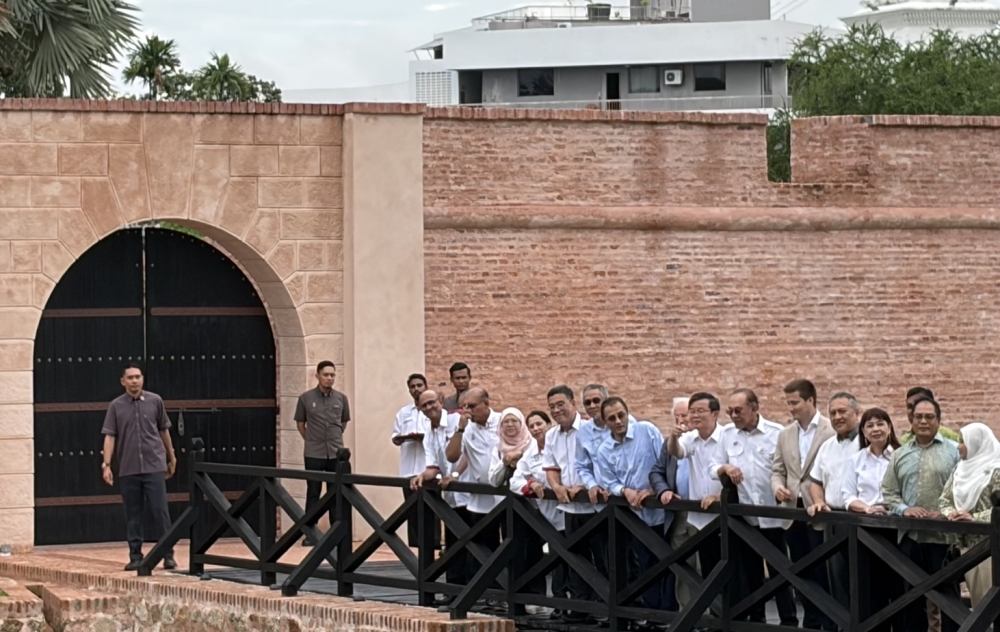
Prime Minister Datuk Seri Anwar Ibrahim has articulated a vision for Malaysia's future that fundamentally rests upon reshaping how the nation understands and interprets its own past. Speaking in George Town on July 25, Anwar contended that Malaysia's historical narrative requires deliberate reconstruction to better serve the country's ongoing nation-building endeavours. This intervention signals a significant emphasis from the highest levels of government on how historical understanding shapes contemporary political and social development.
The Prime Minister's position reflects a broader recognition that historical narratives are not static scholarly matters confined to academic institutions, but rather active forces that continuously shape public consciousness, national identity, and policy direction. By advocating for reconstruction of historical understanding, Anwar appears to be suggesting that certain interpretations of Malaysia's past may no longer adequately reflect the nation's current aspirations or demographic realities. This perspective positions history not merely as a record of what occurred, but as a malleable framework that should be consciously adapted to support present-day objectives.
For Malaysian readers, Anwar's statement carries particular significance given the country's complex multicultural composition and the longstanding debates surrounding how different communities' contributions are represented in the national historical canon. Malaysia's history encompasses multiple strands—pre-colonial sultanates, colonial administration, anti-colonial resistance movements, and the formation of the modern federation—each with competing interpretations and emphases. The Prime Minister's call suggests discomfort with how these various threads have been traditionally woven into the national narrative.
The concept of historical reconstruction that Anwar promotes aligns with broader global trends where nations have increasingly revisited their founding narratives to address historical omissions, correct factual distortions, or emphasize previously marginalised perspectives. South Africa's Truth and Reconciliation Commission, India's reexamination of colonial-era history, and Indonesia's reconsideration of its independence struggle represent examples where nations have deliberately reshaped historical understanding to support contemporary national goals. Malaysia's consideration of similar approaches would represent a significant intellectual and policy shift.
Anwar's emphasis on aligning historical narrative with nation-building carries implications for how Malaysia addresses contemporary challenges including communal harmony, social cohesion, and economic integration. If historical narratives are deliberately reconstructed to highlight shared struggles, common achievements, and interconnected destinies across Malaysia's diverse communities, they could theoretically strengthen identification with a unified Malaysian national project. Conversely, the process of historical reconstruction itself must be managed carefully to avoid perceptions of political manipulation or erasure of inconvenient truths.
The timing of Anwar's remarks in George Town, the capital of Penang, is noteworthy given that state's distinctive historical trajectory as a major colonial trading port and contemporary multicultural centre. Penang's unique position as a historically Chinese-majority state with significant Indian and Malay populations, combined with its role as an intellectual and commercial hub, makes it a fitting location for articulating visions about national historical consciousness. The state's history of relative intercommunal cooperation provides a potential template for how reconstructed narratives might emphasize unity while acknowledging diversity.
Educational institutions, particularly universities and schools, will likely become focal points for any systematic effort to reconstruct historical narrative. Curriculum development, textbook authorship, and academic research priorities would all need alignment with whatever new historical framework the government seeks to establish. Such changes inevitably raise questions about academic freedom, scholarly independence, and the boundary between legitimate historical reinterpretation and politically-motivated revisionism. Malaysian universities and intellectual communities will face pressure to balance government objectives with scholarly integrity.
Regionally, Malaysia's approach to historical reconstruction carries relevance for Southeast Asia more broadly. The region comprises nations with their own contested historical narratives, including debates about colonialism, nationalism, and regional relationships. How Malaysia navigates the challenge of reconstructing its historical narrative while maintaining scholarly credibility and public trust could influence approaches adopted by neighbouring countries facing similar pressures to reframe national histories.
The practical implementation of Anwar's vision remains unclear. Questions persist about which aspects of Malaysian history require reconstruction, what the reimagined narrative should emphasise, which stakeholders would be consulted in this process, and how existing historical scholarship would be reconciled with new frameworks. Whether this represents a call for subtle reframing of emphasis within existing historical parameters or wholesale revision of fundamental historical interpretations will determine the magnitude of this initiative's impact.
Critically, any reconstruction of Malaysia's historical narrative must navigate the tension between strategic nation-building and historical accuracy. While historical narratives inevitably reflect contemporary preoccupations and serve present purposes, they must remain grounded in factual reality and scholarly rigor. The challenge for Malaysian policymakers and intellectuals will be determining how to reshaping historical understanding in ways that genuinely serve national cohesion without sacrificing the complexity, nuance, and honesty that serious historical engagement demands.

