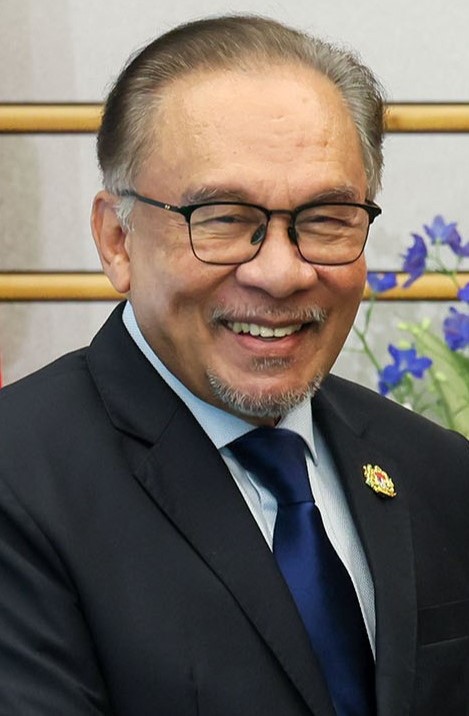
Pakatan Harapan chairman Datuk Seri Anwar Ibrahim has drawn a clear line between political competition and the constitutional role of Malaysia's Malay Rulers, asserting that the forthcoming Johor state election should be decided purely through electoral means rather than institutional interference. Speaking at an event in Tangkak, Anwar stressed the importance of maintaining traditional boundaries between the political sphere and the ceremonial authority wielded by royal institutions in the state.
His remarks come at a time when Malaysia's electoral landscape continues to experience turbulence following numerous coalition realignments and contests over state government formation. The emphasis on separating political battles from royal involvement reflects broader constitutional conventions that have defined Malaysian governance since independence, where Rulers retain ceremonial and advisory roles while elected representatives make executive decisions through parliamentary processes.
The Johor state election carries significant implications for national politics, as the state has historically served as a political bellwether and power base for various coalitions. The outcome could influence the balance of federal politics and determine control over one of Malaysia's most economically important states, home to major manufacturing, petrochemical, and agricultural sectors that contribute substantially to national output.
Anwar's intervention suggests concerns about maintaining constitutional propriety during electoral contests. In Malaysian parliamentary systems, state Rulers exercise important ceremonial functions such as state assembly dissolution and government formation, but these powers are expected to be exercised on the advice of the Chief Minister or, in dissolution cases, according to constitutional procedures. Any perception that royal institutions are being drawn into partisan political competition threatens to compromise their constitutional impartiality.
The Johor political environment has proven particularly volatile in recent years, with multiple changes in state administration and numerous defections across party lines. Coalition partnerships have been tested repeatedly, and the state has witnessed intense factional competition within political blocs. Against this backdrop, Anwar's call appears designed to reinforce the principle that while electoral contests may be vigorous, the institutional structures that oversee and facilitate these competitions must remain neutral and above partisan interests.
Constitutional scholars have long emphasised that the strength of Malaysia's monarchical system depends on public confidence in the political neutrality of royal institutions. When Rulers or their administrative offices become entangled with particular political outcomes, it risks eroding public trust in both the Rulers themselves and the institutions they represent. This concern becomes particularly acute during closely contested elections where the margin between competing coalitions may be narrow.
For Pakatan Harapan, maintaining this boundary also serves strategic interests. As a coalition that has governed federally and in multiple states, PH benefits from strong constitutional conventions that limit executive interference and maintain orderly institutional processes. Electoral defeats can be challenged through established legal channels, but constitutional proprieties cannot easily be restored once damaged through political misadventure.
The Johor state election will likely determine the trajectory of state governance and policy priorities for the coming five-year term. Major questions regarding economic development, infrastructure investment, environmental stewardship, and social welfare remain contingent on who controls the state government. These are fundamentally political questions that ought to be resolved through voter preference rather than backdoor institutional manoeuvres.
Anwar's positioning also reflects the experience of other Commonwealth democracies that maintain constitutional monarchies. In nations like Australia, Canada, and the United Kingdom, governors-general, governors, and other representatives of the Crown maintain strict political neutrality, and any perception of partisan involvement triggers significant constitutional controversy. Malaysia's Rulers, while more directly involved in state governance than their counterparts in these nations, nonetheless operate within similar expectations of impartiality.
The broader context of Malaysian politics suggests that the frequency with which electoral contests intersect with constitutional questions has increased in recent decades. Multiple state governments have changed hands through coalition arrangements rather than fresh elections, and the negotiation processes surrounding government formation have occasionally appeared to involve pressure on royal institutions. Anwar's statement serves as a reminder to all political actors—regardless of affiliation—of the importance of respecting these constitutional boundaries.
For Southeast Asian observers, Malaysia's model demonstrates how constitutional monarchies can coexist with competitive democracy, provided that political actors respect institutional boundaries and refrain from attempting to instrumentalise ceremonial institutions for partisan advantage. The health of Malaysian democracy depends partly on all contenders for power accepting that some contests can be lost, some decisions can be appealed, but constitutional proprieties remain non-negotiable.
As Johor moves toward its election, Anwar's intervention frames the coming campaign as a political test to be resolved through established democratic processes. Whether all political actors heed this implicit call for restraint will partly determine whether the election reinforces or undermines public confidence in Malaysia's institutional framework. The stakes extend beyond state governance to encompass the broader relationship between electoral politics and constitutional governance in Malaysia.