%22%2F%3E%3C%2Fpattern%3E%3C%2Fdefs%3E%3Crect%20width%3D%22100%25%22%20height%3D%22100%25%22%20fill%3D%22url(%23ph4ybd8g)%22%2F%3E%3Crect%20width%3D%22100%25%22%20height%3D%22100%25%22%20fill%3D%22url(%23ph4ybd8p)%22%2F%3E%3Ctext%20x%3D%2250%25%22%20y%3D%2250%25%22%20text-anchor%3D%22middle%22%20dominant-baseline%3D%22central%22%20fill%3D%22rgba(255%2C255%2C255%2C0.95)%22%20font-family%3D%22Georgia%2C%20'Times%20New%20Roman'%2C%20serif%22%20font-weight%3D%22700%22%20font-size%3D%22272%22%20letter-spacing%3D%22-0.02em%22%3EAnwar%3C%2Ftext%3E%3C%2Fsvg%3E)
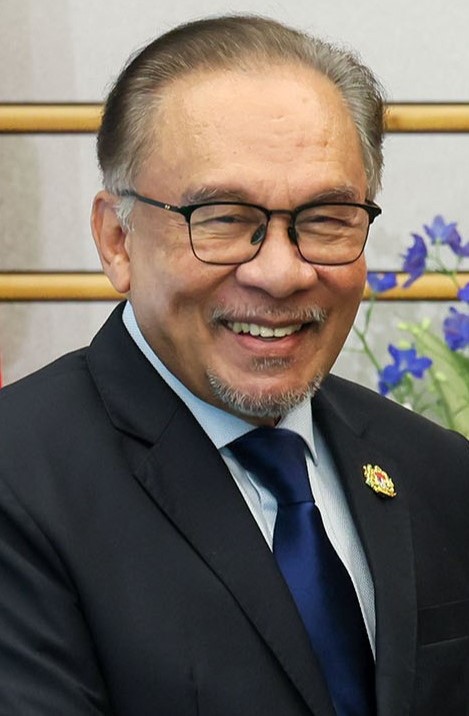
Prime Minister Datuk Seri Anwar Ibrahim has drawn a clear boundary between electoral politics and constitutional monarchy, arguing that campaigning should remain the exclusive domain of competing political parties without the involvement or endorsement of royal institutions. Speaking on the matter, Anwar articulated a vision of electoral conduct that preserves the independence and neutrality expected of Malaysia's constitutional framework while allowing vigorous political competition to unfold among parties vying for public support.
The Prime Minister's remarks reflect broader concerns about maintaining institutional separation within Malaysia's democratic and constitutional system. By explicitly stating that elections should be contested between political parties alone, Anwar appears to be addressing implicit or explicit attempts to draw royal figures into partisan activities. This demarcation becomes increasingly important in a political environment where various factions compete for legitimacy and public backing, sometimes by invoking or attempting to associate themselves with institutions perceived as above ordinary political contestation.
Malaysia's constitutional monarchy traditionally occupies a position of formal authority coupled with restraint from partisan involvement. The Malay Rulers, serving as constitutional monarchs in their respective states alongside the Yang di-Pertuan Agong at the federal level, are expected to maintain political neutrality. When electoral campaigns incorporate royal figures or institutions, this principle becomes compromised. Anwar's intervention suggests that certain developments in recent electoral cycles have prompted the need for such a clarification from the highest executive authority.
The significance of this statement extends beyond mere procedural refinement. Elections form the bedrock of democratic legitimacy, and their integrity depends partly on the widespread perception that all participants operate within recognised rules and that non-partisan institutions remain genuinely neutral. When royal institutions become entangled in partisan campaign narratives, they risk losing the apolitical standing that makes them valuable to national cohesion. For a multi-ethnic democracy like Malaysia, where constitutional monarchy serves as a unifying symbol transcending ethnic and religious lines, protecting institutional neutrality carries particular weight.
Anwar's position also addresses practical challenges that emerge when boundaries blur between electoral politics and other spheres of national life. Campaign resources, media coverage, and mobilisation efforts can become distorted if politicians attempt to harness royal visibility or endorsement. Moreover, royal institutions themselves may face pressure from various quarters seeking their association with particular candidates or parties. By establishing a clear normative standard from the Prime Minister's office, such attempts become more difficult to justify as purely institutional or necessary.
Regionally, Malaysia's approach to balancing electoral democracy with constitutional monarchy offers lessons relevant to other Southeast Asian democracies navigating similar tensions. Thailand's historical struggles with military interventions partly reflect ambiguity about the monarchy's role in political contests. Indonesia, despite its republican system, grapples with how to position its national symbols relative to electoral competition. Malaysia's effort to maintain clarity about institutional boundaries thus holds instructive value beyond its borders.
The practical implications of Anwar's statement remain to be observed in future electoral campaigns at state and federal levels. Political parties typically retain considerable discretion in their campaign strategies, and enforcement mechanisms for maintaining separation between electoral politics and royal involvement remain somewhat diffuse. Party discipline, media scrutiny, and public expectations around proper conduct emerge as key mechanisms through which such principles gain traction. Civil society organisations focused on electoral integrity may also play a role in monitoring compliance with the spirit of Anwar's guidance.
Anwar's intervention also reflects his positioning as a leader invested in strengthening democratic institutions after years of political turbulence. His administration has emphasised institutional reform, anti-corruption measures, and respect for constitutional processes. In this context, clarifying the boundaries around electoral conduct becomes part of a broader agenda to reinforce faith in democratic procedures. By stating explicitly that elections belong to political parties rather than royal institutions, Anwar signals commitment to a democratic model where electoral competition remains vibrant and legitimate without requiring validation from sources outside the political sphere.
The statement carries implications for how younger political movements, particularly those seeking to mobilise new constituencies, conduct their campaigns. Newer or alternative parties sometimes attempt to build legitimacy by associating themselves with traditional or royal symbols. Anwar's clear articulation of boundaries makes such strategies less viable and potentially more controversial. Established parties similarly receive notice that relying on royal connections represents an unreliable or inappropriate foundation for campaign strategy.
Fundamentally, Anwar's call reinforces a democratic principle often taken for granted in established democracies but requiring periodic reaffirmation in younger systems: that electoral contests derive their legitimacy from competing visions, policy proposals, and organisational capacity rather than from patronage networks or institutional associations. By insisting that elections remain the domain of political parties, the Prime Minister positions Malaysia within a democratic tradition where elections represent contests among citizens and their chosen representatives, overseen by neutral institutions rather than contested by them.