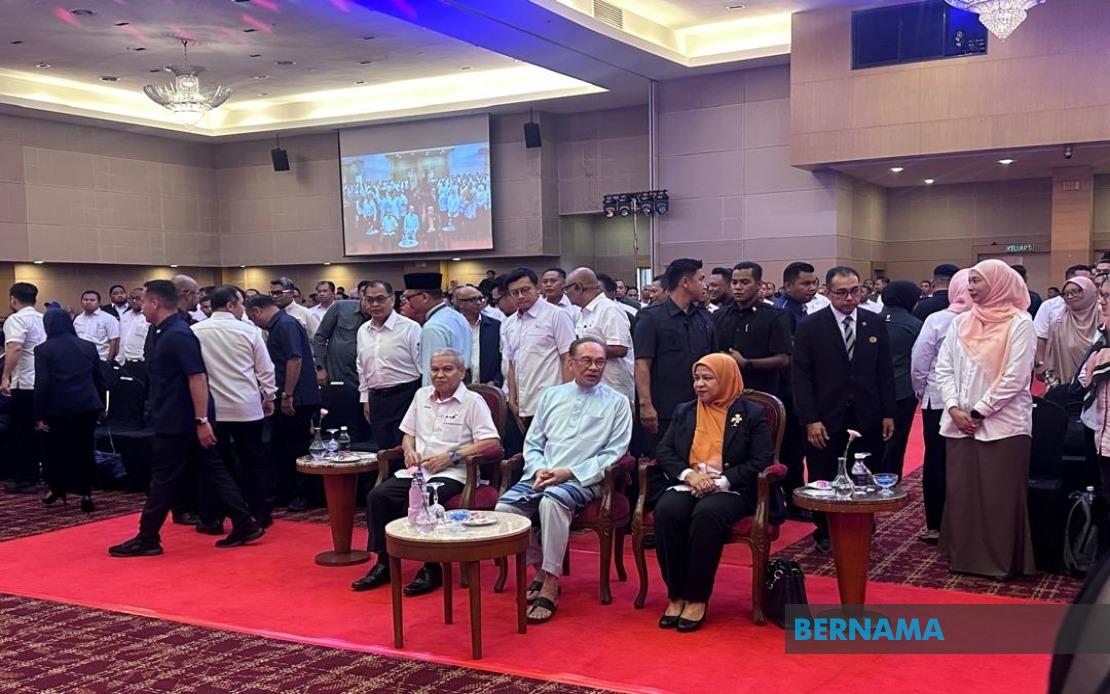
Prime Minister Datuk Seri Anwar Ibrahim has signalled he will hold off from making any public statements regarding the Federal Land Development Authority (FELDA) until the Special Task Force investigating the agency has concluded its comprehensive examination. Speaking after a management forum at Tenera Hotel in Bangi on Wednesday, Anwar indicated that the investigative body has commenced work and that findings will be presented in the coming months, with full public disclosure to follow once the process is complete.
The Prime Minister's measured approach reflects the complexity and sensitivity surrounding FELDA, a venerable institution that has served as the backbone of rural development and land settlement schemes since its establishment decades ago. By waiting for conclusive findings rather than rushing to preliminary announcements, Anwar is attempting to ensure that any policy responses or administrative changes are grounded in comprehensive evidence rather than incomplete data or political expediency.
In his remarks, Anwar outlined the scope of the investigation beyond mere historical accountability. While identifying past management lapses forms part of the mandate, he stressed that the task force is equally focused on assessing current operational frameworks and charting a more robust path forward for the organisation. This dual emphasis suggests the government views the exercise not purely as a reckoning but as an opportunity to modernise FELDA's governance structures and enhance institutional effectiveness.
The announcement comes as Malaysian citizens and stakeholders await clarity on one of the country's oldest development agencies. FELDA, which has managed vast stretches of agricultural land and overseen the welfare of thousands of settler families, has faced mounting scrutiny in recent years over allegations of mismanagement and financial irregularities. The establishment of the Special Task Force therefore represents a formal commitment to transparency and accountability, albeit one that requires patience from the public eager for rapid resolution.
Anwar's comments reflect a deliberate strategy of managing expectations and avoiding premature commitments. By explicitly noting that the task force has only recently begun its investigations, the Prime Minister is effectively managing the timeline for public revelation, signalling that thorough work takes time and cannot be rushed simply to satisfy immediate political demands. This stands in contrast to perceptions of quick-fix governance that have characterised some earlier policy announcements.
The involvement of FELDA leadership, including chairman Tan Sri Ahmad Badri Mohd Zahir and director-general Datuk Dr Suzana Idayu Wati Osman, in the management forum suggests an attempt to foster collaborative problem-solving rather than an adversarial investigation. Their presence alongside the Prime Minister indicates that current FELDA administrators are being brought into the dialogue about institutional reform, potentially positioning them as partners in renewal rather than subjects of blame.
Anwar has already indicated his intention to release the complete investigation report publicly, much as was done with the Royal Commission of Inquiry findings on Tabung Haji. This commitment to open disclosure mirrors broader expectations around transparency in governance and contrasts with historical patterns where sensitive institutional reviews were kept confidential or selectively disclosed. By explicitly inviting public scrutiny and analysis of the eventual report, Anwar is setting a precedent for transparency that extends beyond FELDA to other potential governance inquiries.
For Malaysian investors, FELDA stakeholders, and settler communities dependent on the agency's operations, the pending investigation carries significant implications. The findings may trigger restructuring of management hierarchies, policy reforms governing land allocation and settler benefits, or changes to FELDA's financial management protocols. Given the agency's role as custodian of rural livelihoods and land resources affecting hundreds of thousands of Malaysians, the stakes extend well beyond institutional reputation to tangible impacts on rural development strategy and resource allocation.
The investigation also resonates within the broader context of Malaysia's governance reform agenda. Since returning to office, the current administration has initiated multiple institutional reviews and transparency initiatives intended to restore public confidence in government bodies and address accumulated grievances from previous administrations. FELDA joins a lengthening list of organisations undergoing formal scrutiny, signalling a government determined to root out systemic problems though the process remains ongoing and unresolved.
Regional observers watching Malaysian governance trends will note the emphasis on institutional accountability mechanisms. Neighbouring Southeast Asian nations grappling with similar questions about state-owned enterprise governance and development agency effectiveness may view Malaysia's approach as a case study in balancing reform imperatives with institutional stability and stakeholder management. The method by which Malaysia conducts and then publicly addresses institutional failings carries implications beyond domestic politics.
For FELDA settlers and their representatives, the wait for the task force report represents both opportunity and uncertainty. An investigation conducted transparently and acted upon decisively could restore institutional credibility and improve service delivery. Conversely, if findings are seen as whitewashed or recommendations are implemented only partially, public confidence in both FELDA and the government's reform commitment may deteriorate further, potentially affecting political support in rural constituencies traditionally aligned with FELDA interests.
Anwar's deliberate pacing suggests he is conscious of the political dimensions inherent in any public airing of FELDA's institutional problems. By ensuring the investigation is thorough and the findings are complete before disclosure, he may be attempting to preempt accusations of selective presentation or politically motivated findings. The transparency commitment, meanwhile, reflects lessons learned from earlier governance crises where secretive processes bred suspicion and conspiracy theories among Malaysian publics accustomed to greater information access.
Ultimately, the coming months will test whether the Special Task Force delivers genuine institutional reform or merely provides political cover for administrative reshuffling. As Anwar awaits the complete report and Malaysians await public disclosure, FELDA itself must continue operating effectively to serve its settler communities regardless of what historical investigations may reveal about past management decisions. The challenge lies in conducting thorough accountability while maintaining operational continuity, a balance that will define the success of this government initiative.

