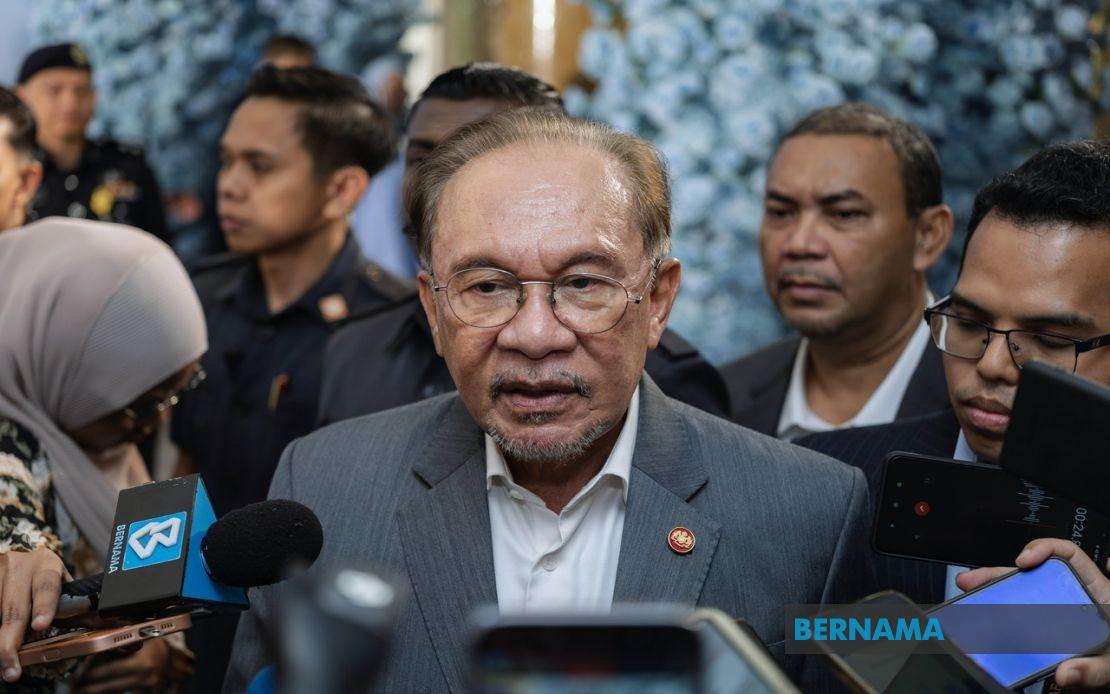
Prime Minister Datuk Seri Anwar Ibrahim remains without comprehensive details regarding the circumstances that prompted four Melaka DAP state representatives to exit the Melaka state government, with the coalition's senior leadership promising swift action on the politically sensitive matter. Speaking to journalists in Kuala Lumpur on July 15, Anwar, who also chairs the Pakatan Harapan coalition, indicated that relevant parties had not yet provided him with a full account of the internal dynamics driving the unexpected withdrawal decision.
The four assemblymen—Allex Seah Shoo Chin of Kesidang, Low Chee Leong of Kota Laksamana, Leng Chau Yen of Banda Hilir, and Kerk Chee Yee of Ayer Keroh—announced their immediate departure from the state administration on July 14, mere hours after the Melaka State Legislative Assembly passed controversial constitutional amendments. These amendments introduced provisions permitting the appointment of nominated assemblymen to the state legislature, a move that evidently triggered sufficient concerns within DAP's Melaka branch to precipitate the coordinated resignation.
The timing of the four lawmakers' exit underscores growing tensions within the coalition's Melaka apparatus regarding institutional changes at the state level. Rather than resigning from their legislative seats, which would have triggered by-elections, the four chose the more measured approach of withdrawing their participation in the state government structure. This distinction carries significance, as it preserves their ability to remain in the assembly while signalling fundamental disagreement with the administration's direction.
Anwar's admission that he lacked prior briefing on the episode represents a notable governance gap, highlighting communication challenges within PH's hierarchical structure. For a coalition government at the federal level, the disconnect between federal party leadership and state-level developments is substantive, particularly when constituent parties take coordinated political action. The Prime Minister's statement suggests that provincial branches may operate with considerable autonomy, or alternatively, that information flows from state to federal headquarters require strengthening.
The constitutional amendments themselves warrant closer examination within Malaysia's broader political context. Nominated assemblyman provisions have historically served as mechanisms to strengthen executive control and reward political allies without subjecting appointments to electoral scrutiny. DAP, positioned as a reform-oriented party within the opposition-turned-government coalition, has frequently articulated reservations about governance structures perceived as circumventing democratic principles. The Melaka party branch's objection thus reflects ideological consistency with DAP's stated values, even as it creates friction with coalition partners and creates complications for state administration.
Anwar's subsequent appeal for DAP to reconsider the withdrawal decision demonstrates his concern about the political fallout. Requesting that the party postpone its exit to concentrate on developmental initiatives and public welfare effectively frames the issue as one of governmental continuity versus internal discord. The framing, however, may overlook DAP representatives' underlying concerns about institutional legitimacy and the constitutional changes they view as problematic.
For Malaysian political observers, this episode illustrates the persistent vulnerabilities in Pakatan Harapan's coalition architecture. Despite controlling both federal and multiple state governments, PH remains susceptible to internal disagreements that can rapidly destabilize administrations. Melaka represents one of Malaysia's smaller states, yet the withdrawal of four assemblymen creates genuine complications for the state executive's legislative support base. Understanding precisely how many seats the PH administration now commands becomes essential for assessing the government's stability and potential vulnerability to no-confidence motions.
The constitutional amendment controversy also resonates across Southeast Asia's political landscape, where many democracies grapple with balancing appointed institutional mechanisms against pressure for more representative governance. Malaysia's recent democratic trajectory has involved successive governments expanding or contracting appointed positions depending on political circumstances, creating an environment where institutional architecture becomes increasingly politicized.
Regionally, the Melaka situation may signal how coalition governments comprising ideologically diverse partners navigate governance tensions. Thailand's complex coalition arrangements, Indonesia's proportional representation challenges, and Singapore's controlled opposition environment all present different models for managing constituent interests. Malaysia's federal coalition system, by contrast, permits constituent parties to withdraw from specific administrations while maintaining broader alliance structures, creating a more fluid but potentially more unstable political equilibrium.
Looking forward, the timing of Anwar's promised follow-up action remains undefined, creating uncertainty for Melaka stakeholders. Whether PH's leadership decides to facilitate DAP's re-entry, accommodate the party's permanent departure, or negotiate a compromise solution will significantly influence the coalition's cohesion narrative heading toward state elections. The incident also raises questions about whether ideological consistency or pragmatic governance will guide PH's internal dispute resolution mechanisms.
For Malaysian readers across the peninsula, this Melaka development merits attention as a potential harbinger of wider coalition instability. If multiple constituent parties begin withdrawing from specific administrations based on policy disagreements, the entire federal government's structural viability could face questions. Conversely, if PH successfully manages this dispute through constructive dialogue, it may demonstrate the coalition's maturing institutional capabilities. The coming weeks will prove instructive regarding both Melaka's governmental trajectory and Pakatan Harapan's resilience as Malaysia's governing force.

