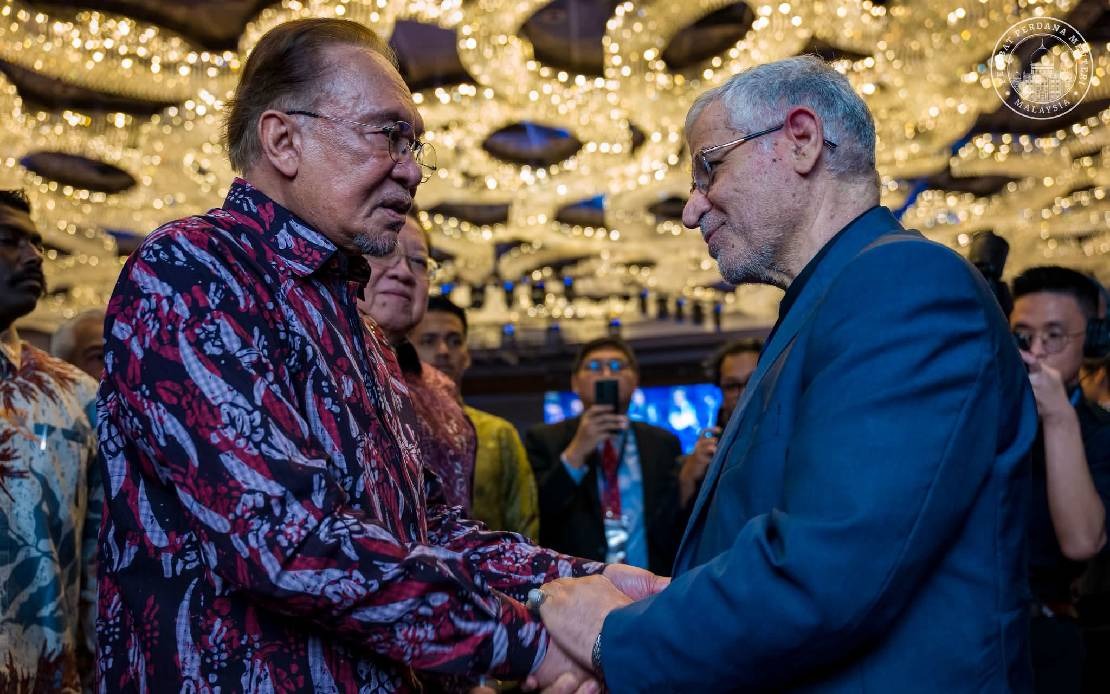
Prime Minister Datuk Seri Anwar Ibrahim has formally conveyed his regrets to the Iranian Government for being unable to attend the state funeral and farewell ceremonies of Iran's Supreme Leader, the late Ayatollah Ali Khamenei. The apology was communicated during a bilateral meeting with Iranian Ambassador to Malaysia Valiollah Mohammadi held on the sidelines of the 39th Asia-Pacific Roundtable conference in Kuala Lumpur on July 2, with the Prime Minister subsequently announcing the exchange through a Facebook post.
Khamenei, who was 86 years old, died at his residence in central Tehran on February 28 following a joint military operation involving the United States and Israel. His death marked the end of a 35-year tenure as Iran's Supreme Leader, making him one of the most influential figures in contemporary Middle Eastern politics. The passing of such a pivotal leader carried significant implications for regional stability and Iran's domestic political trajectory, elevating the symbolism of international attendance at his funeral ceremonies.
The Malaysian Prime Minister explained that prior commitments of considerable importance rendered his personal attendance at the funeral impossible. Rather than leaving his responsibilities unattended, Anwar opted to delegate Malaysia's representation to Agriculture and Food Security Minister Mohamad Sabu, ensuring that the country maintained an appropriate diplomatic presence at the ceremonies. This decision reflected a balancing act between honouring bilateral relations with Iran and fulfilling pressing domestic governmental obligations.
The farewell ceremonies were scheduled as an extended observance spanning six days commencing on July 4, underscoring the significance Iran accorded to its deceased leader's departure. The programme included funeral processions traversing Tehran and Qom, two of Iran's most sacred cities, before culminating in the interment at the Imam Reza Shrine in Mashhad on July 9. This geographical routing through multiple cities allowed citizens across different regions to participate in commemorative activities and reflected Khamenei's profound influence across Iran's religious and political landscape.
For Malaysia, attending the funeral of a significant foreign leader carried diplomatic weight that extended beyond ceremonial courtesy. Iran holds considerable importance within Organisation of Islamic Cooperation circles, and maintaining cordial relations aligns with Malaysia's broader regional foreign policy objectives. The attendance of a cabinet minister rather than the Prime Minister, whilst not ideal, represented a pragmatic compromise that preserved Malaysia's commitment to the bilateral relationship despite scheduling conflicts.
Anwar's decision to personally convey his apologies through the Iranian ambassador rather than through routine diplomatic channels indicated the Prime Minister's recognition of the sensitive nature of his absence. Direct communication at this level underscores Malaysia's respect for Iran and acknowledges the significant role Khamenei played in shaping Middle Eastern geopolitics. The diplomatic courtesy demonstrated awareness of how such absences might be interpreted and reflected Malaysian diplomatic practice of managing relationships with major regional powers.
The Prime Minister also reiterated Malaysia's formal condolences to both the Iranian Government and its people, situating the apology within a broader expression of sympathy. This dual messaging—expressing regret for non-attendance whilst simultaneously affirming support during a period of national mourning—represents standard diplomatic protocol when navigating challenging circumstances. For Iranian officials, receiving such communications offers reassurance that Malaysia views the bilateral relationship as sufficiently important to warrant senior-level personal attention even when direct participation proves impossible.
Khamenei's death and the subsequent succession process held implications extending beyond Iran's borders. As the Supreme Leader, he wielded immense authority over Iran's foreign policy, military decisions, and ideological direction. His passing therefore represented a potential inflection point in Middle Eastern affairs, making the funeral a gathering of significant regional and international figures seeking to gauge Iran's trajectory under new leadership. Malaysia's participation, whether through the Prime Minister or a senior minister, contributed to this broader diplomatic exercise.
The incident also reflects the practical realities of contemporary governance, wherein leaders must juggle multiple competing priorities. Whilst attending state funerals carries diplomatic significance, domestic demands often take precedence. Anwar's determination to send a high-ranking representative rather than leaving Malaysia unrepresented altogether demonstrated an attempt to square this circle—acknowledging the importance of the occasion whilst maintaining governmental continuity at home.
Looking forward, the apology and delegation mechanism preserve Malaysia's relationship with Iran whilst establishing precedent for managing similar situations. The Iranian Government's acceptance of the arrangement, signalled through the diplomatic exchange, suggests an understanding of the practical constraints facing modern statesmen. For Malaysian readers and policymakers, the incident illustrates how nations navigate complex diplomatic relationships amidst competing domestic and international obligations, a challenge increasingly familiar in Southeast Asian foreign policy circles.

