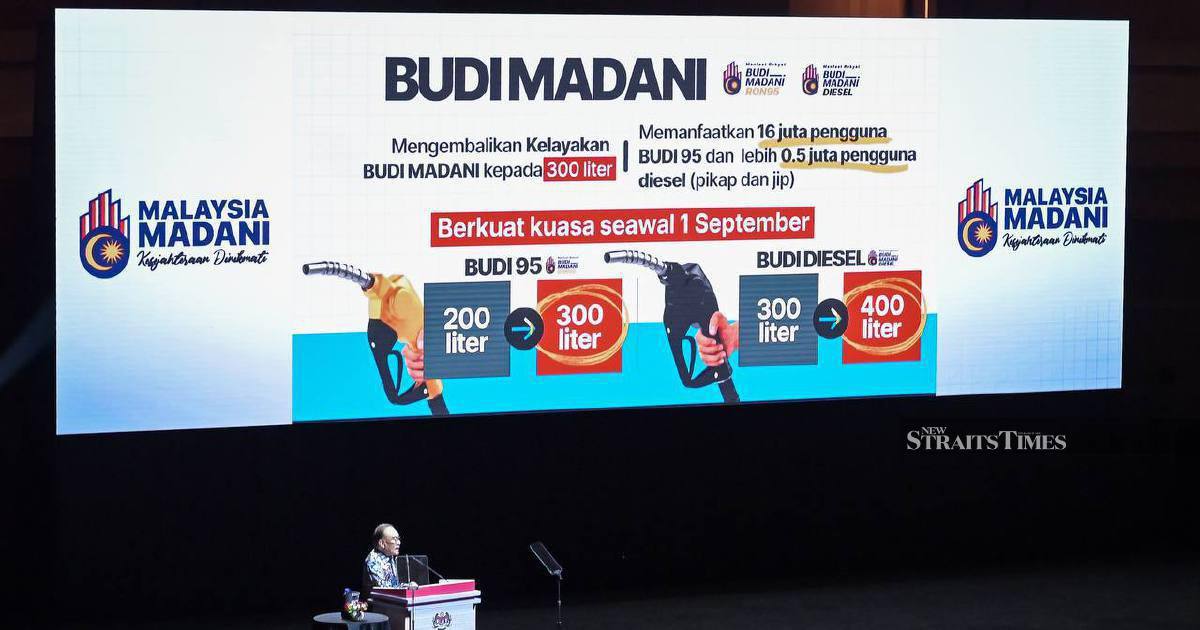
Prime Minister Datuk Seri Anwar Ibrahim has unveiled a six-point initiative designed to provide immediate relief to households and enterprises grappling with elevated living costs. The announcement, made during the National Day Eve address in Putrajaya, signals the government's intent to deploy targeted interventions before presenting the 2027 Budget in October. The timing underscores growing awareness within policymaking circles that Malaysian consumers and small-to-medium enterprises face sustained inflationary pressures that require swift governmental response.
The policy package represents a balancing act between providing immediate relief to struggling households and maintaining fiscal prudence ahead of the formal budget presentation. By announcing measures now, the government demonstrates responsiveness to public concerns about affordability while maintaining strategic flexibility in the comprehensive budget document scheduled for October. This approach allows the administration to gauge public reception and economic conditions before finalising more substantial fiscal allocations.
The emphasis on supporting businesses alongside household relief reflects recognition that economic growth depends on private sector vitality. When companies face rising operational costs, they typically reduce hiring or delay expansion, ultimately dampening job creation and wage growth. By targeting business support measures, the government aims to sustain employment levels and prevent cascading economic slowdown that would compound cost-of-living challenges for ordinary Malaysians.
The announcement comes at a critical juncture for Malaysia's economic management. The nation has experienced persistent inflation in key consumer categories including food, transport, and utilities over recent quarters. Unlike price pressures in developed economies that have moderated significantly, Southeast Asian inflation—particularly in essentials—has proven more stubborn, affecting household budgets disproportionately among lower and middle-income groups.
For Malaysian readers, the significance lies in how these measures address immediate pain points while signalling medium-term economic strategy. Cost-of-living concerns dominate public discourse across income levels, with particular anxiety about housing, utilities, and food affordability. Any government action targeting these areas receives heightened scrutiny from electorate assessing whether policy matches lived experience.
The multi-pronged approach suggests recognition that no single measure adequately addresses such a complex challenge. Different sectors face distinct pressures—retail faces margin compression from rising input costs, manufacturers struggle with energy expenses, while households contend with broader purchasing power erosion. By deploying six complementary measures rather than one-off intervention, the government acknowledges this complexity and attempts broader coverage.
The pre-budget announcement also carries political dimensions. With the comprehensive 2027 Budget forthcoming, preliminary measures maintain momentum in government narrative about economic management. Early action demonstrates proactive governance while allowing space for the budget proper to introduce more comprehensive structural changes or longer-term initiatives. This sequencing prevents announcement fatigue and structures public expectations about government priorities.
For Southeast Asian context, Malaysia's approach reflects regional experience with inflation management. Neighbouring countries have similarly deployed measured interventions targeting specific sectors or income groups rather than broad-based stimulus. Thailand's household relief measures and Indonesia's targeted subsidies demonstrate how regional governments balance fiscal responsibility with social support during inflationary periods.
The business support component carries particular significance for Malaysia's economic trajectory. As a regional manufacturing and services hub, business confidence directly influences foreign investment and job creation. Companies facing uncertainty about cost recovery often freeze hiring or defer capital expenditure, creating ripple effects across employment markets. Supporting businesses during inflationary periods attempts to preserve investment momentum and employment stability.
Anticipation now focuses on specific details of these six measures—which sectors receive targeted support, what household income thresholds qualify for assistance, and how temporary versus permanent these interventions might be. The distinction matters significantly. Temporary measures provide immediate relief but risk creating adjustment challenges when withdrawn, while permanent changes carry substantial ongoing fiscal implications demanding careful calibration.
The October budget presentation will prove crucial in revealing the government's comprehensive vision. Whether these six measures represent genuine preliminary steps toward broader fiscal expansion, or tactical announcements designed to manage expectations before budget reality, will become apparent when Finance Minister tables the full proposal. Market reaction and public reception of these measures will likely shape final budget composition.
For Malaysian businesses and households, the immediate focus centres on implementation timeline and accessibility. Measures announced must reach intended beneficiaries effectively to deliver promised relief. Bureaucratic delays or complex application processes could undermine credibility and effectiveness, particularly among small enterprises and lower-income households with limited capacity to navigate complex procedures.
Looking forward, these measures establish baseline expectations for government cost-of-living support. If inflation persists through late 2024 and into 2025, public pressure for additional intervention will intensify. The government has thus signalled flexibility and responsiveness, positioning itself to potentially announce further measures if economic conditions deteriorate, while maintaining space to claim success if these initial steps prove sufficient.

