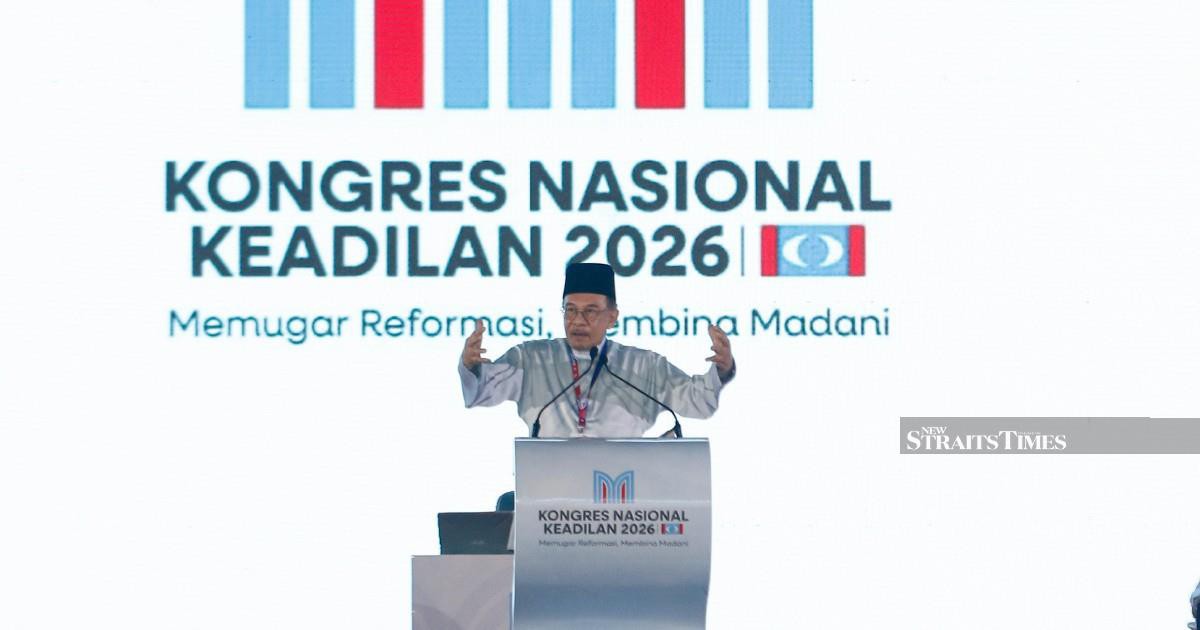
Prime Minister Datuk Seri Anwar Ibrahim has declared that his administration intends to repeal the Universities and University Colleges Act 1971, a foundational piece of legislation that has governed Malaysia's public university system for over five decades. The announcement, made at Ayer Keroh, signals a decisive break from the regulatory framework that has long defined the relationship between the federal government and Malaysia's tertiary institutions.
The Universities and University Colleges Act 1971, commonly referred to as Act 30, represents one of the most significant legislative instruments shaping higher education in the country. Originally enacted to establish a centralised system for managing universities and university colleges, the act has served as the backbone of governance for Malaysia's public university ecosystem. The decision to abolish it suggests that the current administration views the existing legal architecture as incompatible with its vision for modernising and decentralising higher education management.
This move carries substantial implications for Malaysia's 20-strong network of public universities, including prominent institutions such as Universiti Malaya, Universiti Kebangsaan Malaysia, and Universiti Teknologi Mara. The abolition would require parliament to approve replacement legislation or a substantially reformed regulatory framework, indicating that reform will not occur overnight but rather through deliberate legislative processes. The transition will demand careful coordination between the Ministry of Higher Education, university administrators, and academic stakeholders to ensure continuity during the restructuring period.
The repeal of Act 30 reflects growing recognition globally that rigid, centralised governance models may constrain institutional autonomy and responsiveness to regional needs. Malaysian universities have long operated under considerable restrictions on financial management, international partnerships, and hiring decisions, constraints that reformers argue have limited competitiveness with regional counterparts in Singapore, Thailand, and Indonesia. By dismantling the existing legal framework, the government appears committed to granting institutions greater operational freedom and accountability.
For Malaysian students and families, the restructuring potentially offers opportunities for improved educational quality and innovation. Universities freed from rigid statutory constraints may develop more flexible curriculum structures, expand international collaborations, and respond more dynamically to labour market demands. However, such benefits depend entirely on how replacement legislation is drafted and whether sufficient funding accompanies these reforms. Without adequate financial resources and clear governance guidelines, expanded autonomy could create institutional fragmentation rather than strengthened performance.
Regionally, Malaysia's higher education reform will be closely monitored by other Southeast Asian nations grappling with similar governance challenges. Thailand, Vietnam, and the Philippines have all pursued university autonomy reforms in recent years, though with mixed results. Malaysia's approach, combined with its advanced infrastructure and research capacity, could serve as either a cautionary tale or a model, depending on implementation success. The region's increasingly competitive higher education landscape means that institutional flexibility and resourcefulness have become essential competitive advantages.
The announcement also reflects Anwar's broader commitment to institutional reform and democratic governance. During his administration, the Prime Minister has pursued several policy changes designed to strengthen civil liberties and reduce state control over strategic sectors. Education reform aligns with this philosophical orientation, suggesting that the government views excessive regulatory control as an obstacle to meritocratic advancement and innovation. However, balancing greater autonomy with quality assurance and equitable access will test the government's capacity to maintain oversight without reverting to heavy-handed regulation.
Implementation of this reform will require extensive consultation with multiple stakeholders. University administrators will need input on transition arrangements and governance structures. Academic staff associations will likely scrutinise proposals regarding employment protections and contractual terms. Student organisations and parents' groups will want assurances that reforms enhance rather than compromise educational quality and accessibility. The government's willingness to engage meaningfully with these groups during drafting will substantially influence the reform's ultimate success.
The financial dimensions of higher education reform merit particular attention. Public universities have historically relied on government grants complemented by student fees and research funding. Increased autonomy without commensurate funding increases could force institutions to raise tuition fees dramatically, potentially undermining access for economically disadvantaged Malaysian students. Alternatively, universities might pursue aggressive commercialisation of research and international student recruitment, which could reshape their social mission. These financial questions remain unanswered and will shape the reform's real-world impact.
Moreover, the abolition of Act 30 creates an opportunity to reconsider higher education's relationship to Malaysia's economic development agenda. Replacement legislation could establish performance metrics aligned with the country's industrial transformation goals, innovation economy requirements, and professional workforce development needs. Strategic alignment between education policy and economic policy could enhance Malaysia's competitiveness in attracting foreign investment and developing high-value industries, particularly in technology, renewable energy, and advanced manufacturing sectors.
The timing of this announcement also reflects international pressures on Malaysian universities to improve global rankings and research output. Universities worldwide face scrutiny regarding their contribution to knowledge creation, graduate employment outcomes, and social impact. By reforming governance structures, Malaysia's universities may position themselves more effectively to pursue research excellence and international partnerships, though sustained improvement will require investment in research infrastructure, faculty recruitment, and professional development.
As the government moves forward with developing replacement legislation, clear communication about the reform's objectives and implementation timeline will be essential. Universities need certainty regarding their future operating parameters, financial arrangements, and governance responsibilities. Students and their families require assurance that educational quality will be maintained or enhanced. The broader Malaysian public deserves transparency about how public resources will continue serving higher education's public mission. Success depends not merely on abolishing outdated legislation but on crafting thoughtful alternatives that advance Malaysia's aspirations for educational excellence and equitable opportunity.

