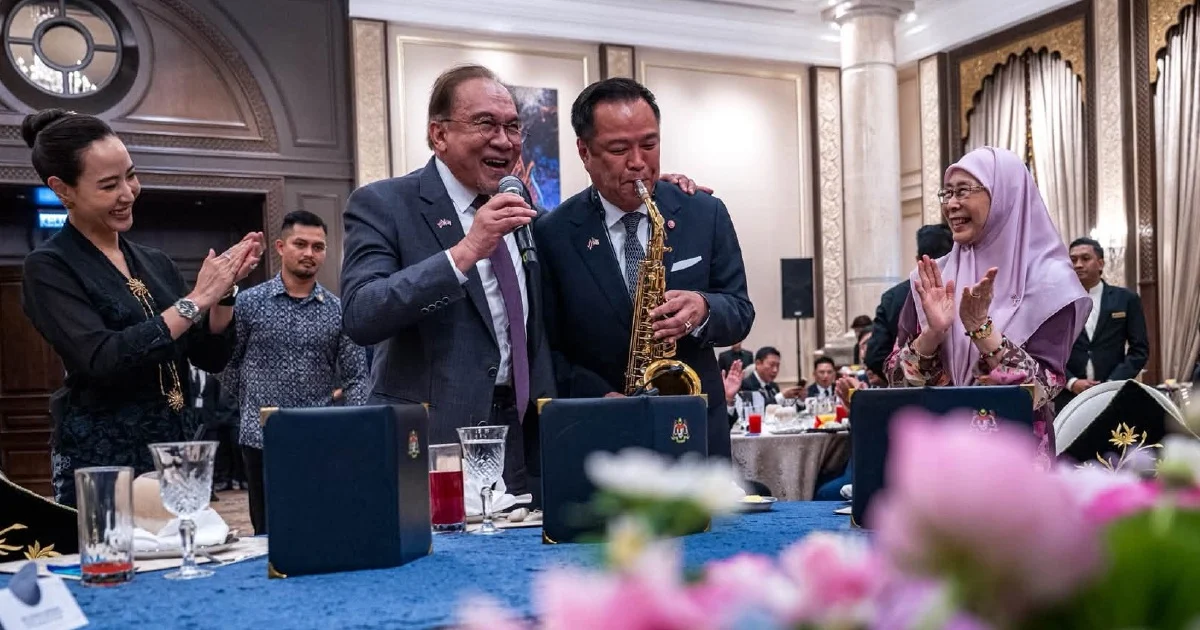
Bilateral relations between Malaysia and Thailand took on a distinctly lighter tone when Prime Minister Datuk Seri Anwar Ibrahim and visiting Thai Prime Minister Anutin Charnvirakul joined forces for an unexpected musical performance at an official luncheon in Putrajaya on Thursday. The two leaders performed an impromptu rendition of Frank Sinatra's iconic 1969 ballad "My Way," a moment that underscored the personal rapport developing between the two governments amid ongoing regional cooperation efforts.
The spontaneous performance came on the heels of formal bilateral talks between the Malaysian and Thai delegations, suggesting that the discussions had yielded sufficient common ground to warrant a celebratory atmosphere. The choice of Frank Sinatra's timeless classic proved symbolic—a song about individual resolve and charting one's own course—perhaps reflecting both leaders' approaches to navigating complex regional and domestic challenges. The impromptu nature of the performance, rather than a carefully orchestrated state spectacle, lent authenticity to the moment and humanised two powerful political figures in the eyes of regional observers.
Anutin Charnvirakul, Thailand's Deputy Prime Minister and leader of the Bhumjaithai Party, is known for his interest in music and entertainment, making his enthusiastic participation in the performance entirely in character. His contribution to the musical interlude demonstrated a willingness to engage informally with regional partners, a gesture that carries diplomatic weight in Southeast Asian political culture, where personal relationships and informal bonding frequently facilitate smoother governmental cooperation. The Thai leader's presence at the official luncheon reflected the significance Bangkok places on its relationship with Kuala Lumpur, Malaysia's closest neighbour and one of its most important trading and security partners.
The Malaysia-Thailand relationship encompasses multiple dimensions that require continuous high-level attention. Beyond the musical entertainment value, such personal interactions between senior leaders help build trust and understanding at the highest levels of government. The casual, friendly nature of the luncheon performance contrasts sharply with the formal structures of diplomatic protocol, yet serves an equally important function in international relations. When leaders can laugh together and engage in spontaneous cultural moments, it frequently translates into greater flexibility and goodwill during negotiations on more contentious issues.
Bilateral issues between Malaysia and Thailand traditionally include maritime boundary disputes, cross-border security cooperation particularly regarding trafficking and organised crime, and trade relations. The luncheon performance, while light-hearted, occurred within the context of substantive discussions on these matters. Thailand and Malaysia share significant economic ties, with bilateral trade reaching into the billions of dollars annually, and security challenges that cross the porous border between them demand consistent attention and cooperation from both governments.
For Malaysian audiences, the image of their Prime Minister engaging in this spontaneous cultural exchange carries multiple implications. It projects an image of Malaysia's leadership as approachable and capable of building warm personal relationships with regional counterparts, which can enhance the country's soft power and diplomatic standing. The moment also reflects Malaysia's cultural confidence—the willingness of a leader to participate in musical performance without excessive concern about image management speaks to a certain political security and comfort in the regional arena.
The performance took place at a moment when Southeast Asian nations are navigating complex geopolitical challenges, including territorial disputes, climate change, economic integration through ASEAN frameworks, and competition from major powers. Within this context, the strengthening of Malaysia-Thailand bilateral relations carries weight beyond mere diplomatic courtesy. The two nations serve as anchors for regional stability in their respective areas, and the demonstrated warmth between their current leaders could facilitate cooperation on regional initiatives within ASEAN and beyond.
Anutin's visit to Malaysia represented part of the routine high-level exchanges that characterise the relationship between Bangkok and Kuala Lumpur. These visits typically result in memoranda of understanding, commitments to future cooperation, and public demonstrations of solidarity. The musical performance at the luncheon, captured on video and shared widely on social media, served as an effective informal public relations moment, communicating to both Thai and Malaysian citizens that their respective governments maintain cordial and even warm relations.
Frank Sinatra's "My Way" carries particular cultural resonance across Asia, where the song remains extraordinarily popular and is a staple of karaoke establishments and entertainment venues. The choice of this particular song may have been deliberate or incidental, but it resonated with audiences across Southeast Asia who recognise the tune and understand its cultural weight. For Malaysian and Thai citizens alike, the image of their leaders performing the song together conveyed a message of friendly bilateral relations and mutual respect that transcended the formal language of diplomacy.
The impromptu nature of the performance—with Anutin playing saxophone while Anwar sang—also highlighted the complementary skills and personalities of the two leaders. Such unscripted moments of interaction frequently reveal more about actual working relationships than prepared remarks or official statements. The comfort level displayed by both men suggested a rapport that could prove advantageous as the two nations navigate future bilateral and regional challenges together.

