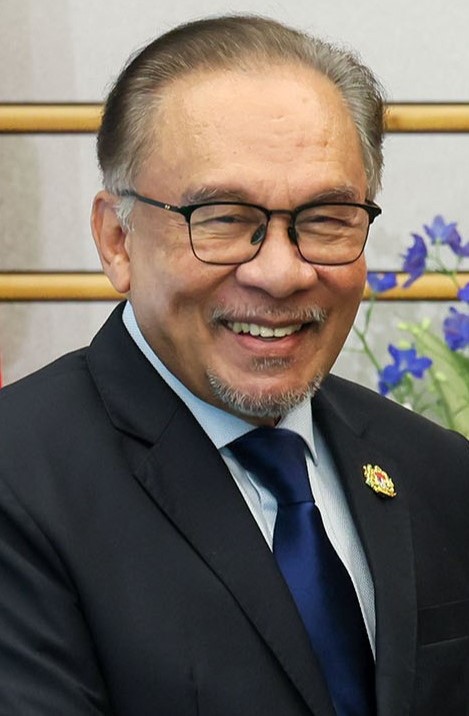
Prime Minister Anwar Ibrahim has held discussions with Johor Regent Tunku Ismail Sultan Ibrahim in Kuala Lumpur, with both leaders expressing their shared commitment to preserving constructive relations between Johor's state government and the federal administration. The bilateral engagement represents an important moment of alignment between two significant power centres in Malaysia's political landscape, particularly given Johor's substantial economic weight and strategic importance to the nation.
The meeting underscores the value of regular high-level communication between federal and state leadership in addressing the complexities of a multilayered governance system. Malaysia's constitutional framework allocates distinct responsibilities to state and federal authorities, creating a need for continuous dialogue to ensure policy coherence and prevent administrative conflicts. By seeking an audience with the Regent, Anwar signalled respect for Johor's constitutional position and the symbolic authority vested in the royal institution.
Johor occupies a uniquely influential position within Malaysia's political economy. As one of the nation's most developed states with significant manufacturing and services sectors, its prosperity directly impacts national economic performance. The state government's cooperation on infrastructure projects, investment incentives, and regulatory matters therefore carries implications beyond its borders. The Regent's role as constitutional head of state makes such engagements particularly significant, as they provide a formal channel for discussing governance issues while maintaining institutional dignity.
The decision to emphasise preservation of good relations suggests a recognition that tensions between state and federal authorities can create inefficiencies and undermine policy implementation. Malaysia has witnessed periodic friction between state and federal governments over taxation, land matters, and resource allocation. By proactively reinforcing their commitment to harmony, Anwar and the Regent are signalling to bureaucrats and policymakers at both levels that cooperation should be the operating principle.
For Malaysia's broader political stability, such meetings carry symbolic weight beyond their immediate content. Johor's political trajectory has often influenced national dynamics, given its electoral significance and the prominence of its leadership. A strong working relationship between the federal Prime Minister and the state's constitutional leadership creates a stabilising effect on the political system, reducing the likelihood of power struggles that could destabilise governance.
The timing of Anwar's outreach reflects pragmatic statecraft. By prioritising such engagement early in his tenure as Prime Minister, he has demonstrated an understanding that effective governance requires buy-in from influential state actors and royal institutions. This approach contrasts with approaches that might neglect such relationships or take them for granted.
From a Malaysian perspective, the implications of maintained state-federal harmony extend to development initiatives, particularly those requiring coordination across administrative boundaries. Transportation networks, environmental management, and industrial policies often need synchronisation between different governmental levels. When leadership maintains good relations, technical teams find it easier to collaborate and resolve disputes pragmatically rather than escalating them into political controversies.
The Regent's receptiveness to maintaining good relations equally reflects awareness that state interests are best served through constructive engagement with federal authorities. Rather than adopting adversarial postures, institutional cooperation allows Johor to influence national policies affecting its interests, whether through representation in federal policy discussions or coordination on specific initiatives.
For regional observers, Malaysia's federal structure and the prominent role of royal institutions represent distinctive features of its governance model. The coordination between executive leadership and constitutional heads of state demonstrates how Malaysia navigates the balance between democracy and institutional traditions. Such meetings illustrate the informal yet crucial consultation mechanisms that complement formal constitutional procedures.
The significance of this engagement also lies in what it prevents. Political tension between state and federal governments can create confusion for investors, complicate business operations, and fragment policy implementation. By publicly affirming their commitment to good relations, both leaders are reassuring economic stakeholders and bureaucrats that Malaysia's governance apparatus will function coherently.
Looking forward, the reinforcement of state-federal cooperation creates a more conducive environment for addressing Malaysia's structural economic challenges. Whether tackling skills shortages in key sectors, attracting quality foreign investment, or managing demographic changes, such issues require coordination that harmonious intergovernmental relations facilitate. Johor's position as a gateway state for ASEAN connectivity makes this cooperation particularly relevant to Malaysia's regional economic role.
The meeting also represents continuity in Malaysian political practice, where prime ministers regularly consult with state rulers and leaders to ensure smooth governance. This tradition, rooted in Malaysia's constitutional monarchy framework, helps maintain institutional stability and respect for federalism principles. By observing these protocols, Anwar reinforces the legitimacy of formal state institutions.
Ultimately, the agreement to preserve good relations between Johor and the federal government reflects an understanding that Malaysia's complex governance architecture functions optimally when all major stakeholders prioritise cooperation. Such deliberate relationship-building, occurring at the highest levels, establishes the tone for lower-level officials to collaborate effectively, enabling Malaysia to address the practical challenges of development, regulation, and service delivery that require seamless coordination across administrative divisions.