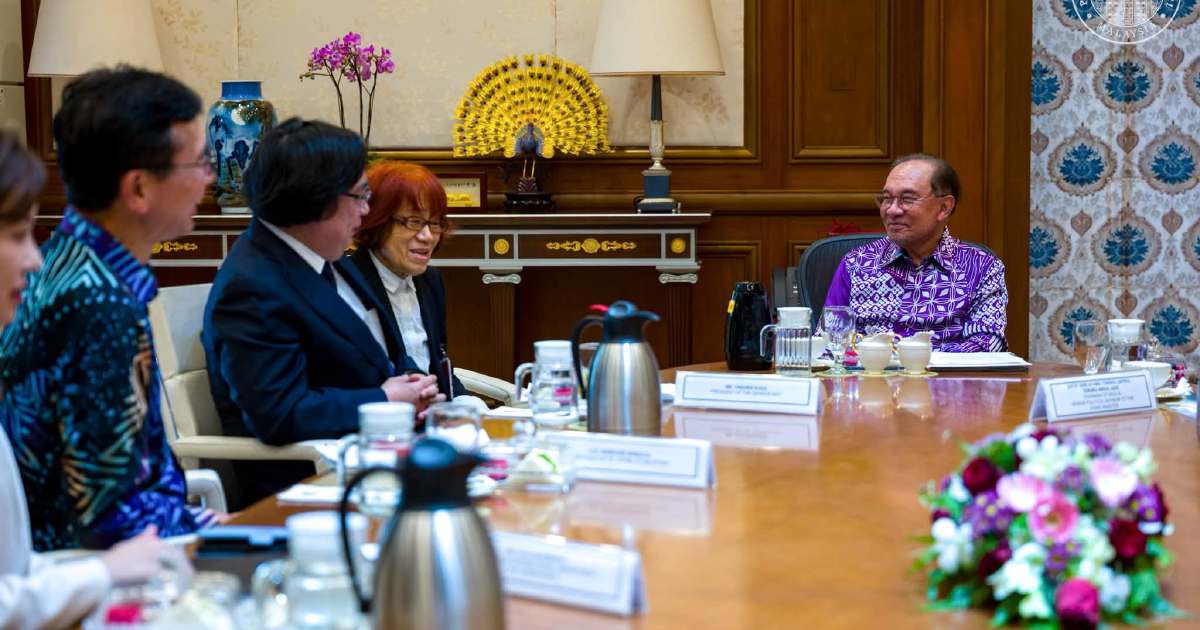
Prime Minister Datuk Seri Anwar Ibrahim received Genron NPO president Yasushi Kudo at a courtesy call in Kuala Lumpur today, with their discussion reflecting both nations' commitment to deepening collaborative frameworks. The exchange represents part of Malaysia's broader diplomatic outreach in East Asia, where Japan remains a crucial strategic partner and leading economic investor in the region.
Genron NPO, known formally as the Japan Institute of Deliberative Democracy, functions as a non-partisan think tank with substantial influence on Japan's foreign policy circles. The organization conducts extensive research on international relations, governance, and regional cooperation, making Kudo's visit a signal that policy-level discussions between Malaysia and Japan are escalating beyond routine diplomatic channels. Such engagements typically indicate that both countries are exploring innovative approaches to bilateral cooperation that extend beyond traditional trade and security frameworks.
The timing of this meeting aligns with Malaysia's strategic repositioning within the Indo-Pacific architecture. As geopolitical tensions simmer across Asia, particularly in Southeast Asia where maritime disputes and economic competition create complexity, stronger ties with Japan offer Malaysia opportunities to diversify partnerships and strengthen its negotiating position. Japan's own interest in engaging Malaysia reflects Tokyo's pivot toward Southeast Asia as a counterweight to regional rivalries and as a market for its technological and industrial capabilities.
Strategic dialogue between the two nations has historically encompassed economic cooperation, cultural exchange, and security matters. Japan maintains significant investments in Malaysian manufacturing, particularly in automotive and electronics sectors, while serving as a crucial source of foreign direct investment and technology transfer. Educational partnerships have also flourished, with thousands of Malaysian students pursuing studies in Japanese institutions annually, fostering people-to-people connections that underpin long-term diplomatic relationships.
Kudo's engagement with Anwar signals that Genron NPO seeks to deepen Malaysia's role in regional discussions about governance, democracy, and economic development. The think tank's deliberative democracy model has gained traction across Asia-Pacific nations, and Malaysia's receptiveness to such dialogue reflects the government's interest in comparative policy learning. This intellectual exchange component often precedes or accompanies formal governmental agreements, as ideas tested through think tank platforms frequently influence policy implementation.
From Malaysia's perspective, strengthening ties with Japan carries practical implications for technological advancement and industrial development. Japanese companies operate extensively in Malaysia's manufacturing heartland, and enhanced dialogue may facilitate knowledge sharing on emerging technologies, sustainability practices, and supply chain resilience—issues increasingly critical as global manufacturing realigns away from China amid geopolitical tensions. Malaysia's position as a manufacturing hub makes it naturally attractive to Japanese firms seeking to diversify production beyond traditional East Asian bases.
The bilateral relationship also extends into cultural and educational dimensions that often escape headline coverage but substantially shape long-term partnership quality. Student exchanges, language programs, and cultural festivals create constituencies in both countries invested in maintaining good relations. Japan's soft power through anime, technology, and lifestyle brands resonates particularly with Malaysian youth, creating favorable conditions for deepening engagement across generational lines.
Regional context cannot be overlooked when assessing this diplomatic engagement. Malaysia, as chair or active participant in numerous ASEAN frameworks and regional mechanisms, occupies a bridging position between Southeast Asian interests and broader Indo-Pacific dialogues. Japan similarly navigates complex regional dynamics, balancing its alliance relationships, economic interests, and desire to maintain regional stability. Dialogue between Malaysian and Japanese leaders therefore carries implications extending beyond bilateral relations, potentially influencing how both nations approach regional issues including connectivity projects, maritime security, and climate cooperation.
Anwar's government has signaled openness to foreign policy engagement while maintaining Malaysia's non-aligned traditions and commitment to ASEAN centrality. Meetings with think tank leaders and policy intellectuals from aligned nations suggest a sophisticated approach to bilateral relations that incorporates multiple stakeholder perspectives rather than limiting engagement to official governmental channels. This pluralistic diplomacy approach enables Malaysia to gather diverse viewpoints while avoiding appearance of excessive alignment with any single power.
Looking forward, outcomes from such exchanges may translate into concrete cooperation initiatives. Enhanced dialogue often precedes memoranda of understanding on research collaboration, educational partnerships, or business facilitation mechanisms. The preliminary nature of think tank engagement allows both governments to explore possibilities without immediate policy commitments, providing flexibility and creating pathways for future formalization if mutual interests align.
For Southeast Asian readers and investors, strengthened Malaysia-Japan ties carry implications for regional business dynamics and technological development. Japanese investment flows often follow diplomatic warming periods, and enhanced strategic dialogue typically correlates with renewed corporate confidence in bilateral economic potential. Malaysia's role as ASEAN's economic engine means its foreign policy orientations influence broader regional economic trajectories, making bilateral partnerships with major Asian economies matter not only for Malaysian prosperity but for the wider region's economic health and stability.

