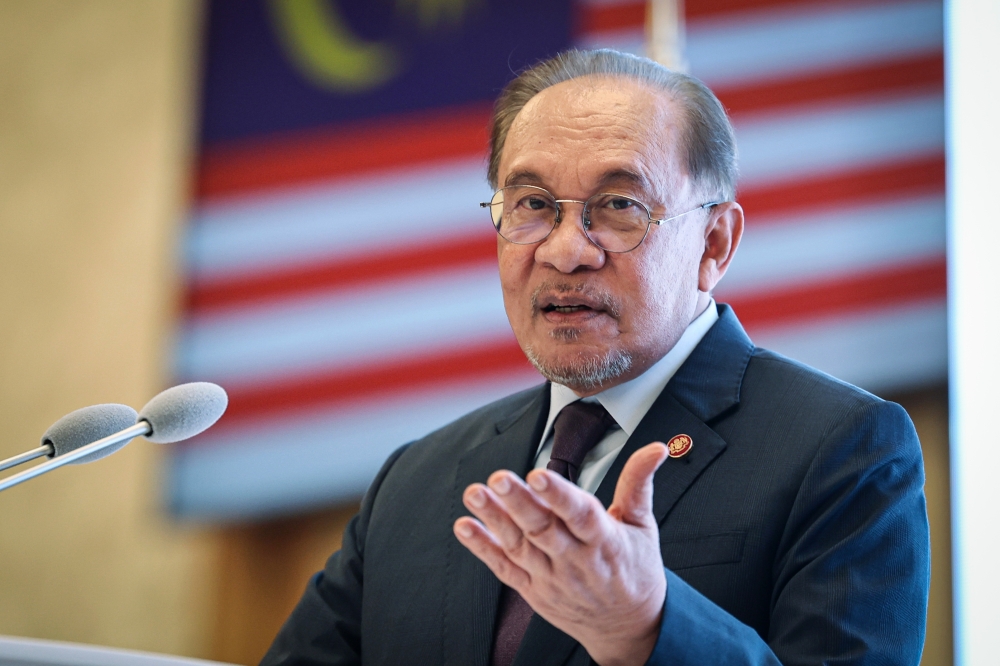
Prime Minister Datuk Seri Anwar Ibrahim has publicly thanked well-wishers across the country for their prayers and expressions of concern regarding his recent health situation, signalling his continued commitment to leading the government through a critical period of institutional reform. Addressing the nation from the capital, the Prime Minister's acknowledgment of public support reflects the broader sentiment of national concern that has accompanied discussions about his welfare, a matter that has attracted significant public and parliamentary attention in recent weeks.
Following his recovery, Anwar has prioritised the scheduling of a special parliamentary sitting that will examine the findings of the Royal Commission of Inquiry into Tabung Haji, Malaysia's Islamic pilgrimage fund. This move underscores the government's intention to maintain legislative momentum on matters requiring urgent parliamentary scrutiny and deliberation, despite the recent disruptions to the Prime Minister's schedule. The RCI report represents a significant development in efforts to address longstanding concerns about governance and financial management within one of the country's most sensitive institutions.
Tabung Haji has faced mounting scrutiny following revelations about its financial performance and investment decisions over several years. The pilgrimage fund, which manages savings for millions of Malaysian Muslims preparing for the Hajj journey to Mecca, holds enormous cultural and religious significance within Malaysian society. The establishment of the RCI itself reflected government acknowledgment that institutional failures required formal investigation and transparent accountability mechanisms. The anticipated parliamentary discussion signals that the government intends to translate investigative findings into concrete policy responses and potential legislative amendments.
The timing of the special sitting carries symbolic weight beyond its procedural significance. By moving forward with parliamentary debate on Tabung Haji shortly after his return to full duties, Anwar demonstrates his administration's determination to tackle governance issues that have eroded public confidence in critical institutions. For Malaysian citizens who have entrusted their pilgrimage savings to this fund, the parliamentary scrutiny represents an opportunity to demand accountability and to understand what systemic improvements may be implemented.
Within Southeast Asian context, Malaysia's handling of institutional corruption and financial governance failures attracts regional attention and influences investor confidence across the broader economy. The transparency demonstrated through the RCI process and subsequent parliamentary debate contributes to the perception that the government takes accountability seriously, even when investigating sensitive matters that may implicate previous administrations or prominent figures. This approach contrasts sharply with approaches taken in some neighbouring jurisdictions where institutional investigations face obstruction or selective enforcement.
The parliamentary sitting will provide legislators opportunity to scrutinise the RCI's methodology, findings, and recommendations in detail. Members from both government and opposition benches can raise questions about the fund's management practices, investment strategies that may have contributed to financial underperformance, and the adequacy of regulatory oversight. Such debate creates a public record of government response and accountability, establishing benchmarks against which future performance can be measured.
For Anwar personally, the return to active parliamentary engagement signals his readiness to guide the government through a substantive agenda despite the health challenges that briefly interrupted his duties. His government has inherited multiple institutional reform imperatives, with the Tabung Haji situation merely one prominent example among numerous governance challenges requiring attention. The Prime Minister's public gratitude combined with his rapid reengagement with legislative responsibilities demonstrates commitment to continuity in government operations.
The special sitting will likely generate discussion about broader questions surrounding institutional governance, regulatory effectiveness, and mechanisms for public accountability in Malaysia's parliamentary democracy. Political analysts anticipate that both government members and opposition representatives will use the platform to advance particular policy positions regarding fund management, investment protocols, and oversight structures. The debate may also touch upon questions about how Malaysia can prevent similar institutional failures across other government-linked entities and statutory bodies.
Beyond the immediate parliamentary proceedings, the RCI report and subsequent legislative response will establish precedent for how Malaysia addresses institutional malfeasance going forward. The visibility afforded to this process through parliamentary debate reinforces the principle that no institution stands beyond public scrutiny or accountability, regardless of its cultural significance or the constituencies it serves. For millions of Malaysian Muslims who have deposited life savings with Tabung Haji, the parliamentary engagement offers reassurance that their concerns receive serious governmental attention.
The government's approach also reflects international best practice in institutional governance, where formal investigations into financial irregularities or management failures are followed by transparent parliamentary debate and public disclosure of remedial measures. This methodology strengthens democratic institutions while simultaneously protecting the fund's long-term viability by identifying and addressing systemic vulnerabilities. Moving forward, the government must translate parliamentary discussion into effective implementation of recommended reforms.

