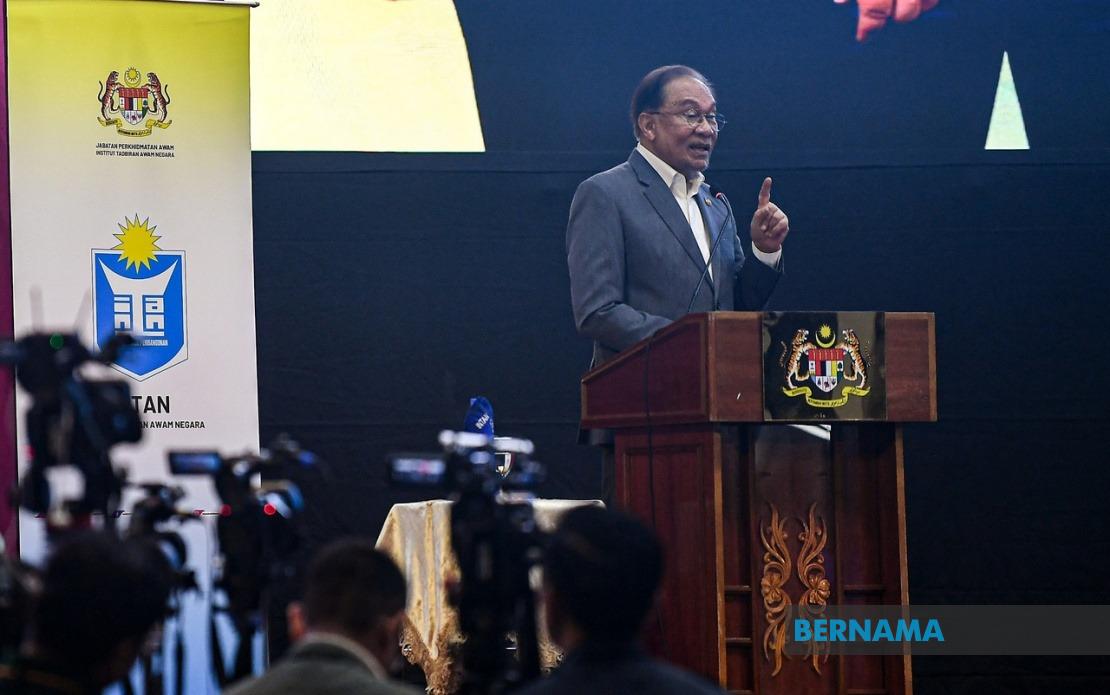
Prime Minister Datuk Seri Anwar Ibrahim has expressed regret if his forthright manner when engaging with civil servants has been received as overly severe, acknowledging feedback from colleagues and the public about his communication approach in his new leadership role. Speaking at a gathering of Central Zone civil servants at Universiti Islam Selangor, Anwar reflected on the tension between his personal conviction and the expected decorum of high office, offering what amounts to a partial explanation rather than a full retreat from his characteristic directness.
The Prime Minister disclosed that various individuals have counselled him to moderate his delivery, suggesting that his position now demands a gentler, more measured approach when speaking to audiences. He acknowledged the conventional wisdom that a sitting Prime Minister should project calm restraint and engage with stakeholders through measured discourse rather than emphatic pronouncements. Despite recognising this feedback and his ongoing efforts to adapt his style, Anwar indicated that his passionate temperament sometimes overwhelms these diplomatic considerations.
Anwar's comments reveal a deliberate calculation about his leadership persona. He framed his apology conditionally, suggesting that if observers perceived harshness, he regretted that interpretation rather than accepting the criticism outright. This rhetorical positioning allows him to maintain his core approach while appearing responsive to public sentiment. The Prime Minister argued that his emotional intensity and vocal emphasis reflect the genuine weight he places on the issues under discussion, particularly matters of governance and national interest.
The underlying tension in Anwar's remarks centres on his relationship with the bureaucracy. As Prime Minister, he bears responsibility for directing an enormous civil service apparatus that implements government policy across the country. His firm tone, when directed at this audience, serves a functional purpose beyond mere personality expression. By speaking with evident passion and conviction to civil servants, Anwar signals the seriousness with which his administration expects policies to be executed and the urgency with which national development priorities should be pursued.
Anwar's comments underscore an ongoing challenge for political leaders transitioning from opposition activism to executive responsibility. Throughout his earlier political career, Anwar built a reputation for passionate advocacy and unfiltered expression of conviction. This communication style resonated with supporters but also generated friction with establishment figures who viewed such directness as lacking decorum. Now occupying the pinnacle of executive authority, Anwar faces pressure to conform to expectations of prime ministerial comportment while maintaining the authenticity that defines his political brand.
The timing of these remarks at an engagement specifically with civil servants carries strategic significance. The bureaucracy represents the implementation arm of government policy, and Anwar's message to these officials carries dual importance. First, he seeks to motivate civil servants to embrace his administration's agenda with urgency and commitment. Second, his firm tone communicates that accountability for implementation failures rests with the bureaucratic apparatus. By juxtaposing his emotional investment in national success against the civil service's responsibility to execute policy, Anwar constructs a narrative where his strictness becomes an expression of legitimate leadership demands rather than personal volatility.
For Malaysian observers accustomed to more formal, restrained prime ministerial communication, Anwar's approach represents a departure from recent precedent. Previous occupants of the office cultivated images of measured authority and careful public speech. Anwar's willingness to display emotional engagement with policy matters reflects both his personal temperament and his political calculation that Malaysians respond more readily to leaders who demonstrate evident concern for national welfare. This represents a subtle but significant shift in the expected norms of executive communication at the highest level.
The broader context includes Malaysian civil service culture, which traditionally emphasizes hierarchical deference and formal protocols. While senior civil servants might accept robust criticism and demanding standards from political leadership, the tone and manner of delivery carries significance for morale and institutional functioning. Anwar's acknowledgement of concerns suggests that some within the bureaucracy may have found his direct approach unsettling, prompting feedback that reached the Prime Minister through official channels and presumably through media reporting.
Anwar's partial apology also carries implications for his broader relationship with critical constituencies. By demonstrating responsiveness to feedback about his communication style, he signals that his administration remains open to input and willing to adjust approaches when concerns are raised. This contrasts with defensive posturing and suggests a level of flexibility in how his government engages with public sentiment about leadership performance. Such responsiveness, even if limited, can contribute to perceptions of accessibility in democratic leadership.
The incident reflects how even senior political figures must navigate competing expectations in contemporary governance. Anwar balances authenticity of expression against institutional norms, personal conviction against the demands of high office, and passionate advocacy against the authority associated with executive position. His comments acknowledge this tension while essentially defending the substance of his approach, accepting the criticism's form while maintaining his fundamental communication philosophy. Whether this calibrated response satisfies critics or merely papers over deeper concerns about leadership style remains an open question for Malaysian political observers.

