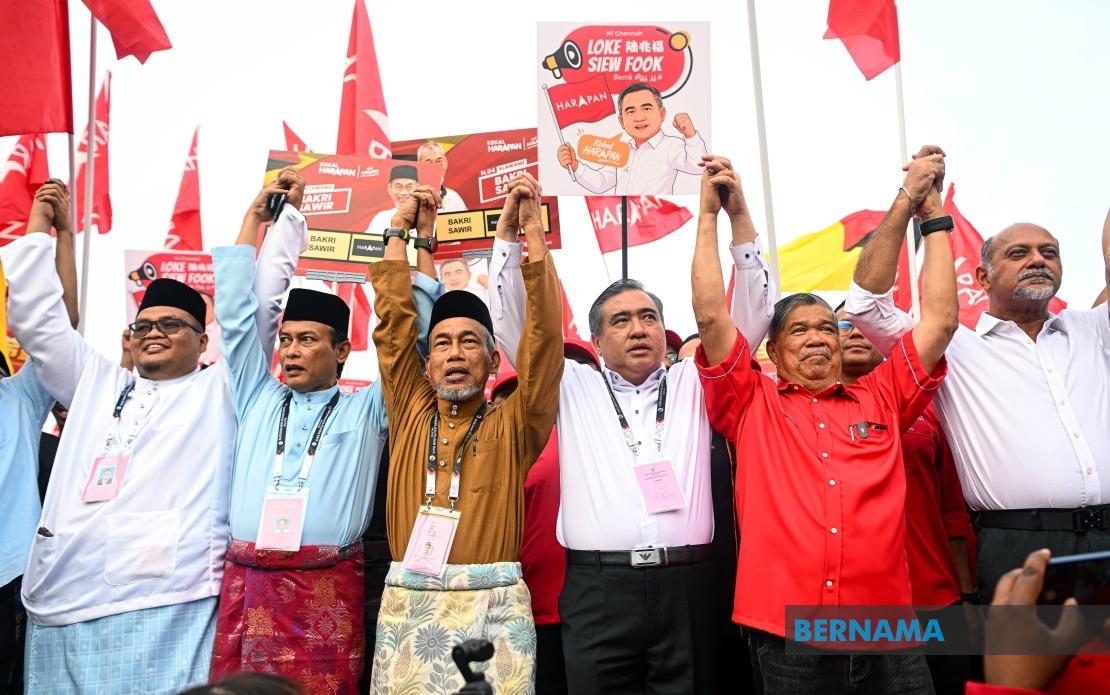
Transport Minister Anthony Loke is poised for a direct contest to retain the Chennah state seat he has successfully held for over a decade, as the 16th Negeri Sembilan state election officially commenced. The DAP secretary-general now faces a challenge from Siow Kong Choon, the state MCA Youth chief, who is standing as the Barisan Nasional candidate in this closely watched constituency.
The straight fight was formally confirmed after the nomination process concluded this morning in Jelebu, with the returning officer announcing both candidates had filed their papers within minutes of each other. Loke submitted his nomination at 9:05 am, while Siow followed at 9:09 am, setting the stage for what promises to be a competitive battle in one of Negeri Sembilan's key constituencies. The timing and sequence of nominations underscored the organised nature of this particular contest, with both major coalitions fielding established political figures.
Loke's tenure in Chennah represents a significant period of political continuity since 2013, when he first claimed the seat. As Seremban Member of Parliament and holder of the Transport portfolio in the federal cabinet, he carries considerable political weight and experience into this election. His dual responsibilities at state and federal levels have given him a prominent platform within the DAP and the broader Pakatan Harapan coalition, factors that will likely influence voter perceptions in Chennah.
The 2023 state election provides a useful benchmark for assessing the electoral dynamics. In that contest, Loke secured 5,888 votes, defeating Perikatan Nasional candidate Rosmadi Arif by a substantial margin of 2,200 votes. This comfortable victory suggests a reasonably solid base of support within the constituency, though political landscapes can shift significantly between elections, particularly when fresh candidates and changing national sentiments come into play.
Siow Kong Choon's candidacy on the BN ticket represents an attempt by the coalition to recapture or make significant inroads in what has been a DAP stronghold. As state MCA Youth chief, Siow brings organizational experience and represents the party's attempt to mobilise Chinese-majority and mixed urban constituencies where MCA traditionally competes. The choice of Siow by BN strategists suggests a calculated effort to present a relatively young, energetic challenger against Loke's established incumbency.
The Negeri Sembilan state election carries implications that extend beyond individual constituencies. The state has been a battleground between different political coalitions, and results here often signal broader trends affecting Peninsular Malaysian politics. With BN, Pakatan Harapan, and Perikatan Nasional all competing for influence, the overall outcome will help determine the political trajectory of Negeri Sembilan for the next five years and may offer insights into voter sentiment regarding national issues and coalition performance.
From a Malaysian political perspective, the contest in Chennah encapsulates several significant themes. It pits the ruling Pakatan Harapan coalition against the traditional BN establishment, with PAS and PN potentially acting as spoilers in certain constituencies. The election also reflects ongoing demographic and political shifts in Peninsular Malaysia, where urban constituencies like Chennah remain crucial battlegrounds where different coalitions compete intensely.
Loke's position as Transport Minister adds a national dimension to his campaign. Voters may evaluate his federal performance, including his handling of public transportation issues and infrastructure development, alongside local constituency concerns. This fusion of state and federal politics means that national governance performance becomes relevant to local electoral calculations, a pattern increasingly common in Malaysian elections where local and national politics become intertwined.
The Election Commission has scheduled early voting for July 28, giving candidates approximately ten days to campaign intensively. The main polling day is set for August 1, providing a definitive date by which voters will render their verdict. This timeline allows for a concentrated campaign period where both candidates can mobilise their respective support bases and attempt to sway undecided voters.
For Malaysian political observers and analysts monitoring coalition dynamics, the Chennah result will offer valuable data about voter preferences in urban, ethnically mixed constituencies. Should Loke retain the seat comfortably, it would reinforce DAP's strength in such areas and suggest continued voter confidence in Pakatan Harapan's governance. Conversely, any significant erosion of his majority or an upset victory for Siow would signal shifting electoral dynamics worthy of closer examination.
The broader Negeri Sembilan context matters significantly. The state represents a microcosm of Malaysian electoral competition, with the state assembly comprising seats where different coalitions hold sway. Results from constituencies like Chennah contribute to the overall state assembly composition and ultimately determine which coalition will lead the state administration. This interconnection means individual contests carry weight extending far beyond their immediate constituency boundaries, affecting the state's governance structure and policy direction.

