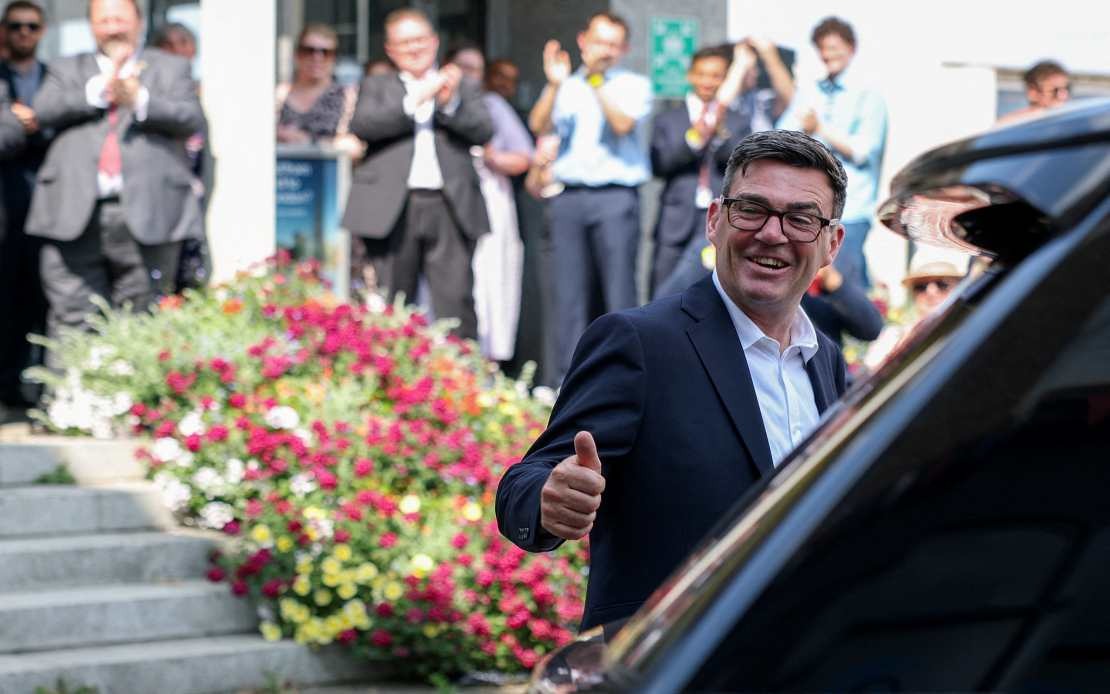
Andy Burnham will formally assume the position of United Kingdom prime minister on Monday following his appointment as Labour leader, carrying with him a pledge to restore public faith in government and deliver what he terms "breathing room" for ordinary citizens grappling with financial pressures. The transition from his predecessor Keir Starmer marks another significant shift in British leadership, occurring just weeks after Burnham returned to Parliament and secured the party's top role without facing opposition from rival candidates.
The incoming premier will deliver his opening statement from Downing Street following a customary audience with King Charles III, using the address to outline his immediate priorities for the nation. Central to his message will be the characterisation of this moment as a turning point demanding both candid assessment of Britain's difficulties and demonstrable commitment to resolving them. Burnham intends to emphasise that political renewal must be accompanied by concrete achievements rather than mere promises, signalling a departure from what he views as the instability that has plagued recent administrations.
One of Burnham's most pointed observations will concern the unprecedented churn at the highest level of British governance. The succession of seven prime ministers across a single decade represents an extraordinary disruption to political continuity, undermining both international standing and domestic confidence in the institutions of state. By highlighting this instability, Burnham positions himself as the antidote to this volatility, framing his tenure as a return to more grounded and enduring political leadership that can weather the complexities of modern governance.
Devolving power away from London constitutes a cornerstone of Burnham's vision for national renewal. Having spent years developing regional governance as mayor of Greater Manchester, he views the concentration of authority in the capital as a structural weakness hindering economic opportunity across the country. This approach resonates particularly with communities in the North and Midlands, regions that have felt historically marginalised by London-centric policymaking. For Malaysian observers, the comparison to Malaysia's own federal dynamics offers instructive parallels regarding the balance between centralised authority and regional agency.
Among his early executive decisions, Burnham has committed to dismantling the digital identity programme championed by his predecessor, viewing it as a distraction from more pressing economic concerns. This cancellation reflects his calculation that public resources should prioritise tangible relief from the cost-of-living crisis rather than pursue technological initiatives that may lack immediate popular support. The pivot illustrates a pragmatic recalibration of government focus toward matters affecting household finances and everyday stability.
The question of energy policy represents a significant early test for Burnham's administration. Pressure exists to expand North Sea oil and gas extraction as a means of moderating energy costs, yet environmental advocates argue this approach contradicts Labour's 2024 campaign manifesto, which pledged to cease issuing fresh drilling licences. Burnham must navigate this tension between economic relief and environmental commitments, a dilemma that reflects broader global tensions as nations attempt to balance energy security with climate imperatives. His decision here will signal how vigorously he intends to honour manifesto pledges when they conflict with immediate economic pressures.
Thames Water's precarious financial position presents another immediate challenge requiring ministerial intervention. The water company confronts a debt burden of £20 billion, threatening its operational viability and potentially necessitating government rescue intervention. Burnham has already signalled receptiveness to increased public stewardship of essential infrastructure, and Thames Water's creditors have indicated willingness to negotiate restructuring arrangements with the new administration. Should the company require temporary nationalisation, it would constitute a significant policy action with implications extending across the broader utilities sector.
Burnham faces considerable strategic choice in assembling his Cabinet, particularly regarding the crucial chancellorship portfolio responsible for economic management. Energy Secretary Ed Miliband and Home Secretary Shabana Mahmood are reported as the leading contenders for this position. The selection will convey important signals about Burnham's economic priorities and whether he intends to continue policies from the Starmer period or chart a distinct course. Miliband brings experience managing energy transition, while Mahmood offers background in security and domestic affairs, each bringing different emphases to fiscal stewardship.
The new prime minister's rapid ascent through Labour's hierarchy without facing competitive challenge suggests confidence among the party's membership but also leaves substantial uncertainty regarding his full governing agenda. Unlike predecessors who campaigned extensively for their leadership, Burnham must demonstrate command of a comprehensive policy platform while simultaneously managing expectations shaped by his principal themes of stability and relief. His first week promises announcements addressing energy costs and living standards directly, yet the substance and scope of these initiatives remain undefined.
For observers across Southeast Asia monitoring British political developments, Burnham's transition illustrates both the fragility of contemporary democracies and the capacity for institutional renewal. The consecutive crises that depleted four predecessors demonstrated how domestic pressures and governance failures can rapidly destabilise even longstanding political systems. Burnham's emphasis on stability and devolving power offers a potential stabilising model, though whether his administration can deliver sustained improvement across multiple policy domains remains uncertain. His tenure will test whether renewed focus on deliberative governance can restore public confidence in institutions subjected to repeated shocks.

