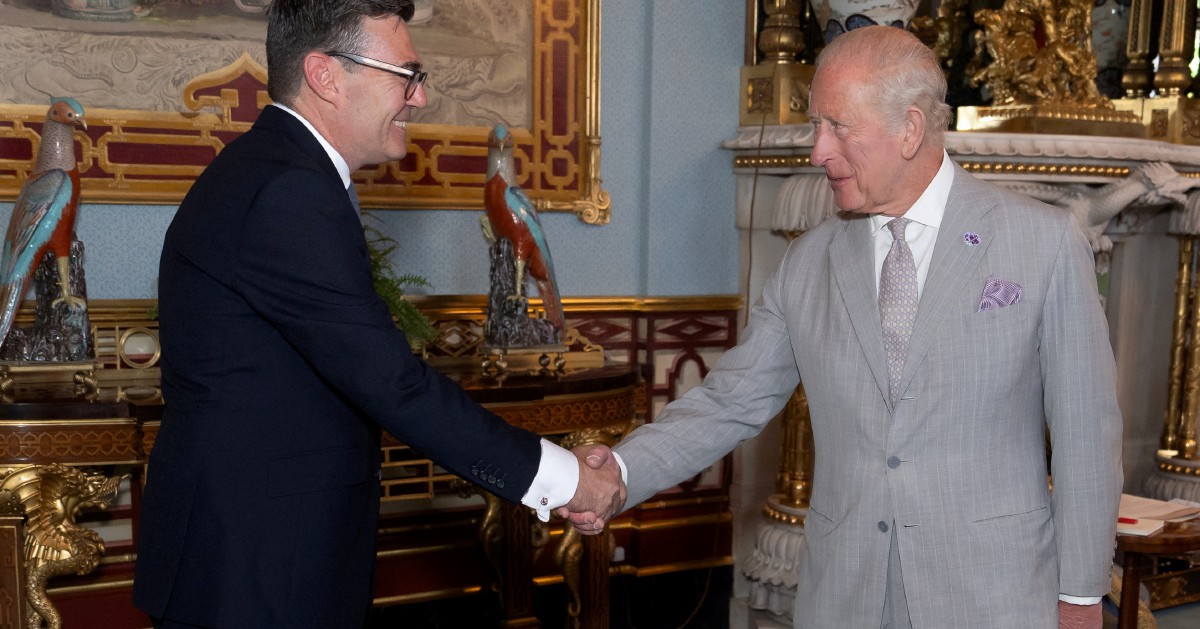
Andy Burnham officially became British Prime Minister on Monday following a ceremonial meeting with King Charles III at Buckingham Palace, marking a significant transition in the United Kingdom's political leadership. The appointment concludes weeks of speculation about the succession and sets the stage for a new chapter in British governance. Burnham, who previously held prominent positions within the Labour Party and served as mayor of Greater Manchester, inherits control of the government at a time when the nation faces considerable economic and social pressures.
The formal process of assuming office involved the traditional meeting between the newly appointed premier and the monarch, a constitutional requirement that formalises the transfer of executive authority. King Charles III, following established parliamentary convention, granted Burnham an audience at the royal residence, cementing his legitimacy to lead the government. This ceremonial aspect underscores the continuity of British democratic institutions, where power transfers occur through established protocols rather than through disruption or instability.
Burnham's ascension to the premiership represents a notable change in leadership style and approach compared to his predecessor, Keir Starmer. Throughout his political career, Burnham has cultivated a reputation as a pragmatic administrator with deep roots in northern England, where he spent his tenure as mayor addressing issues ranging from urban regeneration to public health. His background in regional governance provides him with hands-on experience navigating the complex relationship between central government and local communities, a perspective that may influence his national agenda.
The transition arrives during a period when British politics has been marked by considerable turbulence and shifting electoral dynamics. Starmer's administration faced mounting challenges related to cost-of-living pressures, healthcare system strain, and public sector strikes that tested the government's ability to manage competing interests. The handover to Burnham signals either a strategic recalibration or a response to shifting political circumstances within the Labour Party's parliamentary ranks, reflecting broader calculations about what direction serves the party's long-term interests.
Burnham is expected to outline his comprehensive vision for governing Britain in coming days, addressing the nation and Parliament with his priorities and strategic objectives. Observers will scrutinise his approach to pressing issues including the state of the National Health Service, economic growth strategies, and relationships with devolved nations. His time leading Manchester provided him with experience managing regional crises and pursuing pragmatic solutions to infrastructure and employment challenges.
For Malaysian observers, the leadership transition in Britain carries particular relevance given the historical ties between the two nations and their continued economic relationship. The United Kingdom remains a significant source of investment and technology transfer for Malaysia, while British universities attract substantial numbers of Malaysian students. Changes in British government composition often translate into shifts in foreign policy priorities and bilateral engagement approaches that affect regional dynamics in Southeast Asia.
The Commonwealth connection adds another layer of significance to Burnham's appointment. As a member nation, Malaysia maintains formal diplomatic relationships with Britain and participates in the Commonwealth framework that connects former British territories. The composition and direction of British leadership influence the nature of these institutional relationships and the emphasis placed on Commonwealth cooperation versus other diplomatic priorities.
Burnham's legislative programme will likely reflect his experience navigating the complex politics of northwest England, where issues of industrial heritage, economic inequality, and regional devolution carry particular weight. His understanding of these regional concerns may shape how the central government approaches the so-called levelling-up agenda, which aims to reduce disparities between prosperous and struggling areas across the country.
The appointment occurs in a context where British political institutions face scrutiny regarding their responsiveness to public concerns and their capacity to deliver tangible improvements in living standards. Burnham inherits these institutional pressures along with the formal powers of his office. His early decisions regarding cabinet composition, policy announcements, and parliamentary strategy will signal whether he intends to pursue continuity with previous approaches or chart a notably different course.
International observers, particularly those in Southeast Asia tracking shifts in British engagement, will monitor how Burnham's administration prioritises global relationships. Whether Britain increases diplomatic activity in the Indo-Pacific region, adjusts defence posture towards the area, or modifies trade priorities remains to be seen. His premiership represents an opportunity for nations like Malaysia to reassess and potentially deepen bilateral relationships with Britain through diplomatic channels attuned to the new administration's particular interests and capabilities.

