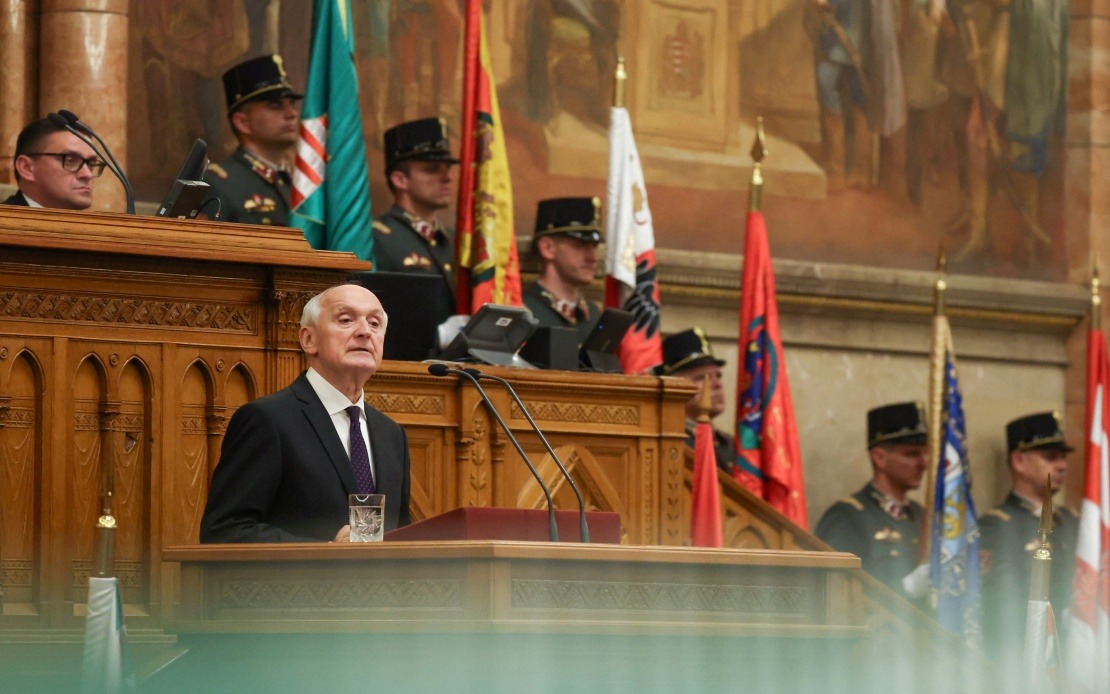
Andras Baka formally became President of Hungary on August 19, 2026, following his election by the Hungarian Parliament earlier that month. Prime Minister Peter Magyar announced the inauguration on social media, offering congratulations to the new head of state and expressing hopes for his tenure to be marked by humanitarian values and good health.
The appointment of Baka represents a significant moment in Hungarian political life, marking a transition in the nation's highest ceremonial office. His background in judicial administration and international human rights law brings a particular profile to a presidency that carries constitutional responsibilities, though executive power in Hungary's parliamentary system rests primarily with the Prime Minister.
Baka's professional trajectory reflects decades of engagement with Hungary's legal system and European judicial frameworks. He served as President of Hungary's Supreme Court from 2009 until 2011, when he stepped down during the implementation of substantial judicial reforms initiated under then-Prime Minister Viktor Orban's administration. Rather than remaining in domestic judicial circles following that departure, Baka gained international experience working at the European Court of Human Rights in Strasbourg, positioning him within Europe's broader human rights architecture.
Following the restructuring of Hungary's supreme judicial body, Baka returned to domestic judicial leadership as chairman of the Hungarian Curia, the institution created to replace the former Supreme Court framework. He held this position from 2012 through 2020, providing nearly a decade of stewardship during a period of considerable transformation within Hungary's legal institutions.
However, Baka's elevation to the presidency does not represent a smooth political consensus. The parliamentary election that brought him to office was marked by significant boycotts from major political actors. Hungary's Fidesz party and the Christian Democratic People's Party both refused to participate in the presidential election, registering their protest against the constitutional process that had removed Baka's predecessor, Tamas Szujok, from office.
The boycott strategy employed by these opposition forces underscores deeper divisions within Hungarian politics regarding constitutional procedures and presidential succession. The use of constitutional amendments to facilitate a president's removal had become controversial, with opposition parties viewing such measures as improper assertions of governmental power over institutional independence. By refusing participation in Baka's election, these parties sought to delegitimize the process and register their objection to the mechanisms employed.
For Malaysian and Southeast Asian observers, Hungary's political situation offers instructive parallels regarding the balance between executive authority and institutional independence. The tensions surrounding judicial reform and presidential transitions reflect broader questions about how democratic systems manage power distribution and constitutional change. In regions where debates about judicial autonomy and executive accountability remain politically sensitive, Hungary's experience demonstrates both the possibilities and the risks inherent in substantial institutional restructuring.
Baka's international credentials, particularly his previous association with Strasbourg's human rights court, suggest a presidency oriented toward European legal standards and human rights frameworks. This positioning may influence how Hungary engages with continental judicial cooperation mechanisms and human rights monitoring, though the Prime Minister retains control over most policy implementation and international negotiations.
The political tensions evident in the boycott signal that Hungary's government faces continuing questions about institutional legitimacy and constitutional propriety. While Baka assumes his duties, the refusal of substantial opposition forces to participate in his election ensures that questions about the procedural integrity of his selection will persist within Hungarian public discourse.
The transition also occurs within the context of Hungary's ongoing relationship with European Union institutions, which have periodically expressed concerns about judicial independence and democratic standards in the country. Baka's background in European human rights law may prove relevant to Hungary's navigation of these complicated relationships, though such matters ultimately rest with the government rather than the ceremonial presidency.
Looking forward, Baka's tenure will likely be examined for the extent to which his judicial background influences the tone and substance of presidential engagement with constitutional questions and human rights advocacy. His previous experience with both domestic legal reform and international human rights institutions creates a distinctive profile that will shape perceptions of the office during his presidency.

