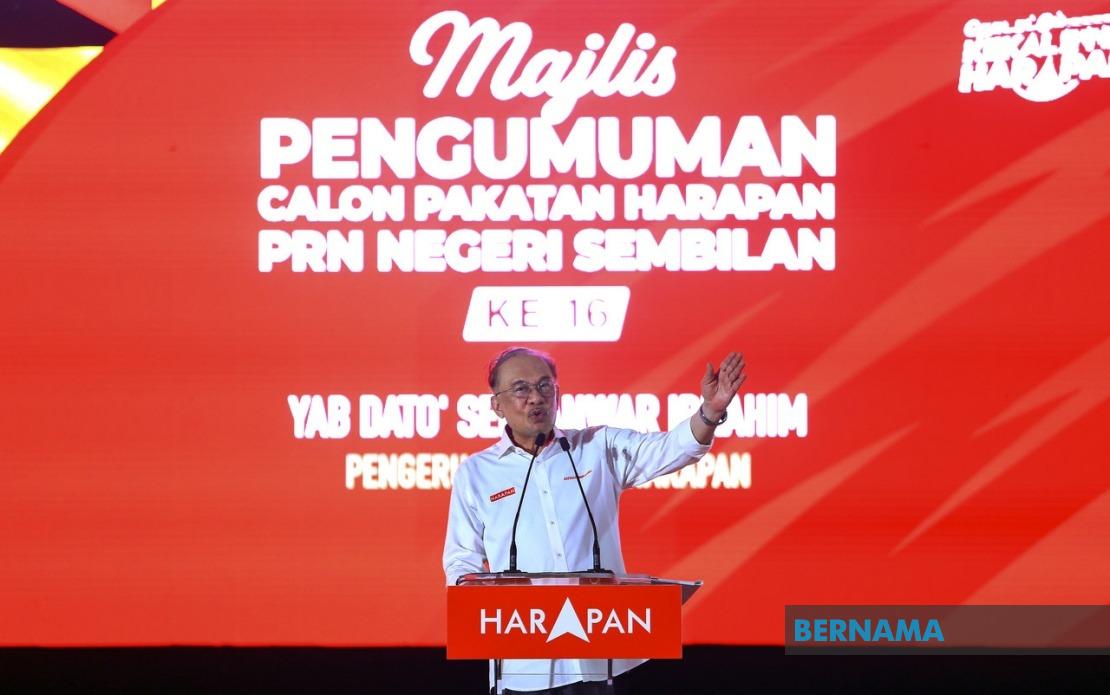
Pakatan Harapan has formally nominated Negeri Sembilan Menteri Besar Datuk Seri Aminuddin Harun as its candidate for the Linggi constituency in the forthcoming 16th Negeri Sembilan State Election, marking a significant strategic positioning ahead of the ballot. The announcement was made by PH chairman and Prime Minister Datuk Seri Anwar Ibrahim during a candidate declaration event in Kuala Pilah that drew the coalition's senior leadership and thousands of party supporters.
Aminuddin, who doubles as Negeri Sembilan PH chairman, brings considerable electoral experience to the Linggi contest. He has successfully retained the Sikamat state seat across four consecutive election cycles beginning in 2008, demonstrating sustained grassroots support in the state. This track record of consistent victory provides Pakatan Harapan with a tested campaigner for what is expected to be a hotly contested seat in the broader state electoral landscape.
Alongside Aminuddin's candidacy, the coalition has confirmed that DAP secretary-general Anthony Loke will contest the Chennah seat, where he seeks to extend his parliamentary tenure. Loke has represented Chennah since 2013, establishing himself as a prominent voice within the coalition and developing a strong electoral base in the constituency. His nomination underscores DAP's continued central role within Pakatan Harapan's coalition structure and reflects confidence in his ability to retain the seat despite any electoral headwinds.
The ceremonial announcement served as a display of coalition unity and organisational readiness. The event brought together major figures including Amanah president Datuk Seri Mohamad Sabu, PH communications director Datuk Seri Fahmi Fadzil, and the coalition's election director, Datuk Seri Amirudin Shari. The presence of these high-ranking party officials signalled the strategic importance Pakatan Harapan places on the Negeri Sembilan contest and its broader electoral plans.
For Malaysian political observers, the timing and composition of these nominations reveal careful calibration within the coalition. By fielding an incumbent Menteri Besar in a potentially vulnerable seat and maintaining an established stronghold with Loke, Pakatan Harapan appears to be balancing incumbent protection with fresh momentum in marginal constituencies. This approach reflects lessons learned from previous state and federal elections where coalition cohesion and strategic candidate placement proved decisive.
Negeri Sembilan represents a crucial battleground in Malaysia's electoral arithmetic. As a state with a relatively modest number of assembly seats, each constituency carries outsized importance for determining overall control of the state government. The selections of Aminuddin and Loke therefore carry implications extending well beyond their individual contests, potentially influencing broader perceptions of coalition strength heading into voting day.
The fact that Anwar himself presided over the announcement ceremony underscores the coalition's investment in the Negeri Sembilan campaign. Prime ministerial endorsement of state-level candidates, while not uncommon, signals to party machinery and supporters alike the priority attached to these contests. For Aminuddin in particular, such visible backing provides political capital useful in contested grassroots environments where voter loyalty remains fluid.
Aminuddin's departure from Sikamat after four consecutive terms, while contesting Linggi instead, represents an intriguing electoral calculation. This move could indicate either strategic repositioning within state boundaries or anticipation of demographic and political shifts that favour the Linggi constituency as more winnable terrain for the Menteri Besar. Such decisions often reflect sophisticated internal polling and voter sentiment analysis conducted by major parties ahead of formal campaign periods.
The regional context surrounding these nominations merits consideration for Malaysian readers. Negeri Sembilan's location within the Klang Valley periphery, combined with its historical swing dynamics between major coalitions, makes it a weathervane for national political trends. State-level results here frequently presage broader shifts in federal sentiment, meaning these Negeri Sembilan contests will likely attract national media attention and donor resources from both Pakatan Harapan and opposition camps.
Looking ahead, both Aminuddin and Loke face the challenge of maintaining incumbent advantages in an electoral environment characterised by volatility and voter fragmentation. Their respective track records suggest capacity to mobilise core support, yet the composition of the broader Pakatan Harapan slate, candidate quality from competing coalitions, and local issues in Linggi and Chennah will ultimately determine outcomes. The coming weeks will reveal how effectively the coalition translates leadership endorsements into electoral performance.

