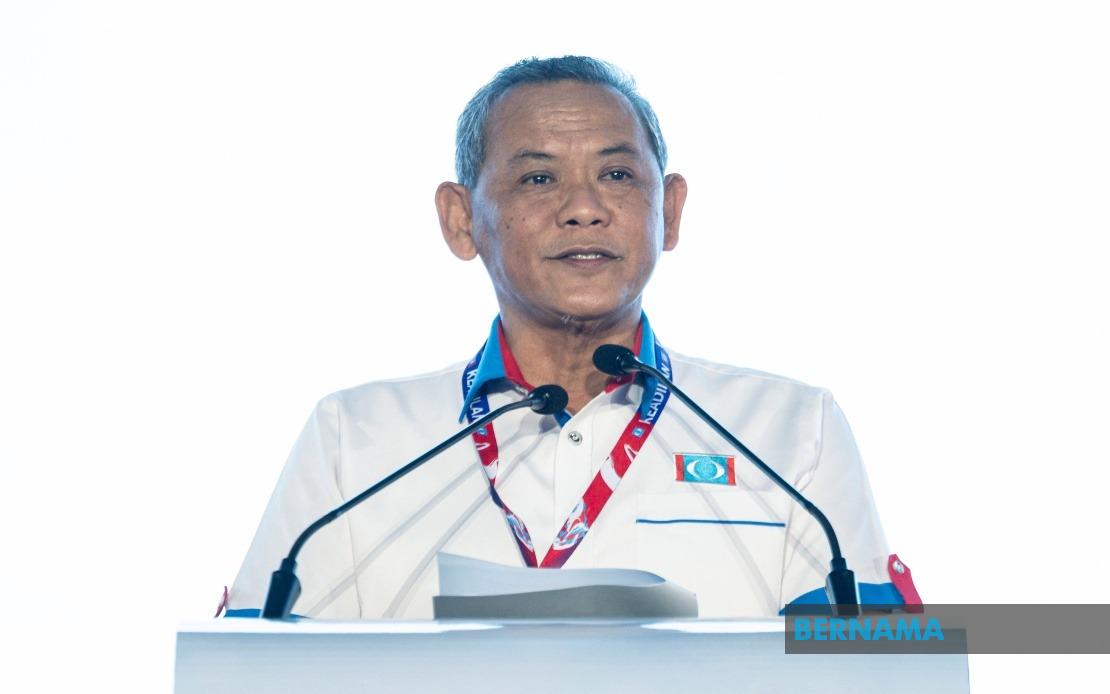
Datuk Seri Aminuddin Harun, the former Menteri Besar of Negeri Sembilan, has publicly indicated his preparedness to relinquish his position as chairman of the Negeri Sembilan State Leadership Council within Parti Keadilan Rakyat, accepting calls for accountability following the party's disappointing electoral performance. Speaking at the PKR National Congress in Melaka on August 16, Aminuddin acknowledged the mounting pressure from six branch leaders within the state who have demanded that senior party figures take responsibility for the electoral reversal and submit to potential disciplinary action or resignation.
The context for Aminuddin's statement lies in PKR's stark underperformance during Negeri Sembilan's state election held on August 1. The party captured merely two of fifteen state assembly seats it contested—the Chuah and Sri Tanjung constituencies—a result that fell far below expectations for a party that has positioned itself as a key reform force within the ruling coalition. For a state where PKR has historically maintained organisational presence, this outcome represents a significant erosion of political ground, raising questions about party management and campaign effectiveness in the state level.
Aminuddin himself experienced defeat in his own electoral contest. Standing for the Linggi state seat, he finished third in a three-cornered race, losing to incumbent Barisan Nasional candidate Datuk Mohd Faizal Ramli by a margin of 2,976 votes. The vote tally illustrated the competitive nature of the contest: Aminuddin secured 6,163 votes while Datuk Mohd Faizal captured 9,139 votes, with Bersatu candidate Datuk Zamri Md Said trailing considerably at 391 votes. This personal loss compounds the broader party failure and made his position as state party chairman increasingly untenable in the eyes of rank-and-file members seeking change.
In his address during the closing session of the PKR Congress, Aminuddin demonstrated a willingness to absorb responsibility rather than deflect blame, a posture that contrasts sharply with the defensive responses sometimes offered by political figures facing criticism. He stated unequivocally that he agreed with the demands levelled by the six branch leaders and accepted full responsibility for his role in guiding the party during the campaign period. This stance reflects either genuine acknowledgement of shortcomings or a strategic calculation that accepting responsibility now could preserve his standing within party circles for potential rehabilitation later.
Crucially, Aminuddin emphasised that the decision regarding his tenure ultimately rests with the party hierarchy rather than his own preference. He framed his position as holding a trust granted by the party, not a personal possession, and thus subject to reallocation should senior leadership deem it necessary. This delegation of final authority to party leadership provides the PKR presidency and central committee with discretion to manage the transition according to strategic considerations, whether that involves immediate acceptance of Aminuddin's implicit offer or a negotiated timeline for succession.
Yet amid the acknowledgement of failure, Aminuddin sought to reframe the narrative around resilience and renewal. He cautioned against allowing the August 1 setback to become an occasion for defeatism or organisational paralysis within PKR's Negeri Sembilan structure. Instead, he characterised electoral defeat as a critical juncture demanding introspection and strategic reconstruction rather than demoralisation. This messaging carries implications for party morale in the state, where activists and members may be disheartened by the loss of ground to both Barisan Nasional and Bersatu in a state that PKR has targeted as a growth market.
For Malaysian political watchers, Aminuddin's statement reflects broader dynamics within PKR as the party navigates life within the federal government coalition. The party has faced mounting criticism over delivery at state levels and questions about the competence of its leadership teams. Negeri Sembilan represents one arena where these tensions have crystallised into open calls for accountability from party members, suggesting that internal discipline and willingness to enforce standards may be strengthening within PKR's structures—or alternatively, that factionalism is driving efforts to remove rivals from power bases.
The timing of Aminuddin's statement, delivered during the party's National Congress, carries additional weight. Such gatherings often serve as forums for airing grievances and recalibrating party direction, and Aminuddin's public acceptance of responsibility may have been calibrated to manage perceptions among delegates and senior leadership attending the congress. By appearing to take the matter seriously and submitting to party judgment, he may have sought to demonstrate the kind of accountability that reformist elements within PKR claim to value.
For Negeri Sembilan specifically, the leadership transition in PKR could reshape political calculations heading toward potential future contests. Whoever assumes the chairmanship will inherit responsibility for rebuilding the party's machinery in the state and addressing factors that contributed to the August 1 defeat—whether these involve campaign strategy, candidate selection, ground organisation, or broader messaging challenges. The transition also affects PKR's role within the state coalition government, where it continues to hold elected representatives despite reduced numbers.
The episode underscores a notable pattern in contemporary Malaysian politics where state-level electoral disappointments trigger demands for leadership changes, often with significant figures accepting responsibility in ways designed to manage party unity while signalling reform. Whether Aminuddin's exit ultimately occurs, and on what timeline, will depend on calculations by PKR's central leadership regarding the political utility of his retention versus the party's need to demonstrate responsiveness to grassroots demands for accountability and renewal.

