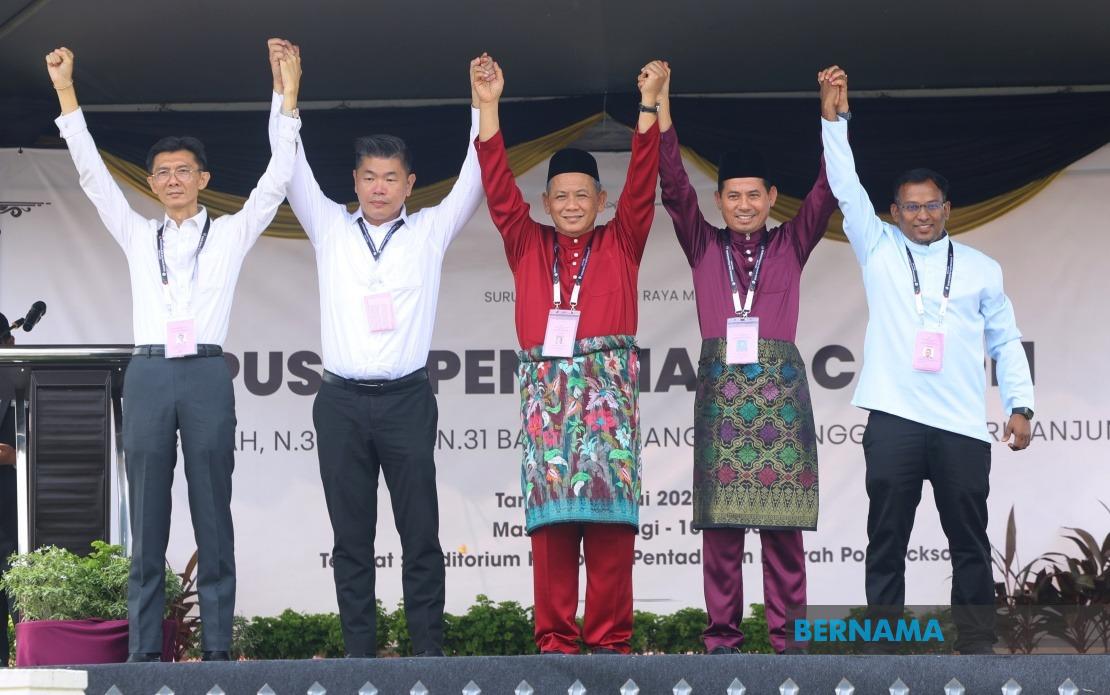
Negeri Sembilan Menteri Besar Datuk Seri Aminuddin Harun has set his sights on transforming the Linggi state constituency through major infrastructure projects, revealing plans for a port and industrial complex as cornerstone developments should voters grant him the mandate in the 16th Negeri Sembilan state election scheduled for August 1. The ambitious vision, presented to reporters in Port Dickson following the nomination process at the District Administration Complex Auditorium, represents an attempt to rejuvenate the constituency's economic landscape and position it as a regional economic player.
As chairman of Negeri Sembilan Pakatan Harapan, Aminuddin characterised the proposed undertakings as integral components of a comprehensive infrastructure modernisation strategy designed to unlock economic potential and generate employment prospects for the constituency's residents. The scale of these commitments signals a deliberate effort to present voters with a development-focused narrative that extends beyond routine political pledges, instead offering tangible, transformative projects that could reshape the local economy and connectivity.
The Linggi constituency presents an intriguing political battleground where Aminuddin's candidacy challenges established political dynamics. Widely acknowledged as a Barisan Nasional stronghold, the seat has been held by incumbent Datuk Mohd Faizal Ramli, creating headwinds for the Pakatan Harapan-backed Menteri Besar. Yet Aminuddin demonstrated resolve when discussing the electoral challenge, emphasising his personal commitment to the proposed developments and his determination to champion the coalition's vision despite the historically unfavourable political terrain.
The three-cornered contest adds another layer of complexity to the electoral equation. Alongside Aminuddin and the incumbent Mohd Faizal, Datuk Zamri Md Said, representing Bersatu, will compete for voter support. This multi-candidate dynamic potentially fragments the vote, creating opportunities for shifts in electoral outcomes that straight two-way contests would not typically offer. For Aminuddin, the Bersatu presence may either dilute opposition strength or splinter coalition support, depending on voter sentiment and campaign effectiveness.
Aminuddin's willingness to contest in traditionally hostile territory underscores the broader narrative of Malaysian electoral competition, where even established opposition strongholds face sustained challenges from alternative coalitions. His framing of the candidacy as a personal challenge he has undertaken after presenting the proposal to party leadership demonstrates both confidence and strategic positioning, suggesting that the infrastructure vision enjoys genuine organisational backing rather than representing merely opportunistic promises.
The proposed port development carries particular significance for Negeri Sembilan's economic future. Given Port Dickson's maritime location, a deep-water or modern container facility could position the state as a competitive alternative to Klang Port, particularly for interregional trade and logistical operations. For Malaysian readers, especially those invested in industrial logistics and supply chain development, such infrastructure improvements represent potential economic multiplier effects extending well beyond Linggi itself.
The companion industrial area commitment addresses employment generation and manufacturing diversification, sectors critical to Malaysia's post-pandemic economic recovery. Industrial zones typically attract foreign direct investment, create skilled employment opportunities, and integrate local supply chains into broader value networks. For Negeri Sembilan, historically less industrialised than Selangor or Penang, such developments could catalyse regional economic rebalancing and reduce reliance on traditional sectors.
Mohd Faizal, the incumbent, signalled awareness that complacency poses risks even in coalition strongholds. His cautionary message that Barisan Nasional cannot take Linggi for granted reflects broader electoral realities where traditional voter loyalties face erosion from both principled opposition movements and internal coalition fragmentation. His appeal for a campaign conducted without excessive provocation or baseless allegations suggests concern about intensified political rhetoric that might energise opposition mobilisation efforts.
The timing of these announcements, with polling occurring August 1, allows candidates approximately two weeks for campaigning and voter persuasion. Within this compressed window, infrastructure pledges function as persuasive messaging that differentiates candidates and appeals to development-oriented constituencies. For Malaysian voters, such promises require careful evaluation regarding feasibility, funding mechanisms, and implementation timelines—considerations that distinguish credible commitments from aspirational rhetoric.
Negeri Sembilan's state election holds significance beyond the state itself, as results will influence national political calculations and potentially affect federal coalition stability. A strong Pakatan Harapan performance would strengthen arguments for the coalition's continued relevance at federal level, while Barisan Nasional success would reinforce assertions regarding its recovery momentum. For Malaysian observers, Linggi represents one of several constituencies where genuinely competitive contests, rather than predetermined outcomes, will shape the state's political direction and development trajectory.
Aminuddin's strategic positioning emphasises infrastructure transformation over conventional political messaging. By anchoring his campaign to tangible economic projects rather than abstract governance promises, he attempts to resonate with constituencies prioritising development delivery. The effectiveness of this approach will become apparent through voter response during the remaining campaign period and ultimately through ballot outcomes. Whether infrastructure-focused campaigns prove more electorally persuasive than established coalition loyalties remains one of the intriguing questions the Linggi contest will help answer.

