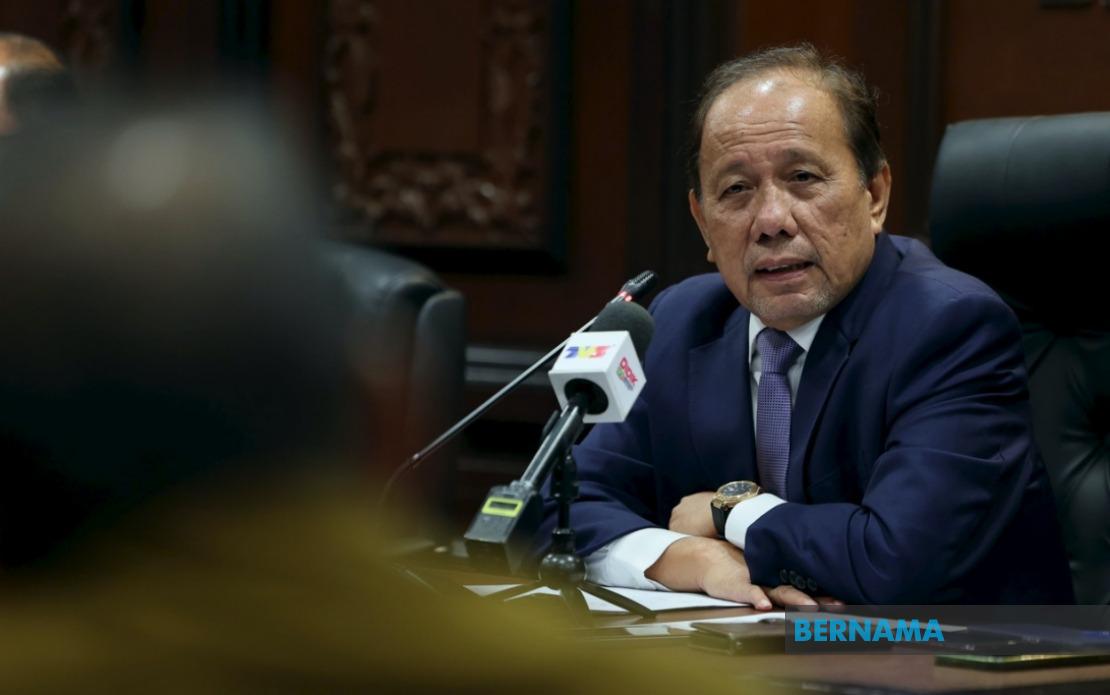
In a significant accountability test following Negeri Sembilan's political upheaval, Menteri Besar Datuk Ismail Lasim revealed that only former menteri besar Datuk Seri Aminuddin Harun has returned the complete allocations he received while serving under the Pakatan Harapan administration. The disclosure underscores mounting pressure on opposition-aligned representatives to account for public funds distributed prior to the state assembly's dissolution on June 5.
Speaking after a flag-presentation ceremony for Negeri Sembilan's contingent to the 2026 Malaysia Para Games, Ismail indicated that numerous former PH state assemblymen and their constituency coordinators have initiated repayment but have only furnished partial reimbursements. Assemblymen representing constituencies including Paroi and Labu commenced returning funds from June 30 onwards, yet substantial portions of the original disbursements remain outstanding. The disparity between sums returned and amounts originally provided has prompted the state executive to conduct a comprehensive audit of allocation records.
The menteri besar acknowledged the complexity of tracking individual payments, emphasising that allocations varied significantly depending on each representative's seniority and constituency designation. Rather than issuing blanket recovery notices, his office is meticulously examining records for each former assemblyman to calculate precise outstanding balances before sending formal demand letters. This methodical approach reflects recognition that not all representatives received identical funding levels, making a standardised recovery process administratively impractical.
Ismail suggested that some of the unreturned funds may have been legitimately expended on constituent welfare programmes and community initiatives rather than political activities, though he stopped short of absolving those who failed to provide complete accounting. He explicitly called upon those retaining portions of allocations to supply detailed expenditure records justifying their retention. This conditional language hints at official tolerance for reasonable spending on public benefit, provided transparent documentation exists to validate such claims.
An important temporal distinction emerged regarding senior officials. Executive councillors serving under the previous administration, including Aminuddin, retained ex-officio status through July 31, thereby maintaining entitlement to allocations for that entire month. This legal technicality potentially explains Aminuddin's successful full repayment—having legitimately used portions of funding during his extended tenure period. The distinction creates a legal framework differentiating between those whose mandates ended immediately upon assembly dissolution and those who retained official capacity into early July.
Responding to allegations of improper fund usage, Nilai assemblyman J. Arul Kumar asserted that allocations disbursed before dissolution were exclusively channelled toward constituent welfare rather than partisan political campaigns. His defence underscores broader tensions within Malaysian politics surrounding how opposition-controlled constituencies employ state resources, with ruling coalitions frequently scrutinising opposition spending patterns. The DAP assemblyman's counter-narrative reflects defensive positioning common when newly-displaced governments face accountability investigations.
Kumar further claimed that his party's representatives had already remitted all unspent balances to the menteri besar's office by July 10, accompanied by comprehensive financial reports documenting expenditure across each state constituency. Such proactive reporting could substantially strengthen opposition claims regarding fiscal propriety, though the current administration's continued audit suggests either incomplete trust in these submissions or discovery of discrepancies during verification processes. The timing of these resubmissions, preceding Ismail's formal demands by several weeks, indicates either genuine compliance consciousness or sophisticated political positioning.
The ongoing allocation recovery effort must be understood within Negeri Sembilan's recent political transformation. Following the June assembly dissolution, the state shifted from PH governance toward a Perikatan Nasional-aligned administration led by Ismail. This transition inevitably triggered scrutiny of predecessor governments' financial management, a pattern repeated across Malaysian states undergoing political realignment. Allocation recovery initiatives often serve dual purposes: legitimate fiscal accountability and political leverage against displaced administrations.
For Malaysian observers and neighbouring state leaders, this episode illuminates broader governance challenges surrounding fund allocation mechanisms during political transitions. The absence of standardised national protocols for retrieving state allocations following assembly dissolutions leaves considerable discretionary authority with incoming administrations. Negeri Sembilan's measured approach—rather than imposing across-the-board demands—suggests attempting to distinguish legitimate spending from misappropriation, yet the completion timeline and ultimate recovery percentage will prove telling indicators of genuine accountability versus selective political prosecution.
The Aminuddin precedent establishes an institutional benchmark that may influence future compliance from remaining debtors. His complete reimbursement, whether reflecting institutional discipline or substantive absence of unexplained expenditure, provides counterweight to claims of systematic opacity among former PH representatives. As investigations proceed through August and beyond, the differential compliance patterns among former assemblymen will reveal whether allocation recovery represents principled financial stewardship or becomes weaponised for political advantage—a distinction carrying significant implications for Malaysian democracy's institutional health.

