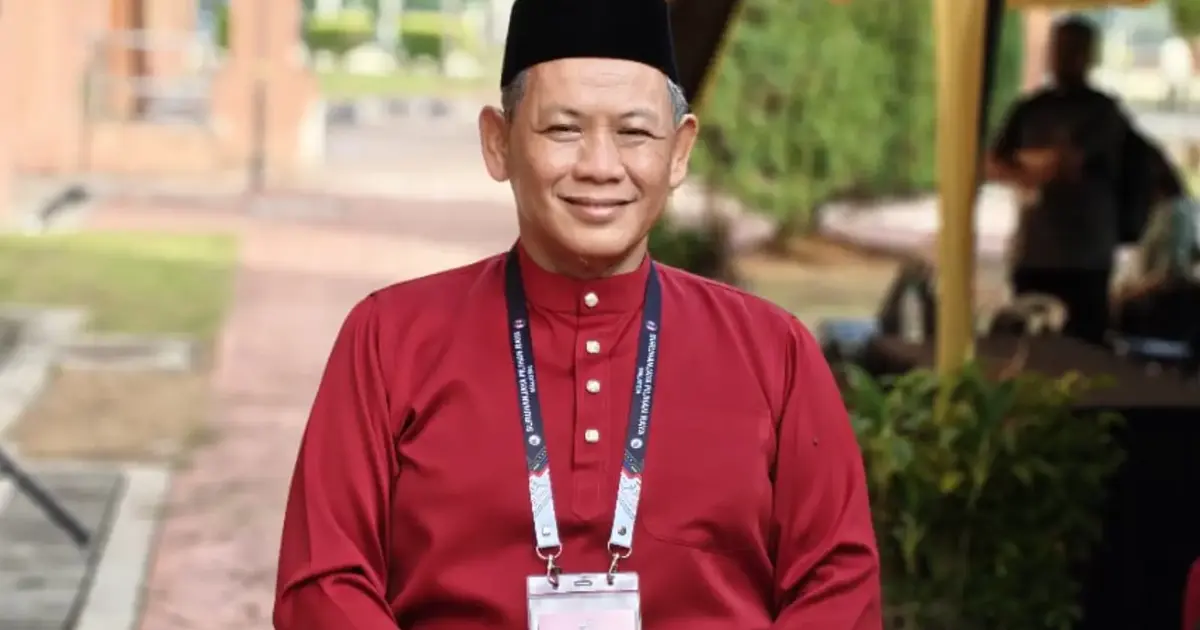
Negeri Sembilan Chief Minister Aminuddin Harun has entered the electoral fray for the Linggi parliamentary seat, setting up what promises to be a closely contested three-way battle in one of Umno's traditional strongholds. The move pits the state leader directly against Barisan Nasional's Faizal Ramli, who claimed victory in the predominantly Malay constituency during the 2023 general election, whilst a candidate from Bersatu has also entered the race, further fragmenting the opposition vote in a seat long considered safe for the ruling coalition.
Linggi has historically represented a secure base for Umno within Negeri Sembilan's political landscape. The Malay-majority demographic composition of the seat has traditionally favoured parties with strong appeal among rural Malay voters, making it a crucial battleground for any coalition seeking to maintain or expand its parliamentary majority. Faizal Ramli's 2023 victory cemented BN's hold on the constituency, though the emergence of competing challengers suggests the political terrain may be shifting beneath the surface.
Aminuddin's decision to contest the seat reflects broader strategic calculations within the opposition coalition. As Chief Minister of Negeri Sembilan, he commands significant administrative resources and grassroots visibility that could prove advantageous in a direct electoral contest. His entry into the race indicates that the opposition views Linggi as winnable territory, despite BN's recent success there, and that concentrating senior political leadership in the constituency could yield electoral dividends. The move also signals confidence in his personal political brand and appeal among Linggi's electorate.
The inclusion of a Bersatu candidate introduces an additional layer of complexity to the contest. Bersatu's presence in the race creates a potential split in the anti-government vote, though the party's positioning and campaign strategy remain crucial variables. The three-way contest transforms what might otherwise have been a straightforward BN versus opposition matchup into a more unpredictable scenario where vote-splitting dynamics and candidate appeal become paramount factors in determining the outcome.
For BN, defending Linggi against an unusually strong challenge from a prominent state-level politician represents a more demanding test than the typical electoral cycle. Faizal Ramli must not only consolidate the support that delivered his 2023 victory but actively expand his coalition to withstand pressure from both Aminuddin and the Bersatu candidate. The defensive posture required in such contests can prove demoralising to incumbents, particularly when facing well-resourced and visible challengers.
Aminuddin's candidacy carries particular significance for Negeri Sembilan's political direction. His role as Chief Minister means that his involvement in parliamentary politics carries implications beyond the single constituency. Should he succeed in reclaiming the Linggi seat whilst retaining his state leadership position, it would strengthen his hand in navigating federal-state political relationships and could enhance his stature within the broader opposition movement. Conversely, an electoral defeat might complicate his state-level governance, though incumbency advantages typically favour sitting Chief Ministers in their home states.
The Linggi contest reflects wider patterns of political flux across Malaysia's electoral landscape. Constituencies that appeared settled following the 2023 general election are being contested anew, suggesting that voter preferences remain fluid and that electoral competition remains robust at all levels. The willingness of opposition leaders to challenge sitting MPs, particularly in constituencies previously considered BN strongholds, indicates growing confidence in their capacity to compete effectively even in traditionally unfavourable terrain.
From a regional Southeast Asian perspective, Linggi's three-way contest exemplifies the competitive intensity characterising Malaysian politics. Unlike some neighbouring countries where electoral outcomes appear predetermined, Malaysian constituencies remain genuinely contested spaces where campaign strategies, candidate quality, and ground-level organisation meaningfully influence results. This genuine electoral competition, though occasionally destabilising, serves important democratic functions in ensuring that governing coalitions must continuously earn public support.
The broader implications of the Linggi race extend to Negeri Sembilan's political balance. Should opposition candidates perform strongly in parliamentary contests, it might translate into pressure on the state-level coalition, potentially affecting the stability of Aminuddin's position as Chief Minister. Conversely, strong BN performances could reinforce the party's control over both state and federal representation, consolidating its position within the state's political hierarchy and limiting opposition capacity to shape policy outcomes at either level.
Among Malaysian voters, the Linggi contest may serve as a bellwether for broader shifts in electoral sentiment, particularly regarding Malay-majority constituencies where coalition strength traditionally concentrates. The performance of all three candidates will be closely analysed by political observers seeking indicators of underlying changes in voter behaviour, demographic shifts, or coalitional realignments that might reshape Malaysian politics in coming electoral cycles. The constituency thus carries significance beyond its own borders, offering insights into the health and trajectory of competing political coalitions.

