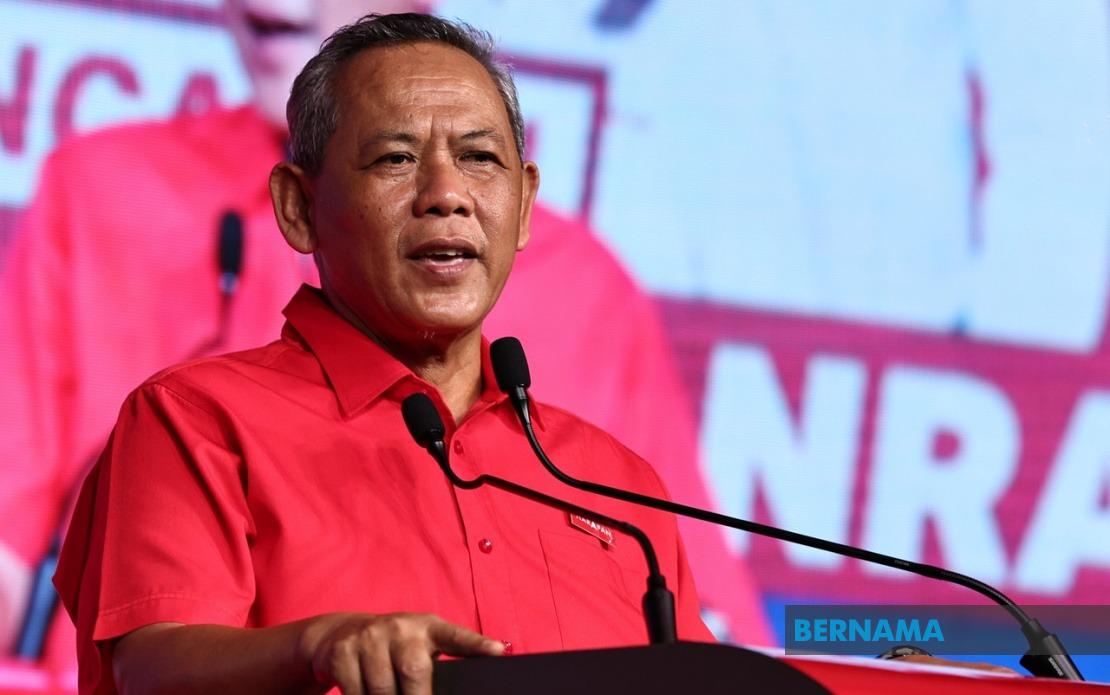
Menteri Besar Datuk Seri Aminuddin Harun has firmly rejected suggestions that his decision to contest the Linggi state seat in the forthcoming Negeri Sembilan election amounts to a strategic retreat from his long-held Sikamat constituency. Speaking through a Facebook statement released in Seremban, the Negeri Sembilan Pakatan Harapan chairman characterised the move instead as an autonomous political decision reflecting his desire to serve a different community.
The controversy surrounding Aminuddin's constituency switch reflects broader speculation within Malaysian political circles about whether senior figures shift electoral bases to escape challenging contests or to pursue better electoral prospects. In this instance, observers had questioned whether the Menteri Besar, despite holding Sikamat across four consecutive terms, had decided to abandon the seat due to perceived vulnerability or changing political winds. However, Aminuddin's statement provides a counter-narrative, framing the transition as a proactive choice rather than a defensive manoeuvre.
Among Malaysian voters and political analysts, such constituency changes routinely spark debate about political authenticity and commitment. Aminuddin's emphasis that his switch represents continuity of service—simply extended to a new geographical area—attempts to address concerns that established representatives might treat constituencies instrumentally. His assertion that he intends to bring the same work ethic to Linggi that characterised his Sikamat tenure carries particular weight given his longevity in the previous seat.
The Menteri Besar's reflective commentary on his Sikamat experience illuminates the resource constraints faced by opposition-aligned politicians during periods when their coalitions held limited institutional power. His recollection of operating from modest shophouse premises with restricted budgets, while simultaneously mobilising grassroots support through fundraising and community organising, resonates with narratives of how Pakatan Harapan representatives sustained constituency operations before the 2018 federal breakthrough. This historical framing contextualises his decision as part of a broader evolution in his political career rather than an isolated tactical adjustment.
Aminuddin's gratitude towards Sikamat constituents, expressed publicly in his statement, serves multiple political functions. It acknowledges the foundation upon which his career was built, preserves goodwill within that community ahead of the election, and signals to the broader electorate that he does not lightly abandon constituencies he has represented. This approach helps mitigate potential criticism from rivals suggesting that long-serving representatives might view constituencies as disposable stepping stones.
The naming of Nor Azman Mohamad as Sikamat's replacement candidate carries significant implications for Pakatan Harapan's electoral strategy in Negeri Sembilan. By installing a successor whom Aminuddin publicly endorsed, the coalition attempts to maintain continuity of representation while managing the narrative around the outgoing Menteri Besar's departure. Whether voters in Sikamat perceive Nor Azman as a capable successor or view the transition as a loss remains to be seen, particularly given Aminuddin's substantial personal brand within that constituency.
Linggi represents a different electoral challenge, with Aminuddin positioned to face Barisan Nasional incumbent Datuk Mohd Faizal Ramli. The choice of Linggi for the Menteri Besar's re-election bid suggests that Pakatan Harapan strategists identified the seat as competitive or winnable under his candidacy. Whether Linggi truly offered superior electoral prospects compared to Sikamat, or whether other factors influenced the decision, remains subject to speculation. The electoral mathematics of Negeri Sembilan, where coalition alignments and rural-urban dynamics shift constantly, would have informed this strategic calculation.
For Malaysian observers tracking the 16th Negeri Sembilan state election, Aminuddin's trajectory illustrates the complex calculations that senior politicians navigate when positioning themselves for electoral contests. The Menteri Besar must simultaneously defend his Linggi candidacy, protect his coalition's broader state position, and manage perceptions within Sikamat regarding his departure. These competing demands explain the careful, multi-layered messaging evident in his public statement.
The election timeline—with nominations scheduled for Saturday, early voting set for July 28, and polling day designated as August 1—provides a compressed window for these narratives to develop. Aminuddin's early public clarification of his motivations reflects an awareness that multiple storylines could emerge around his constituency change, each with potential electoral consequences. By addressing doubts proactively, he attempts to control the framing of his decision within public discourse.
Negeri Sembilan state elections carry particular significance for Malaysian politics given the state's positioning as a bellwether for broader electoral trends and its history of competitive, closely contested races. The Menteri Besar's status as an established political figure capable of contesting different constituencies adds another variable to what observers anticipate will be a closely watched contest. His personal popularity and perceived effectiveness in office may indeed transcend specific constituency boundaries, potentially enabling him to build support in Linggi despite the geographical transition.
The broader implications of such elite political mobility deserve attention from Malaysian voters and analysts. When senior figures relocate constituencies, questions naturally arise about whether this practice strengthens or weakens constituency representation. Aminuddin's emphasis on continuity of service—and his framing of the move as a voluntary choice—addresses these concerns, though sceptics might question whether any politician would publicly characterise a constituency switch as anything other than a positive development.
Ultimately, Aminuddin's electoral performance in Linggi will provide the most meaningful response to suggestions that his decision reflected weakness or tactical withdrawal. If he secures victory, the narrative will solidify around personal choice and political ambition. Should he face unexpected difficulties, observers may revisit these early claims about his motivations with greater scepticism, potentially validating suggestions that he abandoned a vulnerable seat. The August 1 polling results will therefore determine not merely the composition of the Negeri Sembilan state assembly, but also the political memory of this significant transition in the Menteri Besar's career.

